
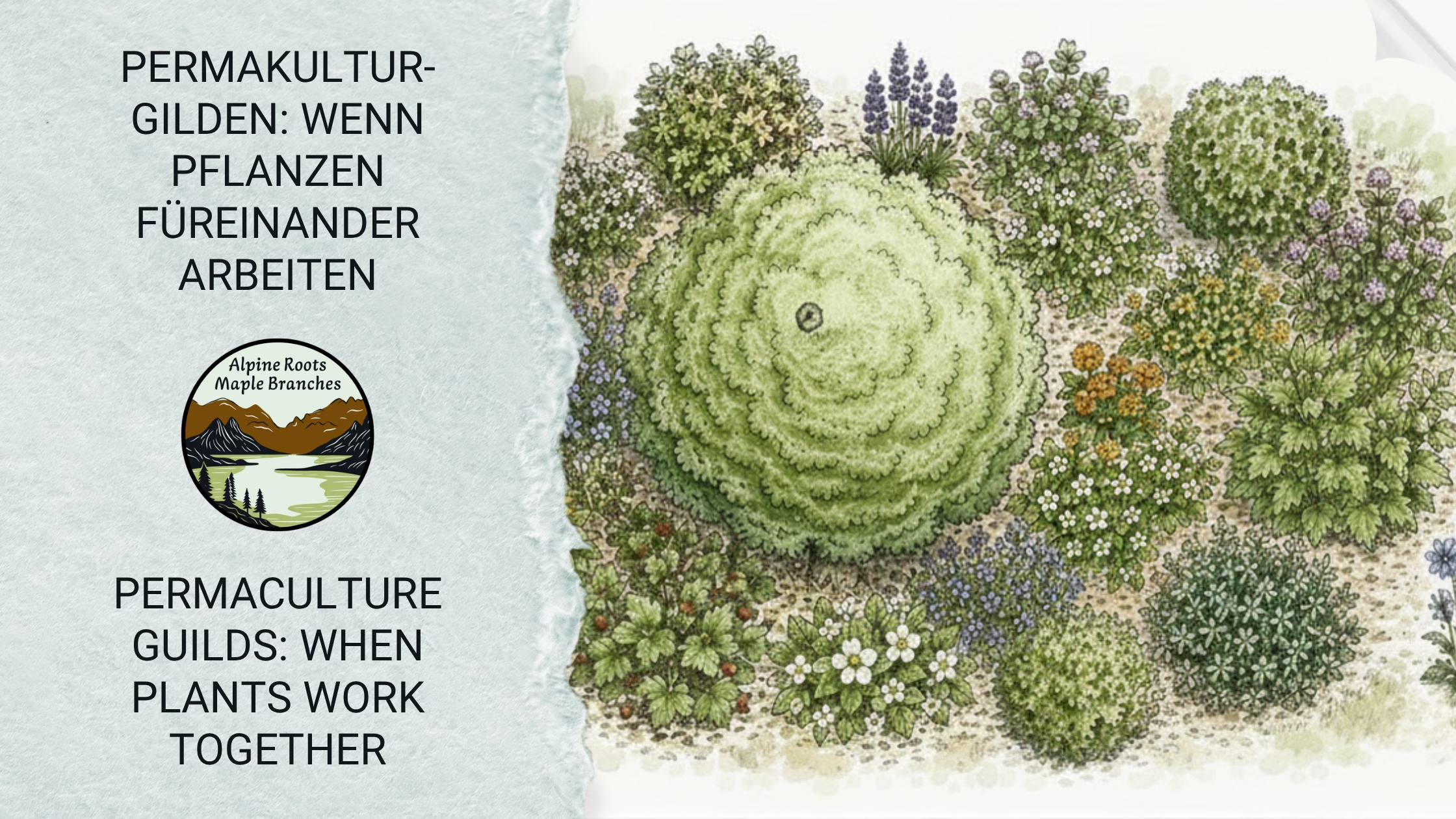
A garden that functions as a closed system drastically reduces the workload after the establishment phase.
Instead of continuously weeding, applying synthetic fertilizers, or watering uninterruptedly during dry spells, permaculture utilizes a principle that has run stably in natural ecosystems for millions of years: plants do not grow in isolated monocultures, but in functional communities. We call these communities guilds. Anyone who understands how they are structured will fundamentally change their garden planning.
In this article, we look at what makes a functioning guild, which five basic functions it should cover, which species prove successful in temperate climates, and how systematic establishment succeeds in practice.
Planting a single plant solves a problem. Building a guild creates a system that solves problems on its own.
What is a Permaculture Guild?
In the Middle Ages, anyone belonging to a guild was part of a community with a clear division of labor. Blacksmiths, bakers, and weavers worked together, everyone contributed their strengths, and everyone benefited. In permaculture, the concept of a guild works on exactly the same principle, except that here plants (and sometimes fungi and animals) are the members.
A permaculture guild is a carefully selected community of plants, centered around a main element, which is usually a fruit tree or a larger utility shrub.
Around this center, companion plants are arranged to take on various tasks: they fix nitrogen, attract beneficial insects, keep weeds in check, protect the soil from drying out, or deter pests.
This might sound complicated. But it isn’t. Once you understand which plants can work together, you can build a system with comparatively little effort that largely self-regulates after the establishment phase.
The term itself goes back to Bill Mollison and David Holmgren, the founders of modern permaculture.
But the idea behind it is much older: the Three Sisters of the indigenous North American peoples—corn, beans, and squash—are one of the best-known examples of a functioning plant guild that has been practiced for thousands of years. Corn provides a trellis for the beans, beans fix nitrogen for all three, and the broad squash leaves shade the soil and retain moisture.
Every plant gives, every plant takes, and the result is greater than the sum of its parts.
Why Guilds Make Tremendous Sense in Temperate Climates
Temperate climates, such as Central Europe, the East Coast of Canada, and parts of North America, have one thing in common: a short, intense growing season, long, harsh winters, and unpredictable late frosts that threaten the system well into May, and sometimes even longer.
In exactly this context, guilds stabilize the microclimate:
- Continuous Soil Work in Winter: Ground covers and deep-rooting plants keep working even during the cold season. They protect the substrate from erosion caused by heavy rains or snowmelt, keep the pore structure intact, and continuously supply organic matter, which is converted into humus by soil organisms in the spring.
- Microclimatic Protection: Dense ground covers keep the soil temperature stable in the root zone, while taller companion plants act as windbreaks. A closed, living mulch layer also prevents frost from penetrating deep into critical root zones.
- Season Extension: Through the mutual protection of the plants in the system, more sensitive species can optimally utilize the short growing periods in spring and autumn. In practice, this means less manual weeding and more efficient water management.
Healthy soil is not created by digging it up once, but through uninterrupted biological processes. In our eBook Living Soil, we describe in detail how the interplay of soil biology, fungal hyphae, and root exudates drives this regenerative network.
On our own property in Cape Breton, we manage growing zones 5b to 6a with heavy, wet clay soils. Monocultures here mean pure, permanent maintenance effort—guilds, on the other hand, work for themselves.
The Five Functions of a Guild
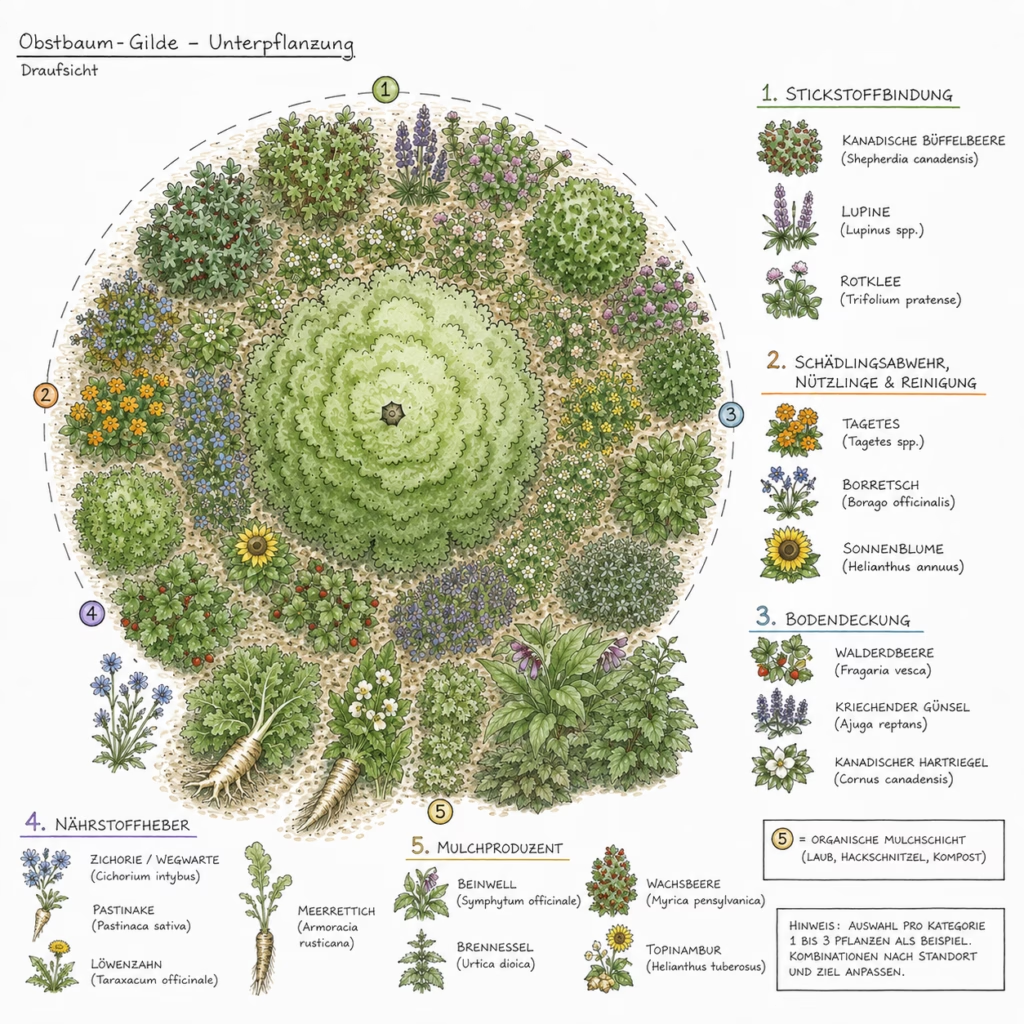
A stable guild system should ideally cover five basic ecological functions. Around a central woody plant, such as our young sea buckthorn in Cape Breton, companion plants are selected specifically to fill these roles. It is not strictly necessary to fill all five roles immediately with separate species, but the more functions that are integrated, the more resilient the system becomes.
- Nitrogen Fixation: Woody plants at the center of a guild often have high nutrient demands. Herbaceous companion plants from the legume family (Fabaceae) buffer this demand biologically. They live in a close symbiosis with Rhizobium nodule bacteria on their roots. These bacteria are capable of fixing nitrogen, which is abundant in the air but inaccessible to plants, and converting it into bioavailable fertilizer for the entire system. In temperate zones, this work is primarily done by pioneer plants in the immediate vicinity of the trunk.
- Pest Deterrence and Beneficial Insect Promotion: Certain plants protect the center through intensive essential oil emissions (e.g., marigolds). Simultaneously, open umbel and borage flowers specifically attract predatory beneficial insects like hoverflies, parasitic wasps, and pollinators, which keep the biological balance stable.
- Ground Cover and Weed Suppression: Open soil exists in nature only as a temporary state of disturbance and is immediately colonized by pioneer plants (weeds). By deliberately occupying this space with dense, runner-forming ground covers, we suppress unwanted competition, reduce evaporation, and protect the edaphon (soil with all soil life, including bacteria, etc.) from UV radiation.
- Deep Rooters and Dynamic Accumulators: Plants with massive taproots penetrate deep into the subsoil and unlock minerals that have long been leached from the upper layers or remain unreachable for shallow rooters. When the above-ground biomass dies off, these nutrients become available in the topsoil, a process referred to in permaculture as dynamic accumulation.
- Mulch Producers: Fast-growing, extremely leafy plants produce enormous amounts of biomass in short cycles. This biomass is cut directly on-site using the chop-and-drop method and laid around neighboring crops as a living mulch layer to accelerate humus building without external material inputs.
Classic Guild Plants for Temperate Climates
The following matrix lists the species that reliably overwinter in our harsh climate and assume specific functions within the system.
| Core Function | Proven Companion Plants | Mode of Action in the System | Practical Benefit & Cape Breton Climate Note |
| (Botanical Name) | |||
| 1. Nitrogen Fixation | Silver Buffaloberry | Root symbiosis with Frankia actinomycetes; captures atmospheric nitrogen. | Remains compact (1.5 – 2m), is absolutely winter-hardy, and is completely avoided by deer due to its rough leaf texture. |
| (Shepherdia canadensis) | |||
| Lupine | Root symbiosis with Rhizobium bacteria for nitrogen enrichment of the soil. | Thrives excellently on acidic, very poor sandy and clay soils and loosens them with its taproot. | |
| (Lupinus spp.) | |||
| Red Clover | Widespread nodule bacteria symbiosis in the topsoil. | Forms a persistent, very foot-traffic-tolerant base and living mulch layer for pathways. | |
| (Trifolium pratense) | |||
| Black Alder | Large-scale nitrogen fixation via a deep, strong root system. | In contrast to many cultivated woody plants, it handles extreme waterlogging and wet clay soil ideally. | |
| (Alnus glutinosa) | |||
| 2. Pest Deterrence, Beneficials & Remediation | Marigold | Emits intense essential scents to confuse pests. | Active root exudates combat harmful nematodes (roundworms) in the root zone. |
| (Tagetes spp.) | |||
| Borage | Open, nectar-rich flowers specifically attract predatory beneficial insects and pollinators. | An absolute bumblebee magnet that reliably self-seeds despite short summers. | |
| (Borago officinalis) | |||
| Sunflower | Active phytoextractor for binding and storing heavy metals in plant tissue. | Aids in the step-by-step biological remediation of areas near historic mining zones. | |
| (Helianthus annuus) | |||
| White Mustard | Functions as a fast-growing accumulator of pollutants in the topsoil. | Binds pollutants quickly; effectively unburdens the affected area when harvested and disposed of. | |
| (Sinapis alba) | |||
| 3. Ground Cover | Wild Strawberry | Forms dense, creeping runner carpets against weeds and evaporation. | Provides valuable harvest yields and tolerates partial shade under fruit trees perfectly. |
| (Fragaria vesca) | |||
| Bugleweed | Protects the soil structure through a carpet-like, extremely dense leaf growth. | Is extremely shade-tolerant and closes dense gaps in the immediate, dark trunk area. | |
| (Ajuga reptans) | |||
| Bunchberry | Native, herbaceous ground carpet with high resilience. | A wild plant perfectly adapted to acidic, damp, and heavy clay soils. | |
| (Cornus canadensis) | |||
| Sweet Woodruff | Closes the ground via a flat, dense undergrowth against heavy rain erosion. | Works ideally for shady, permanently damper areas directly in the undergrowth of woody plants. | |
| (Galium odoratum) | |||
| 4. Dynamic Accumulators | Chicory | Strong taproot penetrates extremely deep into dense soil layers to pull up minerals. | Drills unbothered up to 2 meters deep through dense, heavy clay soil. |
| (Cichorium intybus) | |||
| Parsnip | Thick, turnip-like storage root cracks open dense soil layers. | Simultaneously delivers nutritious food and transports minerals into the topsoil. | |
| (Pastinaca sativa) | |||
| Dandelion | Fine, deep-going taproot pulls up trace elements like potassium and iron. | Leaves behind fine aeration and drainage channels against waterlogging when the root naturally dies off. | |
| (Taraxacum officinale) | |||
| Horseradish | Extremely massive, persistent, and vigorously spreading taproot. | Develops enormous root power that mechanically unlocks clay barriers in the subsoil. | |
| (Armoracia rusticana) | |||
| 5. Mulch Producer | Comfrey | Massive, rapidly regrowing, and mineral-rich biomass leaves. | Can be radically cut 3–4 times per season via chop-and-drop and resprouts immediately. |
| (Symphytum officinale) | |||
| Stinging Nettle | Nitrogen-rich, herbaceous leaves for fast humus building and activation. | Targeted accumulation of nutrients; ideal as a biological activator for barren, depleted zones. | |
| (Urtica dioica) | |||
| Northern Bayberry | Native, woody shrub undergrowth with a tough structure. | Loves acidic soils and braves even harsh, salty Atlantic winds in exposed coastal locations. | |
| (Myrica pensylvanica) | |||
| Jerusalem Artichoke | Produces meter-high, herbaceous stalks and dense leaf layers in record time. | Massive biomass supplier; spreads vigorously (best planted with a root barrier). | |
| (Helianthus tuberosus) |
How to Plan Your First Guild
The systematic planning of a guild always occurs from the inside out:
- Define the Center: At the very beginning stands the selection of the main tree or utility shrub. The future canopy diameter at full maturity determines the physical radius of the entire guild.
- The Site Analysis: Before buying plants, the soil condition (clay or sand ratio), pH value, light conditions, and local risks such as waterlogging or wildlife damage must be precisely checked. These factors dictate the choice of the right companions.
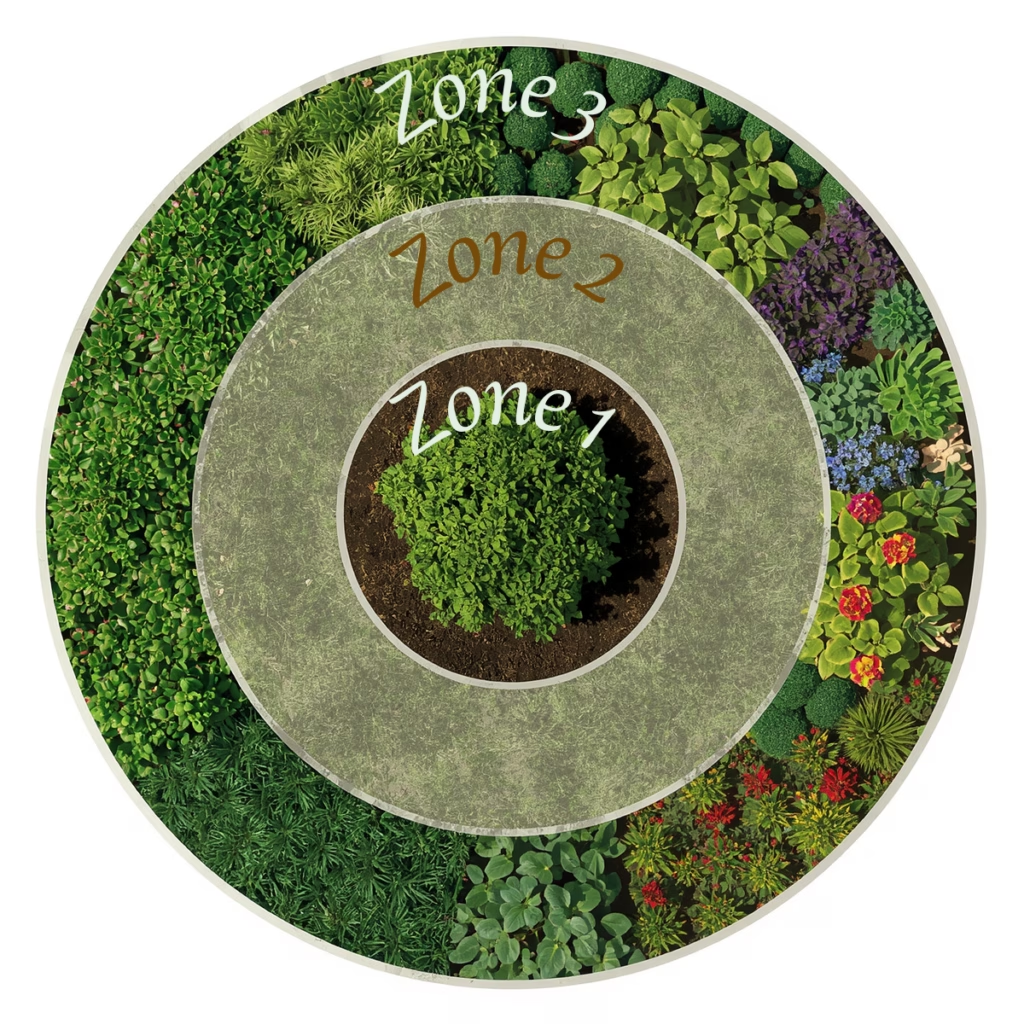
- Implement the Zoning: Directly in the inner trunk area (Zone 1), shade-tolerant ground covers are planted. At the canopy edge (Zone 2 / drip line), you position the hungry dynamic accumulators and biomass producers, as this is where most of the rainwater hits. Outside the canopy shadow (Zone 3), the sun-loving nitrogen fixers and flowering plants find their place.
Basic Planning Rule: Prioritize plants that fulfill multiple functions simultaneously. Comfrey is a deep rooter and a mulch provider at the same time; red clover fixes nitrogen, protects the soil flächig, and serves as a bee pasture. The more multifunctional the selection, the more efficient the overall system.
And then: Plan for patience. A guild usually takes two to three years to settle in. In the first year, you invest the most in planting, watering, and mulching. From year three, most of it runs by itself.
Common Mistakes When Building a Guild
Overwhelm from Too Many Species: Trying to establish twenty different plant species at the same time usually fails due to maintenance complexity. It is more effective to start with a manageable core set of 4 to 6 robust species.
Competition Pressure on Young Centers: Designing a dense guild directly around a freshly planted, young tree risks companion plants overgrown the center before it is strongly enough rooted. Always give the central woody plant a one-season head start to establish itself.
Underestimating Invasive Dynamics: Species like Jerusalem artichoke, peppermint, or even common comfrey develop an extreme urge to spread. Without physical rhizome barriers or a conscious choice of location, these plants will dominate the guild within a very short time.
Lack of Surface Protection at the Beginning: Before ground covers close the earth completely, the system is extremely vulnerable to silting and drying out. A thick mulch layer of straw, woodchips, or grass clippings is a prerequisite during the first two years.
Our Plans in Cape Breton
Our property in Loch Lomond, Cape Breton, is anything but an ideal starting point: heavy clay soil, low pH, long winters, barely any humus, plus white-tailed deer and rabbits that show little restraint. That is exactly the reason why we don’t want to continue with raised beds and monoculture rows.
The idea of building guilds around our sea buckthorn cuttings is obvious, even though they have only been in the ground for a year and, to be honest, we don’t even know yet if they survived the winter well. As companions, we are thinking about red clover as a ground cover, comfrey as a mulch producer, and marigolds for pest deterrence.
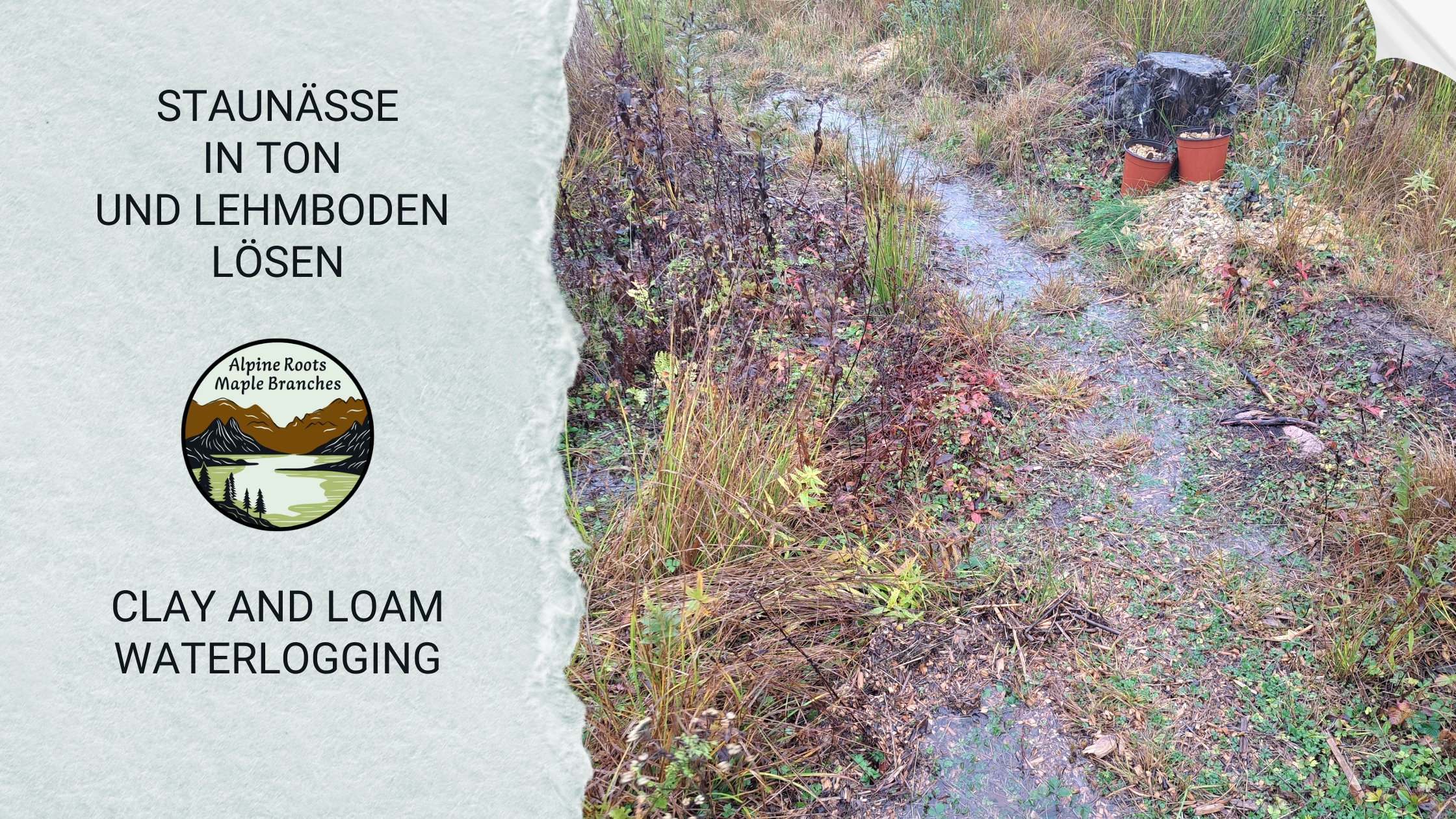
Since every successful guild must be preceded by a functioning soil, we are working in parallel with activation via biochar and the mechanical remediation of waterlogging. Permaculture is not a sprint, but the step-by-step guidance of natural processes. We will keep you updated here.
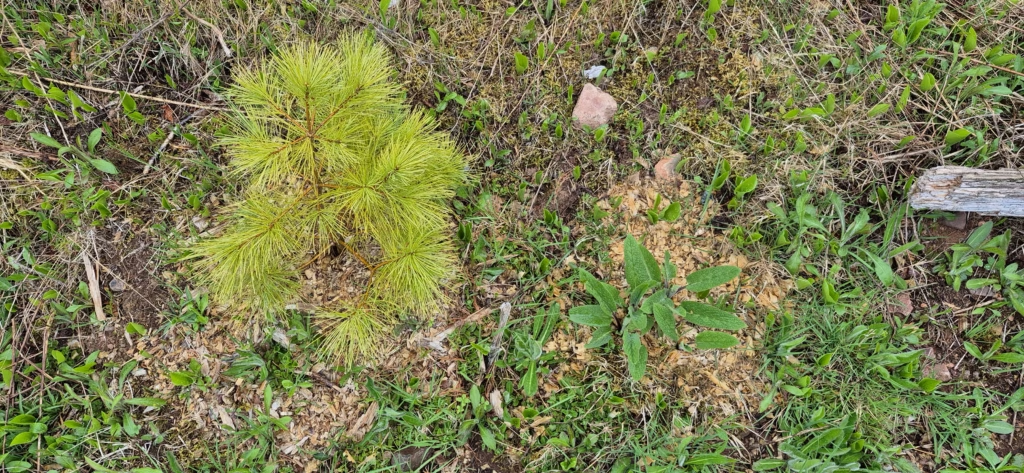
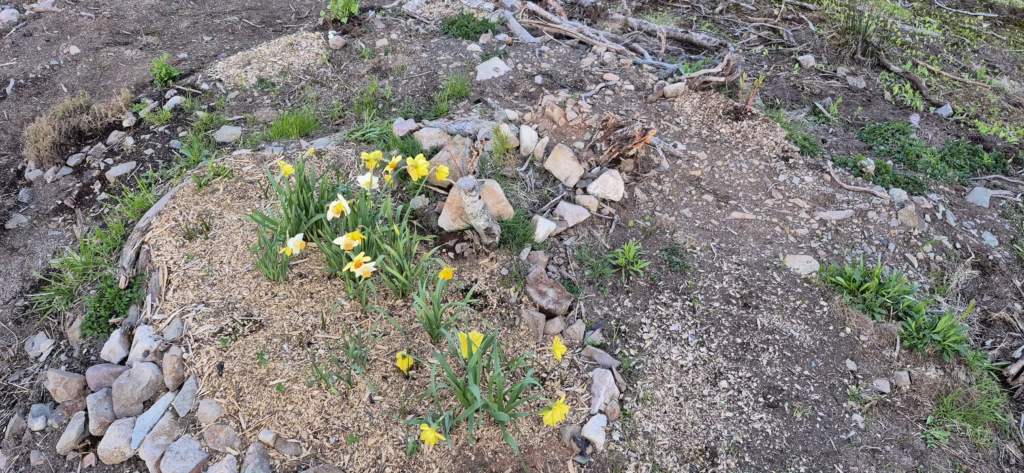
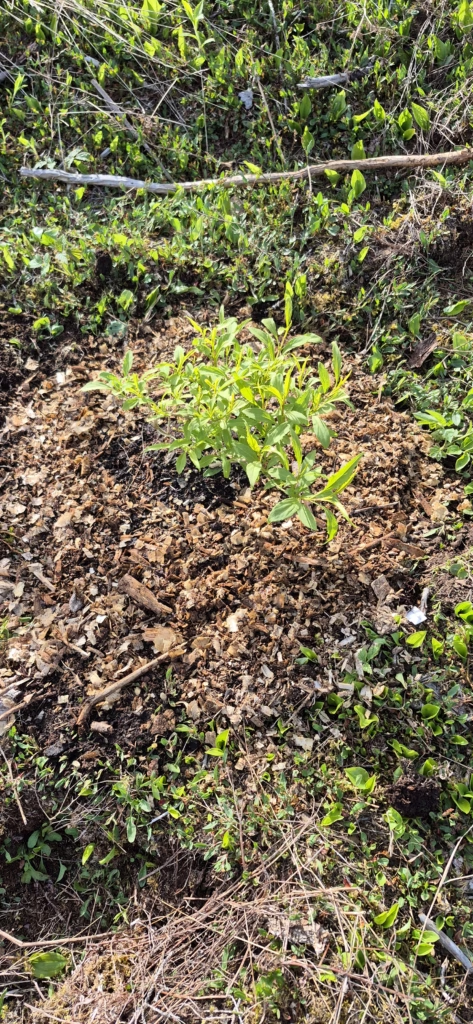

We try to apply this guild principle to all our plantings and reforestation efforts. Young trees, for example, get support from comfrey. Young shrubs are mulched to prevent direct overgrowth. Additionally, we have created a small spring flower ‘spiral’ to attract pollinators. Through these principles, the wild grass is replaced step by step with useful plants, without leaving the earth unprotected.
Sources & Further Reading
- Books:
- Bill Mollison & David Holmgren: Permaculture: A Designers’ Manual (1988)
- Toby Hemenway: Gaia’s Garden – A Guide to Home-Scale Permaculture (2009) – highly recommended for beginners
- Martin Crawford: Creating a Forest Garden (2010) – focus on temperate climates
- Sepp Holzer: Sepp Holzer’s Permaculture – Austrian perspective, alpine conditions
- Our eBook: Living Soil: Understanding and Using Earth – Soil health as the foundation of every guild, with chapters on mycorrhizae, actinomycetes, and soil organisms
- Further Reading on This Blog: Permaculture and Forest Gardens – the comprehensive overview of our entire system
Back to the main Page
Explore more Articles
more plants

Leave a Reply