
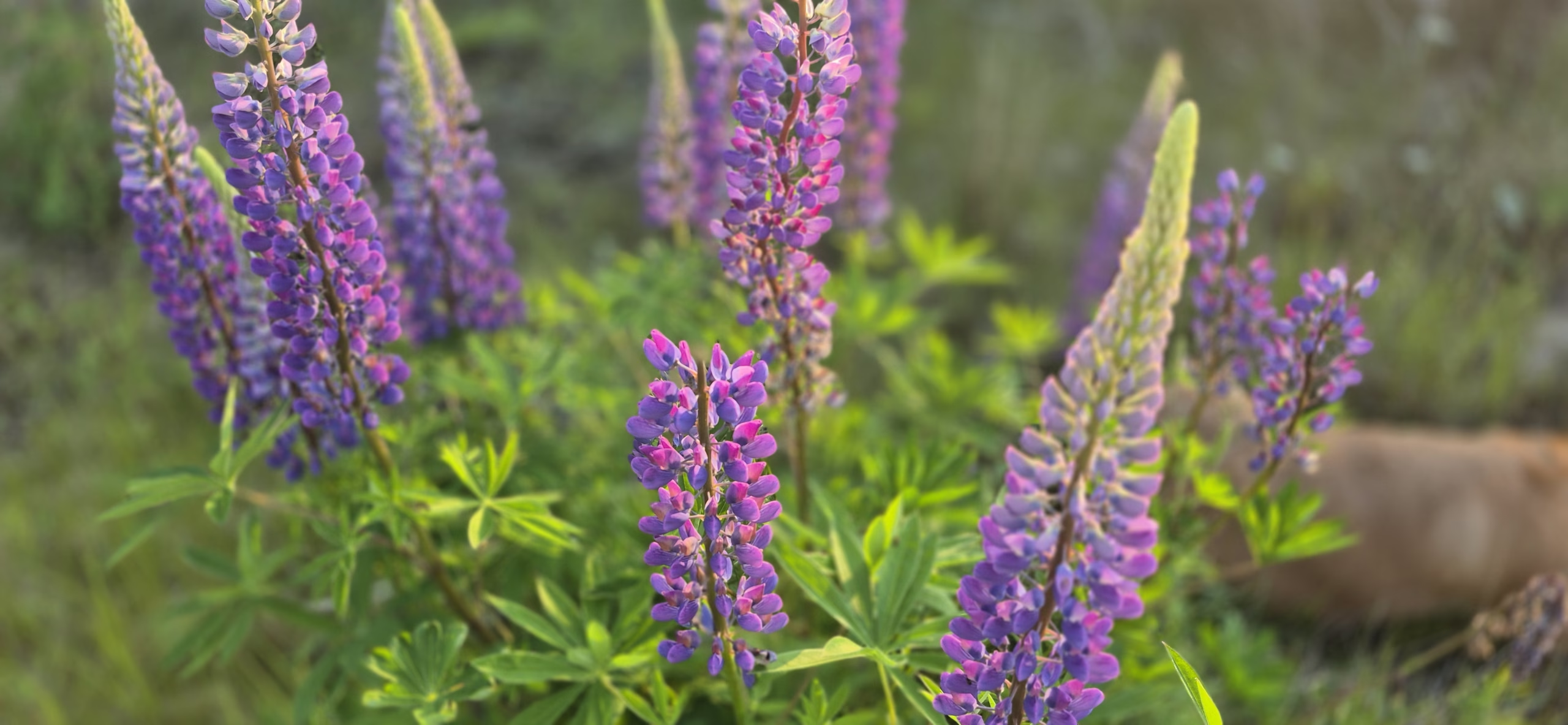
The lupine is a versatile plant that has found its place both as an ornamental plant and in agriculture.
The lupine (Lupinus spp.) is one of the most versatile plants in our gardens and fields. As an ornamental, it enchants with its magnificent flower spikes in blue, purple, white and yellow – as a green manure, it quietly and reliably improves any soil. What many people don’t know: its name comes from the Latin lupus (wolf), and in plant mythology it has been a symbol of strength, perseverance and hidden beauty for centuries.
This plant profile gives you all the practical facts: botany, identification features, growing conditions, uses and everything you need to know about toxicity.
Name
- German: Lupine
- English: Lupine / Lupin
- Latin: Lupinus spp. (Lupinus albus, Lupinus luteus, Lupinus angustifolius)
- Name origin: From Latin lupus (wolf) – the plant was considered a “soil devourer”
Plant Group / Family
- Family: Fabaceae (Legumes)
- Subgroup: Papilionoideae (Pea family)
- Related plants: Clover, beans, peas, vetches



Distribution
- Original origin: North and South America
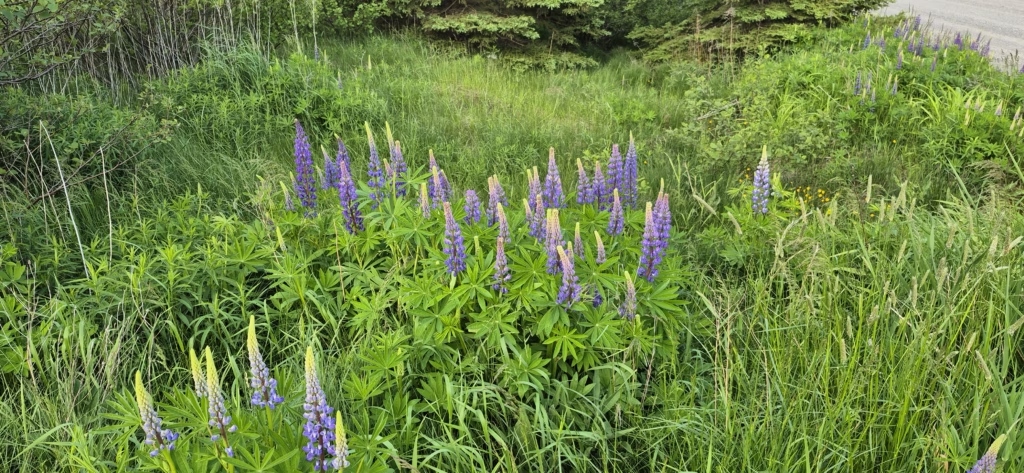
- Current distribution: Worldwide; especially in temperate climates of Europe, North America and Australia
Identification Features
- Height: 30–150 cm depending on species and location
- Leaves: Characteristically palmate with 5–15 lanceolate leaflets; leaves collect water droplets like a wheel – an unmistakable feature
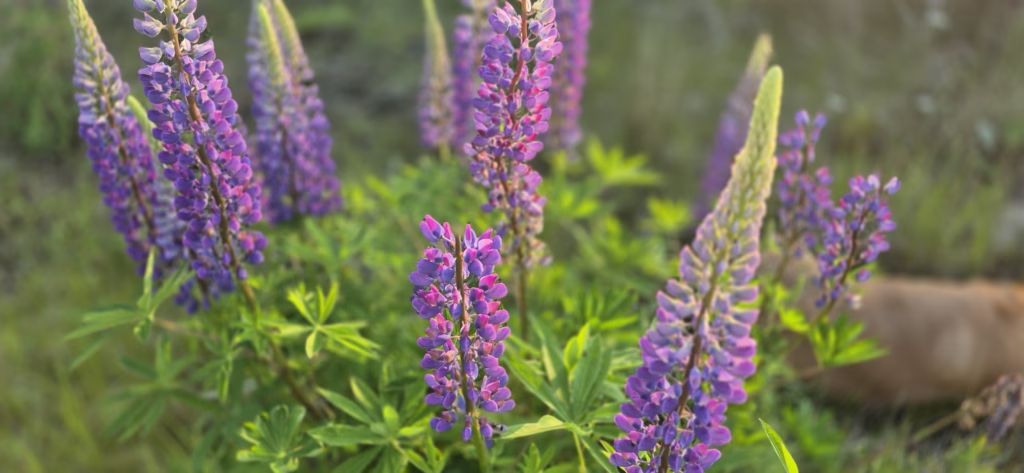
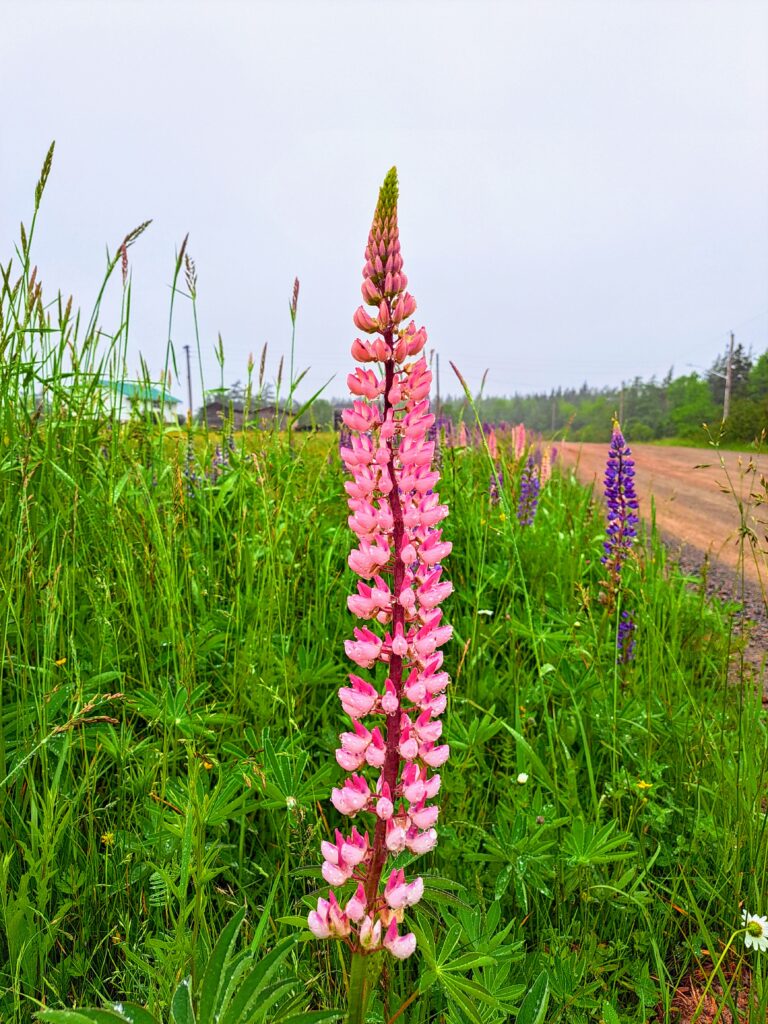
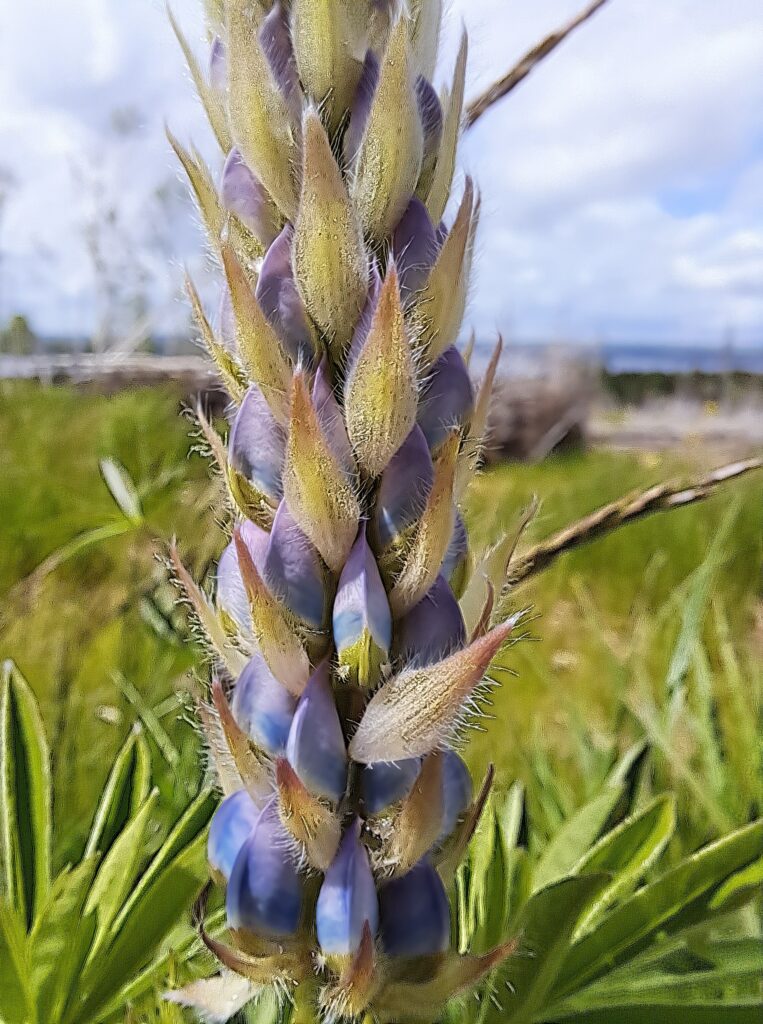
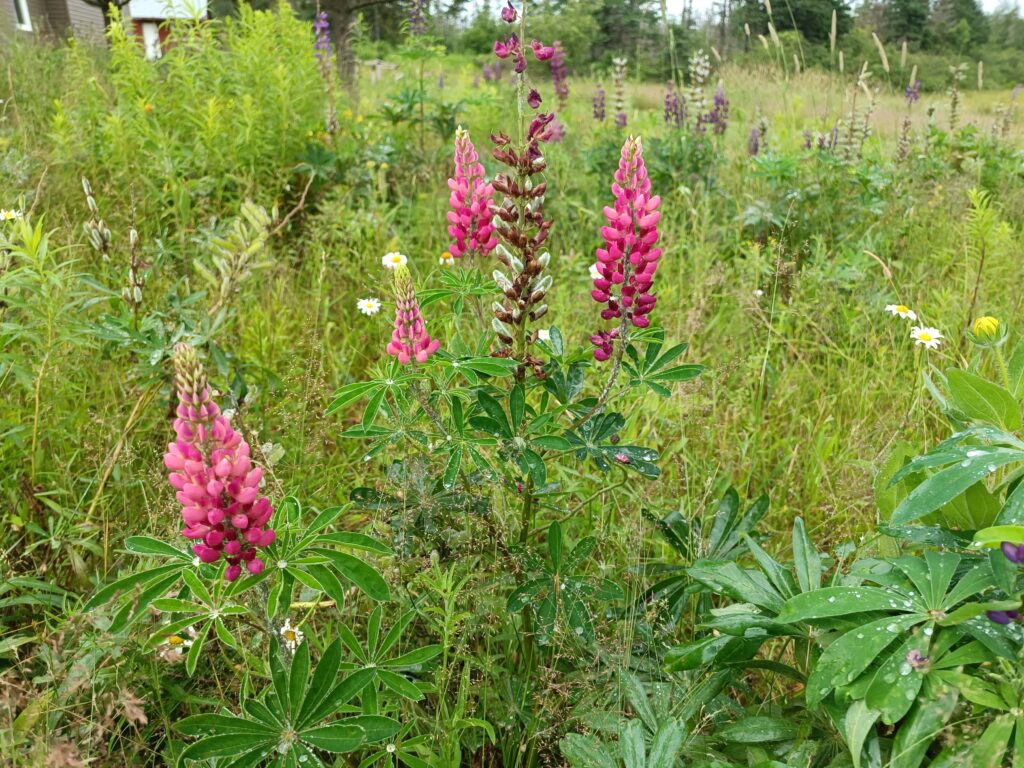
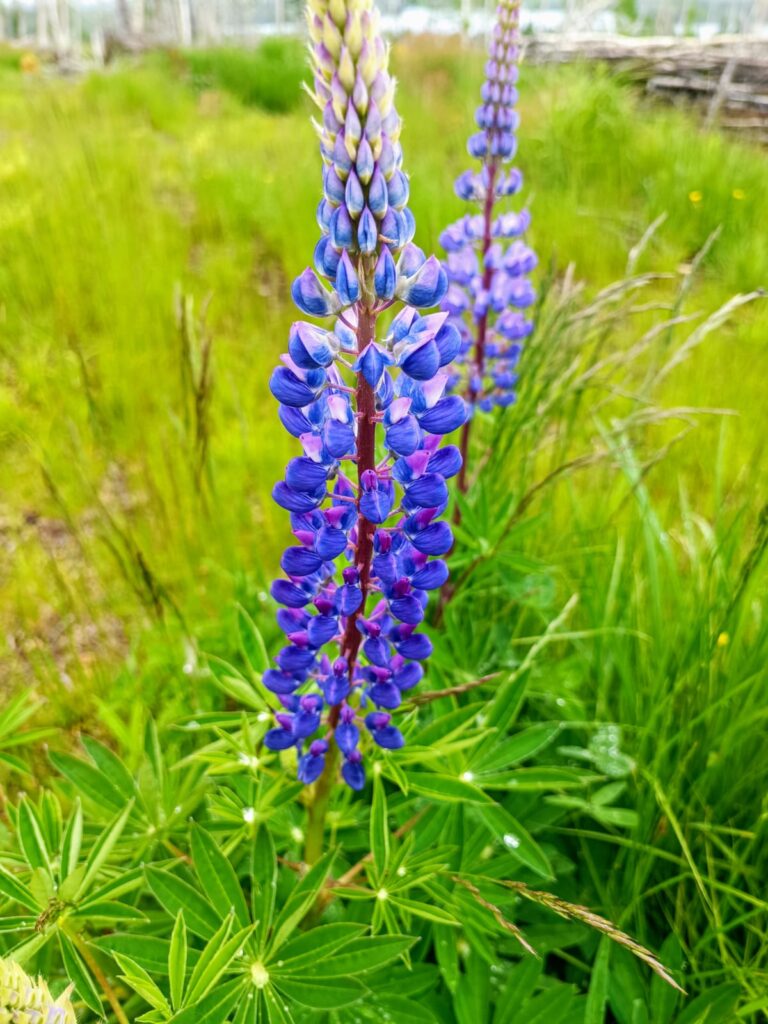
- Flowers: Dense spike-like flower clusters (racemes) that open from bottom to top; colour palette ranges from blue and purple through white and yellow to vivid red and pink
- Fruits: Hairy seed pods containing 3–12 seeds; split open when ripe
- Bark / Stem: Upright, usually slightly hairy, woody at the base in older plants
- Flowering season: May to July in temperate climates
- Special features: Characteristic nitrogen-fixing root nodules (Rhizobium bacteria); leaves move in response to light (paraheliotropism)
Uses
- Medicinal: Limited traditional use
- Lupine species play only a minor role in traditional medicine
- Historically, alkaloids were used as antiparasitic agents and to stimulate labour (obsolete today)
- Lupine seed flour is currently being researched for its prebiotic potential and effects on blood sugar regulation
- Important: Self-experimentation is strongly discouraged due to toxicity risks
- Culinary: High-protein food source (sweet lupines only!)
- Lupine seeds (certified sweet varieties only): Traditionally served as “tremoços” in Portugal and Spain – brined and eaten as a snack
- Lupine flour: High-protein flour alternative for bread, pasta and baked goods
- Lupine drink: Plant-based milk alternative, increasingly popular in Europe and North America
- Lupine pasta: High in protein and fibre; available ready-made or home-made from lupine flour
- Critical note: Only use certified sweet lupine varieties (Lupinus albus, L. luteus or L. angustifolius – sweet-bred strains). Never use seeds from wild or unknown garden lupines
- Ecological / Ornamental: Green manure, soil transformer
- Nitrogen fixation: Through Rhizobium bacteria in root nodules, lupines fix atmospheric nitrogen and make it available for subsequent plants – without any synthetic fertiliser
- When to incorporate: Just before or during flowering, when nutrient content is at its peak
- Method: Till under, or chop and leave as surface mulch
- Deep roots: Loosen compacted soils and make deeper nutrients accessible
- Pollinator magnet: Bumblebees and wild bees depend particularly on lupine nectar and pollen
- Pioneer performance: Colonises disturbed, poor or sandy soils where little else establishes
- Wildlife habitat: Several butterfly species (including various blue butterflies) depend on lupines as larval host plants
- Ornamental: Classic cottage garden plant
- One of the most popular perennial cottage garden plants, especially Russell lupines
- Spectacular in mixed borders alongside delphiniums, cranesbill geraniums and daylilies
- Available in almost every colour; bicoloured varieties are particularly striking
- Self-seeds readily – can naturalise under the right conditions
- Other uses:
- Crop rotation: Ideal pre-crop for nitrogen-hungry vegetables such as brassicas or potatoes
- Cover crop / winter green manure: Protects bare soil from erosion and nutrient leaching
- Animal feed: Sweet lupine seeds are a valued high-protein feed for livestock (especially pigs and poultry) – certified sweet varieties only
- Natural dyeing: Flowers can be used for gentle natural dyeing of wool and plant fibres; yields soft yellow-green tones
Toxicity
- For humans:
- Toxic parts: All parts of the plant, especially the seeds; toxic in wild and unknown varieties
- Toxic compounds: Quinolizidine alkaloids (mainly lupinine, sparteine, anagyrine)
- Symptoms: Nausea, vomiting, diarrhoea, rapid heartbeat, breathing difficulties; in severe cases respiratory paralysis
- Safe varieties: Only certified sweet lupine varieties contain low enough alkaloid levels for food use
- First aid: Call emergency services or poison control immediately. Do not induce vomiting. Do not give milk (increases absorption)
- For animals:
- Dogs: Very sensitive – even small amounts can cause serious poisoning; keep away from lupines
- Cats: Also sensitive; avoid contact with seeds and pods
- Sheep and cattle: “Lupinosis” – a liver disease caused by fungal-contaminated lupine seeds; a serious risk in agricultural contexts
- Birds: Generally unaffected by small quantities
- Horses: Avoid – sensitive to quinolizidine alkaloids
Risk of Confusion
- Similar plants:
- Sweet lupine (certified garden variety) – EDIBLE (with caution)
Habitat: Only in cultivation; available from garden centres and seed suppliers
Key feature: Visually identical to wild lupine; only the label and source distinguish them
Distinction: Low alkaloid content through selective breeding; certified varieties only for food use
Caution: Never eat seeds from unknown sources, even if they look like sweet lupines - Laburnum (Laburnum anagyroides) – HIGHLY TOXIC
Habitat: Garden shrub and small tree; often planted as ornamental
Key feature: Yellow pendant flower clusters; similar overall impression to yellow lupine
Danger: All parts highly toxic – one of the most poisonous garden plants in Europe
Distinction: Laburnum is a tree/shrub with trifoliate leaves; lupine is an herbaceous plant with palmate leaves - Wild Indigo (Baptisia spp.) – MILDLY TOXIC
Habitat: Occasionally in gardens as an ornamental; native to North America
Key feature: Similar upright flower spikes, often in blue or white; inflated seed pods
Distinction: Leaves trifoliate (not palmate); inflated pods are distinctive
Caution: Mildly toxic; not for consumption
Additional Information
- Care:
- Lupines are relatively undemanding once established in the right location. Perennial garden lupines (Russell lupines) benefit from deadheading – cutting spent flower spikes back to the base encourages a second flush of flowers. In very exposed positions, tall varieties may need staking.
- Growing Conditions:
- Soil: Well-drained, slightly acidic to neutral (pH 5.5–7.0); no waterlogging
- pH: Slightly acidic soils preferred; lupines dislike chalky or strongly alkaline conditions
- Light: Full sun to partial shade; best flowering in full sun
- Moisture: Moderate; water regularly during dry spells, never allow roots to sit wet
- Special note: Perennial garden lupines to approx. -20°C; annual species are frost-sensitive
- Cultivation Notes:
- Sowing: Direct sow March–May; scarify or soak seeds 12 hours before sowing → significantly improves germination
- Transplanting: Lupines develop a deep taproot early – transplant only as young seedlings
- Deadheading: Remove spent flower spikes promptly → encourages reblooming in perennial varieties
- Self-seeding: Lupines self-seed readily; remove pods before they split to control spread
- Division: Perennial lupines are difficult to divide; propagation from cuttings or seed is easier
- Special notes:
- Not for alkaline soils: Lupines really struggle on chalky or lime-rich soils – yellowing leaves are the warning sign
- Short-lived perennials: Russell lupines perform best in years 2–3 and may need replacing after 4–5 years
- Root nodules: If you dig up a lupine, look for the small pink nodules on the roots – these are the nitrogen-fixing bacteria at work
- Companion plants: Excellent companion for roses (improves soil nitrogen), brassicas (pre-crop) and ornamental grasses
Recipes
Lupine Hummus (from Sweet Lupine Seeds)
Equipment
- Large pot
- colander
- Blender or food processor
- Mixing bowl
Ingredients
- 200 g dried sweet lupine seeds certified
- 2 tbsp tahini sesame paste
- 2 tbsp olive oil plus extra for serving
- 1 clove garlic
- Juice of 1 lemon
- ½ tsp ground cumin
- Salt and pepper to taste
- 50 –100 ml cooking water reserved from lupines
- Optional: paprika and fresh herbs for serving
Instructions
- Soak lupine seeds for 12 hours or overnight in cold water. Drain and rinse.
- Cook in fresh unsalted water for 35–45 minutes until tender. Reserve the cooking water.
- Drain the lupines and allow to cool slightly.
- Place lupines, tahini, olive oil, garlic, lemon juice and cumin in a blender.
- Blend until smooth, adding cooking water tablespoon by tablespoon until you reach your desired consistency.
- Season generously with salt and pepper.
- Serve drizzled with olive oil, sprinkled with paprika and fresh herbs.
Notes
- Sweet lupines only: Never use seeds from wild or unknown garden varieties
- Cooking time: Lupine seeds can take longer than chickpeas – taste-test for doneness
- Texture: For an extra smooth result, rub off the seed skins after cooking
- Protein content: Lupine seeds contain up to 40% protein – significantly more than chickpeas
- Storage: Keeps refrigerated for up to 4 days
- Variation: Add roasted red pepper or smoked paprika for a different flavour profile
Lupine Flour Flatbreads
Equipment
- Mixing bowl
- Rolling Pin
- Non-stick frying pan or cast iron skillet
Ingredients
- 100 g lupine flour certified sweet lupine
- 50 g tapioca starch or rice flour
- ½ tsp salt
- ½ tsp ground cumin optional
- 120 –140 ml warm water
- 1 tbsp olive oil
Instructions
- Mix lupine flour, tapioca starch, salt and cumin in a bowl.
- Add olive oil and gradually add warm water, mixing until a smooth, pliable dough forms.
- Divide into 4 equal portions and roll out thinly on a lightly floured surface.
- Heat a dry frying pan over medium-high heat.
- Cook each flatbread for 2–3 minutes per side until lightly spotted and cooked through.
- Keep warm wrapped in a clean cloth.
Notes
- Flavour: Lupine flour has a slightly nutty, mild flavour that pairs well with herbs and spices
- Binding: Tapioca starch helps with texture; potato starch is a good substitute
- Protein boost: Add 1 tbsp ground flaxseed for additional nutritional value
- Storage: Best eaten fresh; keeps wrapped for 1 day
- Variation: Add dried herbs (rosemary, thyme) or a pinch of chilli to the dough
Medical Disclaimer
The recipes and information provided here are for informational purposes only and do not replace the advice of a doctor or other healthcare professional. Lupine seeds can cause serious allergic reactions in people with peanut allergies (cross-reactivity). Always consult a doctor if you have health concerns or are unsure about anything. In case of suspected poisoning, contact emergency services immediately.
Further Reading
- The Magic of Lupine
- Red Clover – Plant Profile (also Fabaceae, nitrogen fixer, pollinator plant)
- Sea Buckthorn – Plant Profile (pioneer plant, nitrogen fixation)
- The Art of Mulching
- Soil Lives, Everything Thrives
Leave a Reply