
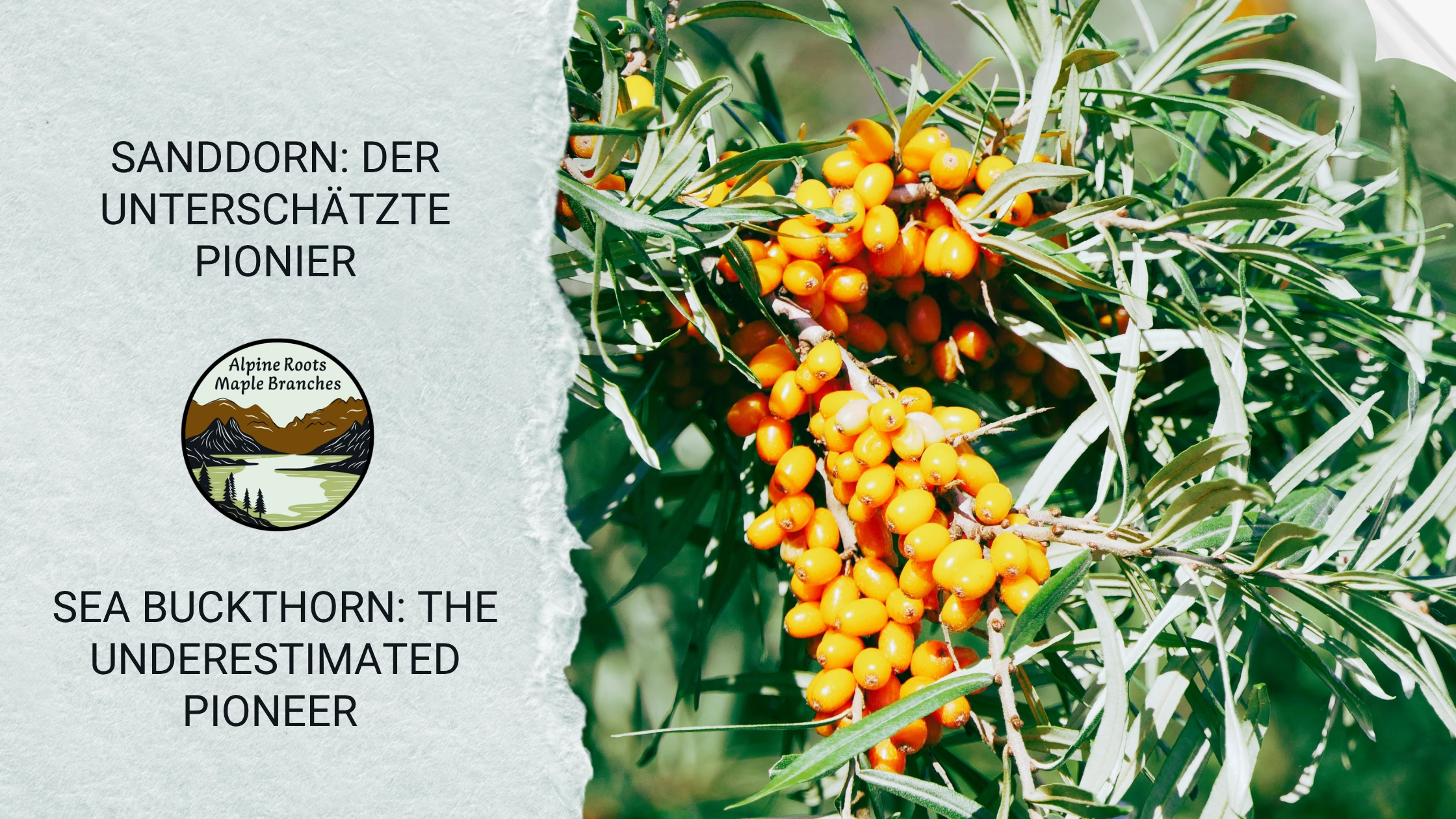
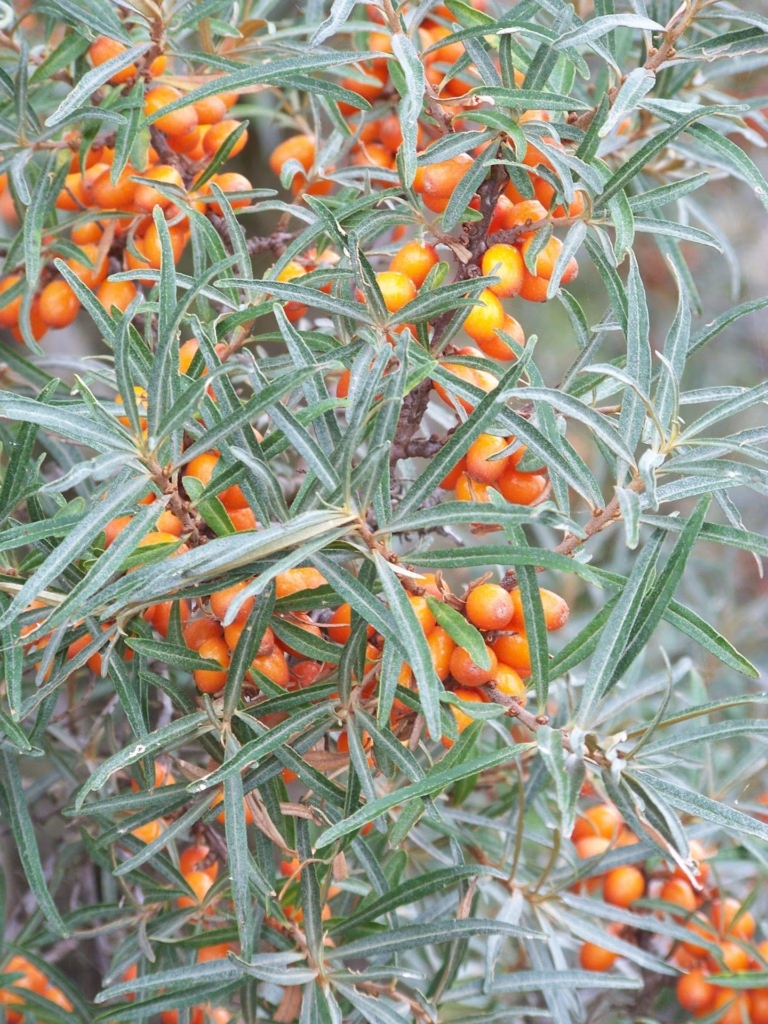
Sea buckthorn is one of those plants you completely underestimate at first glance. With its silvery-green leaves and vivid orange berries, it looks like a pretty but unremarkable wild shrub by the roadside. But its real value to us – especially in regenerative agriculture – only becomes clear when you look more closely and understand what this plant actually does.
It is a true pioneer – a plant that gets to work where the soil is poor, loose or even contaminated. Here on our property in Cape Breton, it has long become an indispensable partner, showing us that even difficult land is no reason to give up.
For anyone who wants to go deeper – identification features, risk of confusion, cultivation details and recipes – our Sea Buckthorn Plant Profile has all of that. This post takes a different angle: what sea buckthorn does to the soil, what science says about its effects on the human body – and why we wouldn’t want to be without it.
It's not an ornamental shrub and it's not a miracle cure. Sea buckthorn is a system player – and that's exactly what makes it so valuable.
More Than Just a Pioneer – A System Player
In our project we learned early on: when the soil doesn’t immediately “cooperate”, you need plants that take the first step. Sea buckthorn is that plant. It makes do with very little, uses its roots to anchor loose ground, and helps us slowly turn a piece of land back into a living system.
What fascinates us most: sea buckthorn doesn’t only work above ground. Its deep-reaching roots – sometimes up to 3 metres down – unlock nutrients from soil layers other plants never reach. At the same time, it forms a symbiosis with actinomycetes that fix atmospheric nitrogen. It is therefore not only a stabiliser but also a nutrient supplier for the entire system.
Actinomycetes – The Silent Workers in the Soil
Actinomycetes sound like a biology lesson, but they are among the most fascinating actors in soil life. The name is a little misleading: actinomycetes are actually bacteria that branch under the microscope like fungi – hence the popular name. They belong to the genus Frankia and live in small nodules on the roots of sea buckthorn and a few other pioneer shrubs. Anyone who wants to dive deeper into the world of soil organisms will find a dedicated chapter in our eBook Living Soil.
What they do there is remarkable: they fix atmospheric nitrogen – the nitrogen that makes up almost 80 percent of the air around us but is completely inaccessible to most plants. Frankia converts this airborne nitrogen into a form that sea buckthorn can absorb and pass on.
This has far-reaching consequences for the entire soil ecosystem:
- Sea buckthorn can thrive on nitrogen-poor soils where other shrubs give up
- When leaves fall and decompose, the fixed nitrogen is released into the topsoil – a natural fertiliser for neighbouring plants
- Over the years, sea buckthorn actively changes the soil chemistry of an area to favour more demanding successor plants
- The combination of deep roots and Frankia symbiosis makes it the ideal precursor in a permaculture succession
It is this invisible network beneath the surface that turns sea buckthorn from a simple shrub into a true ecosystem engineer.
What Sea Buckthorn Really Does – Soil, Science and the Human Body
Sea buckthorn is not a plant you put in the ground and forget about. It works – quietly, continuously and on multiple levels at once. What it does to the soil, what science knows about its effect on contaminants, and what current research reveals about its benefits for human health – for us these things belong together. Because whoever truly understands sea buckthorn stops seeing it as a shrub and starts seeing it as a system.
Three Qualities That Count
Before we get to the research, it’s worth understanding the fundamental ecological services this plant provides – because they are the foundation for everything else.
- Deep Nutrient Pumping – From Below to Above
- What the actinomycetes supply in nitrogen, the deep roots complement with minerals: potassium, phosphorus, manganese and iron are drawn up from soil depths that surface-rooting plants never reach. When sea buckthorn leaves fall and decompose, these minerals land directly in the topsoil – a continuous cycle that runs without any effort on our part.
- For us there is an additional factor: our property has extremely dense, compacted clay soil that makes it hard for roots to penetrate and for new plants to establish. Sea buckthorn is one of the few woody plants that works its way through such soils – and in doing so, gradually loosens the structure over time.
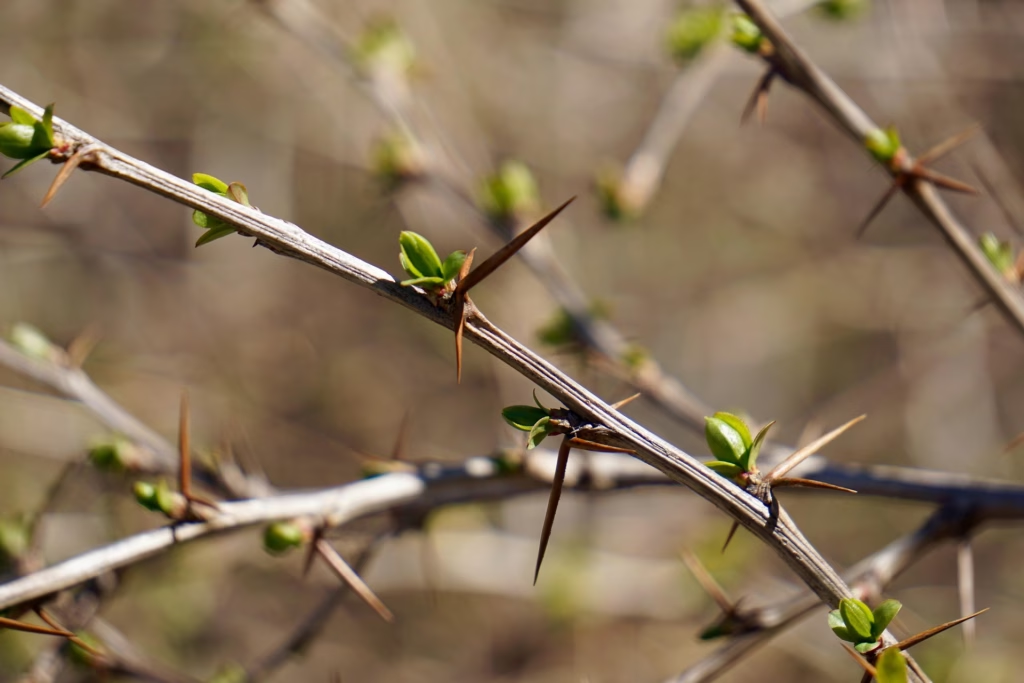
- We also have a strong population of white-tailed deer and rabbits on the property – a real challenge for most cultivated plants. Sea buckthorn handles this in its own way: the thorny branches make it largely unappealing to deer and rabbits as a food source, while still providing dense cover. The prunings are correspondingly valuable as mulch: they return exactly the nutrients that were previously drawn up from depth – making them available to neighbouring shallow-rooted plants.
- Erosion Control and Soil Anchoring
- With its runner-forming lateral roots – which can spread up to 12 metres horizontally – sea buckthorn reliably anchors even loose, sandy soils. On exposed slopes and coastal locations where wind and water erode the surface, it is irreplaceable. No labour-intensive intervention, no irrigation system – it handles it structurally.
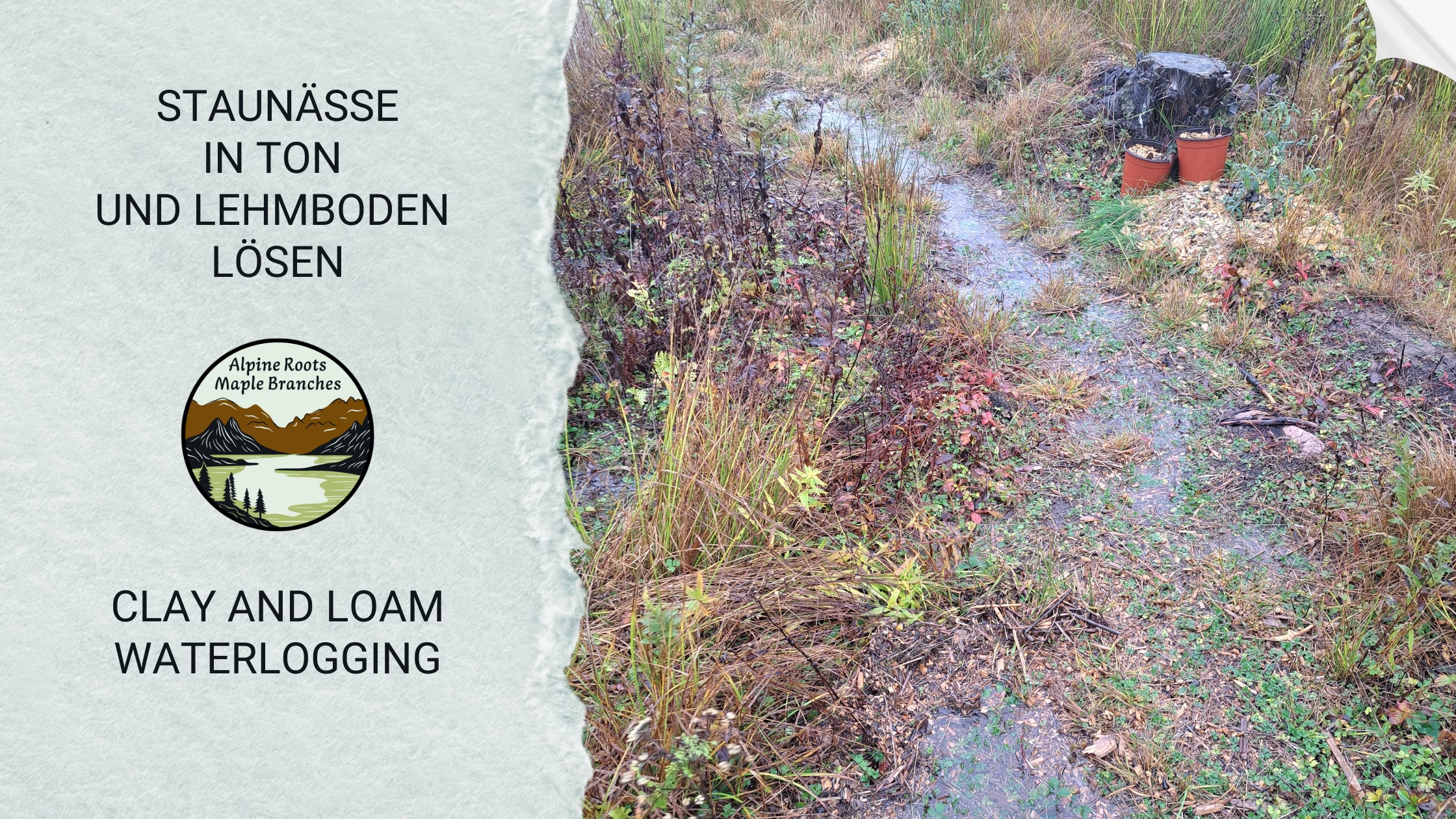
- For us personally, another aspect is at least as relevant: our soil is dense, compacted clay – a swamp in the rain, concrete in the drought. What sea buckthorn does here over the long term is less visible but decisive: its deep roots penetrate compacted layers and, as individual root sections naturally die off, leave fine channels in the soil. These channels drain excess water and allow oxygen to penetrate deeper – both prerequisites for soil life to establish itself. It’s not a quick fix, but over years the soil structure changes noticeably – from a compact mass to a system with pores that can absorb and release water.
- Climate Resilience and Biodiversity
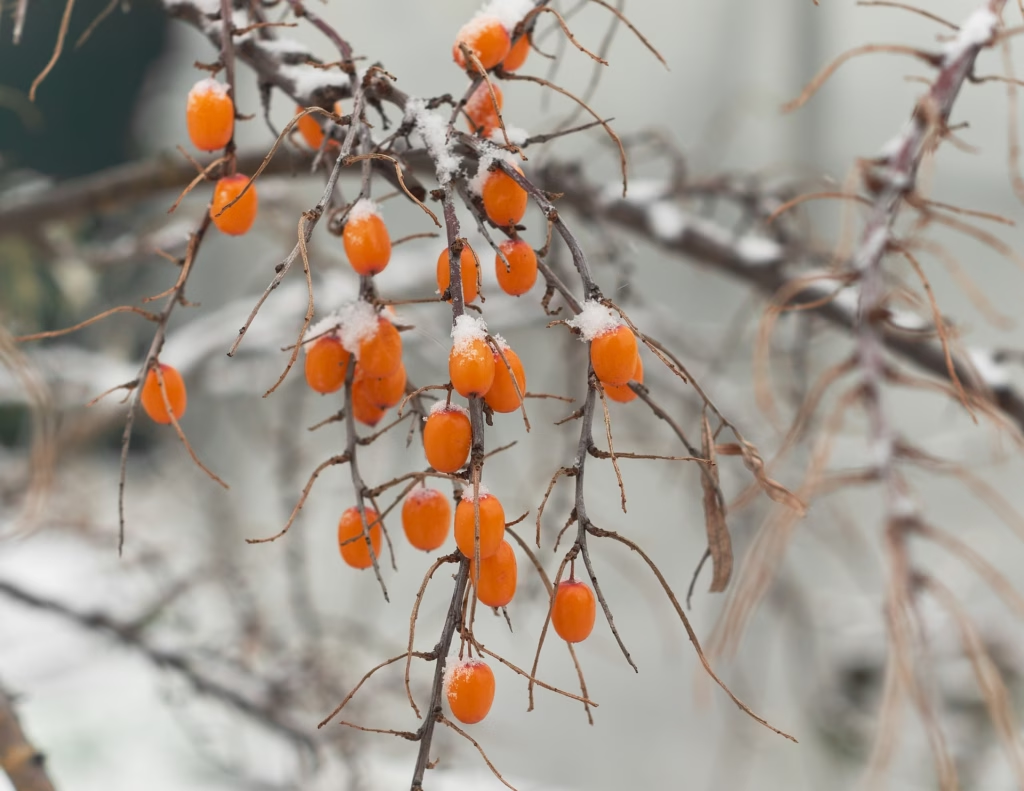
- Hardy to -35°C, drought-tolerant, salt-resistant – sea buckthorn seems made for the challenges of climate change. Here in Cape Breton, where Atlantic winds and hard winters set the conditions, we appreciate this every day. At the same time, its thorny branches create nesting sites and shelter for small birds, and its berries often hang well into winter – a food source when almost nothing else is available. Sea buckthorn gives back more than it takes.
Contaminated Soil: What the Studies Show
Our property is near the former Stirling Mines in Cape Breton – and that’s no minor detail. In Canada, new mining projects are currently being approved at an increasing rate, and with that comes the same question that occupies many people in rural areas – the same one we think about every day:
How do we help the earth endure this? How do we support natural regeneration processes instead of just watching human-made damage persist? For us this is not an abstract ecological debate – it is the soil we live and work on.
Against this backdrop, we have looked closely at which plants can actually make a difference. Can sea buckthorn “clean” heavy metals from the soil? The answer is more complex than you might hope: sea buckthorn is not a miracle filter. It is rather an intelligent stabiliser.
Scientific studies on former mine tailings and industrial sites show: sea buckthorn preferentially stores heavy metals in its roots rather than transporting them into leaves and fruit. This prevents contaminants from spreading through the food chain, while simultaneously stabilising the contaminated area both mechanically and biologically.
Particularly interesting: in combination with arbuscular mycorrhizal fungi, this capacity is significantly enhanced.
Arbuscular mycorrhizal fungi are soil fungi that penetrate the root cells of plants and form fine, tree-like branching structures inside – the so-called arbuscles, from Latin “arbuscula”, meaning small tree. Through this network, plant and fungus exchange nutrients. The plant supplies sugars, the fungus unlocks minerals and – as studies increasingly show – helps to bind and immobilise heavy metals in the root zone. Inoculation in this context simply means: the plant is deliberately treated with fungal spores at planting time, so that the symbiosis can develop from the very start. Learn more about mycorrhizal fungi and their role in the soil in our eBook Living Soil.
A study on magnetite tailings ponds in northern China showed that sea buckthorn measurably improved soil quality and microbial community structure – even under difficult conditions. Another study documented that male and female plants respond differently to lead and zinc stress, and that fungal inoculation significantly increased pollutant binding in both.
In practice this means: using sea buckthorn on contaminated land creates stability and a starting point for regeneration – but not rapid detoxification. The soil needs time, and sea buckthorn gives it the framework to do so.
We therefore combine it with sunflowers and mustard as true phytoextractors – plants that actively accumulate heavy metals in their above-ground biomass, removing contaminants from the site when harvested and disposed of properly. We add raised beds with clean soil for our food production, regular mulching and clear zoning: sea buckthorn in buffer zones, production in secured areas.
Sea Buckthorn and the Human Body
Anyone who has dived as deep into the ecological properties of this plant as we have will inevitably ask the next question: What does it actually do to us? What genuinely surprised us in our research: sea buckthorn is in science now far more than a topic for gardeners and foragers. A comprehensive review published by PMC/NIH (2025) shows how many body systems can benefit from the plant’s active compounds.
Berries, leaves and seeds each have their own compound profiles. The fruits are rich in phenols – secondary plant compounds with antioxidant activity –, vitamins, fatty acids and carotenoids, the orange-red pigments. The leaves are dominated by flavonoids and terpenes, both groups of plant compounds with documented anti-inflammatory properties. The seeds supply primarily valuable fatty acids. Together they exert a remarkably broad effect:
- For the heart and vessels: Flavonoids and unsaturated fatty acids positively influence blood lipid levels – multiple studies document measurable improvements in elevated cholesterol and triglyceride values.
- For the liver: Antioxidants in sea buckthorn protect liver cells from oxidative stress – the damage caused by free radicals in the body.
- For the gut: Sea buckthorn has long been used traditionally for stomach complaints and mucosal inflammation. Newer studies confirm what folk medicine knew for years.
- For the skin: Oil from the pulp and seeds supports wound healing and strengthens the natural skin barrier – with documented effectiveness for burns and eczema.
- For the immune system: Sea buckthorn is among the most vitamin-C-rich plants known. Add carotenoids and tocopherols – vitamin E compounds – that support the immune system on multiple levels.
- Antibacterial: Extracts from various plant parts show activity against a range of bacterial strains – an area where research is just beginning to explore the potential.
- For the nervous system: Early studies suggest that certain flavonoids from sea buckthorn may influence how nerve cells generate and transmit electrical signals – so-called electrophysiological activity. Researchers are specifically investigating whether these compounds can alter signal transmission between nerve cells. The research is still young, but the direction is interesting.
- On the topic of cancer: Laboratory studies show that sea buckthorn extracts have a so-called antiproliferative effect – meaning they slow the uncontrolled growth of cancer cells. That sounds impressive, and it is. But laboratory results are not the same as effects in a living human body – a long road lies between such findings and real therapies. We mention it because it shows just how broad scientific interest in this plant has become.
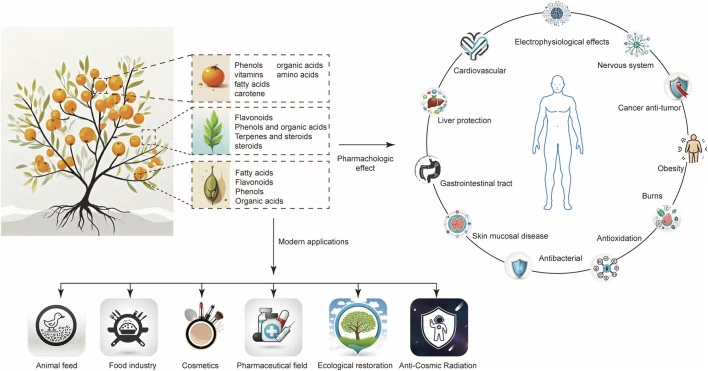
Wirkstoffe aus Früchten, Blättern und Samen von Sanddorn und ihre pharmakologischen Wirkungen. Quelle: Ethnopharmacology, phytochemistry, and pharmacology of sea buckthorn – PMC/NIH 2025
Important: most studies are still preclinical or based on animal models. But the evidence is impressive enough to take sea buckthorn seriously as a genuine functional plant – not as a miracle cure, but as a well-documented part of a healthy diet and a thoughtful garden system.
The Harvest – and What’s Really in This Plant
The berries ripen from August onwards but can often be harvested well into December. Anyone wanting to process larger quantities quickly faces the question: how do you get to the fruit without shredding your hands on the thorny branches?
The best-known method – cutting branches, freezing them, then knocking off the berries – sounds practical, but has two drawbacks: it takes up a lot of freezer space and uses energy. On top of that, heavy cutting damages the shrub, because sea buckthorn flowers on the previous year’s wood – cut too much and you risk a weaker harvest the following year.
There are good alternatives though:
- Berry comb or berry fork: A simple tool available from garden centres – or a sturdy table fork in a pinch. Gently bend the branch down, comb from base to tip, and the berries fall into a bucket below. No freezing needed, no space required.
- After the first frost: Once a light overnight frost has lightly frozen the berries, they come off the branch much more easily. Lay a tarpaulin under the shrub, tap the branches gently with a wooden stick – the berries fall off. The frost does what the freezer would otherwise do, but right there at the shrub.
If you do cut branches, the rule is: selective pruning rather than indiscriminate cutting. Dead or diseased shoots, branches growing strongly inward that shade the crown, and shoots that have already been harvested – these can be cut back by a third after harvest to stimulate new growth. Healthy, current-season shoots should be left alone – they will bear the fruit next year.
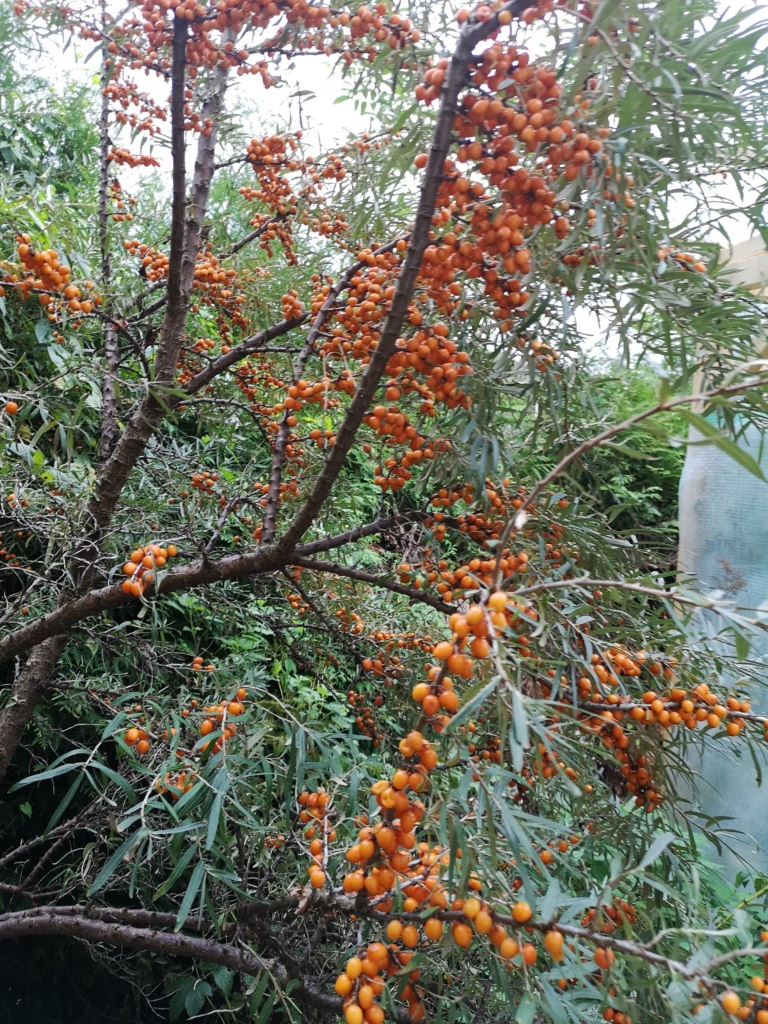
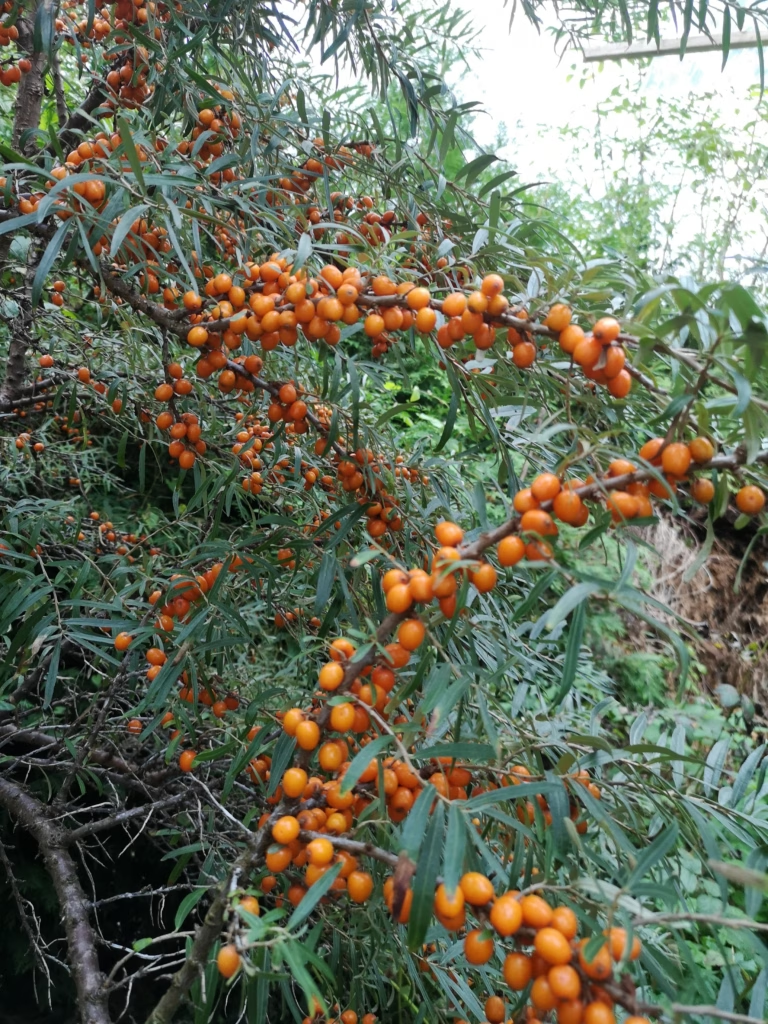
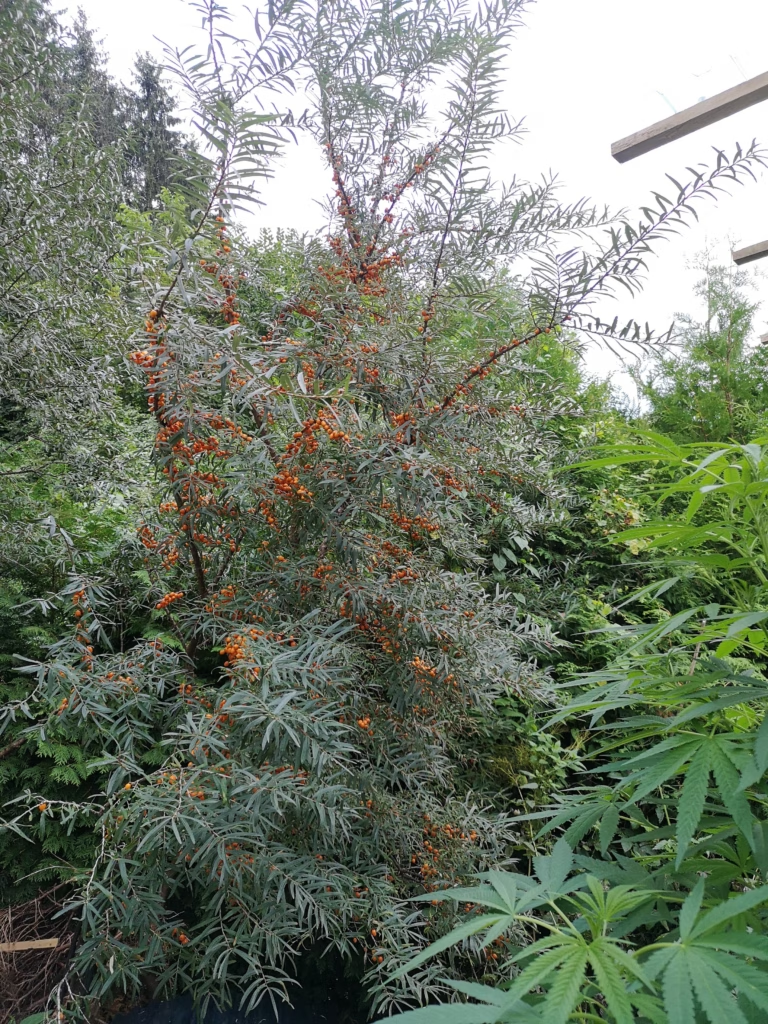
What many people don’t know: sea buckthorn berries are one of the few fruits to contain oil both in the pulp and in the seeds – a botanically rare trait. The seed press-cake yields a valuable seed oil rich in omega-6 fatty acids and fat-soluble vitamins. The pulp oil, extracted from the skins, is deep orange due to its high carotenoid content – and contains the characteristic omega-7 (palmitoleic acid), a fatty acid to which a particular role in skin regeneration is attributed.
A note that often comes up: the itching powder from childhood comes not from sea buckthorn but from rosehip. Both carry orange-red berries in autumn and are often mentioned in the same breath. With rosehips it’s the tiny hooked hairs on the seeds that cause the legendary itch when rubbed into a collar. Sea buckthorn seeds are smooth – but rich in oil and genuinely valuable.
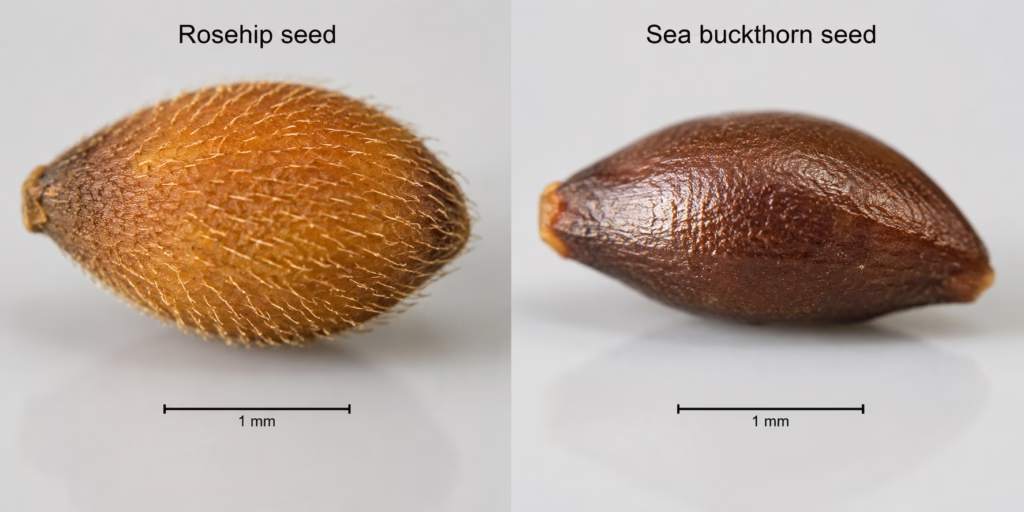
Left: Rosehip seeds with the typical hooked hairs that cause the itching. Right: Sea buckthorn seeds – smooth, oil-rich, valuable. Image: AI-generated (DALL-E / OpenAI)
Recipes for juices, jellies, berry powder and teas – with exact quantities, equipment lists and dosage notes – are all in the Sea Buckthorn Plant Profile.
Our Practical Tip: The 3-Zone Strategy
Based on our experience here in Cape Breton, we recommend a zoned approach – especially where soil quality varies or contaminated areas are present:
Zone 1 (Production area): Main crops in clean soil – raised beds, greenhouse, intensive vegetable production. Sea buckthorn does not belong here.
Zone 2 (Buffer zone): Sea buckthorn as a living fence and windbreak, combined with other robust shrubs. This is where we harvest the berries.
Zone 3 (Regeneration area): The problem areas, where sea buckthorn works as a pioneer and gradually improves soil quality. No food production, but active soil investment.
What We’ve Learned: Patience Is the Key
Soil regeneration is not a sprint, it’s a marathon. And honestly, we are still right at the beginning.
Our cuttings (taken from our grown plants in Austria) have only been in the ground for a year – barely 20 cm tall – and we don’t even know yet whether they survived the winter. We can’t report from personal experience what sea buckthorn does to our soil. That would be a lie, and that’s not our style.
What we can report: we have researched this plant intensively, because the questions around our land – the heavy clay soil, the proximity to the former Stirling Mines, the increasing mining activity in the region – don’t let us go. The science gives us reason for hope, and the decision to make sea buckthorn part of our regeneration strategy feels right. The real proof is still to come.
Sometimes the first step toward healing a piece of land is simply covering it, leaving it in peace, and giving it a plant that grows with the challenges. Whether sea buckthorn is exactly that plant for us – the next few years will tell. We’ll keep you posted.
Sources & Further Reading
Back to the main Page
Explore more Articles
more plants
Leave a Reply