
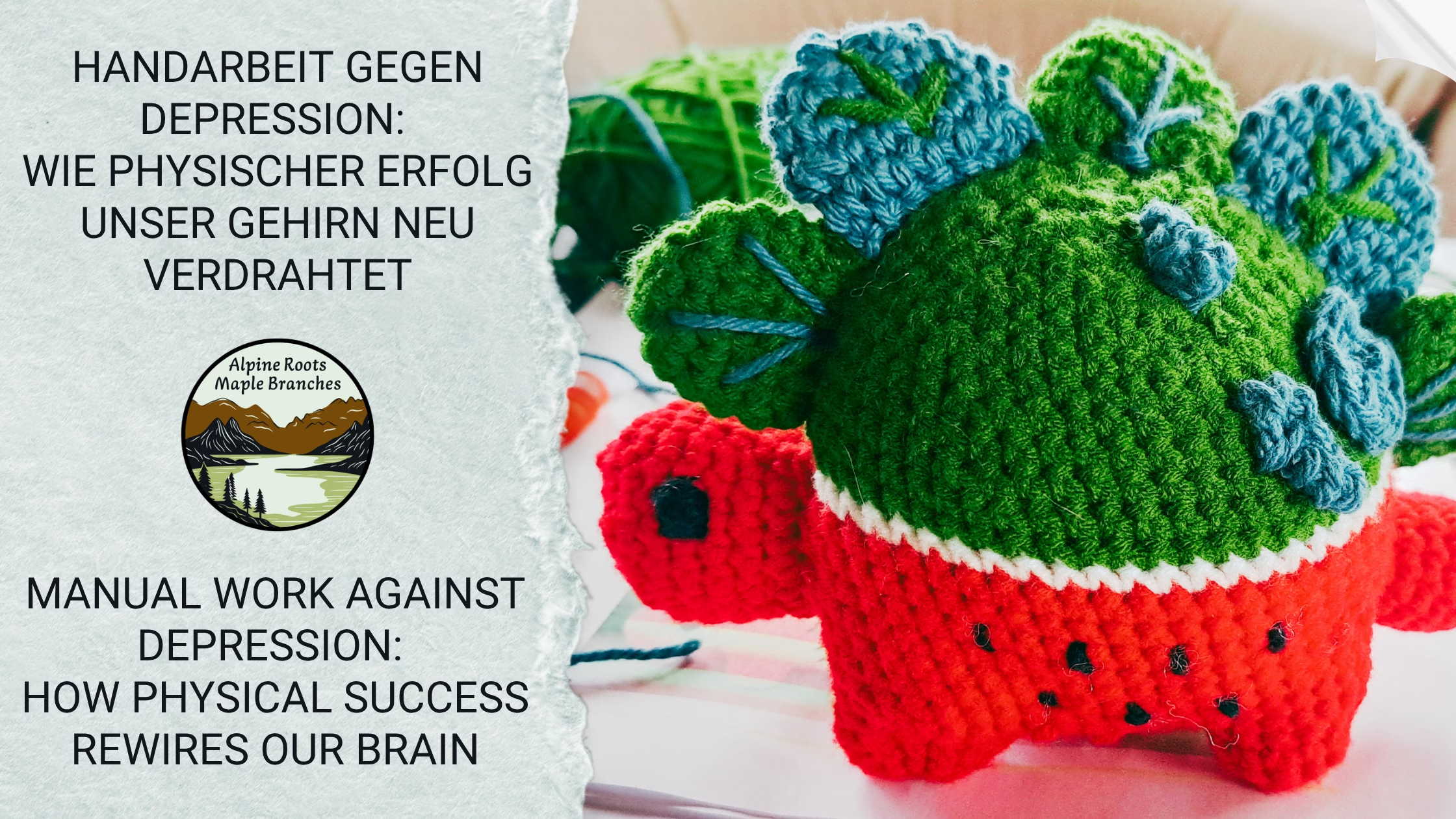
When the depressive heaviness settles over daily life like a thick fog, the connection to reality often fades. Everything becomes abstract, distant, and strangely meaningless. In these phases, thinking about problems helps very little – one must “grasp” them, in the truest sense of the word. In doing so, we must not ignore that in the deepest darkness, simply leaving bed represents an almost insurmountable task. The path to the bedroom door can feel like a marathon for which one has neither the training nor the equipment.
Yet, this is precisely where healing through doing begins: It is not about saving the world immediately, but about grounding one’s own nervous system through the smallest physical actions. Whether it is kneading a heavy bread dough or the rhythmic guiding of a crochet hook: work that delivers a visible result is a powerful tool for reclaiming one’s own agency in a world that increasingly forces us into passivity.
Manual work is lived creative power: By shaping matter, we prove our own efficacy to our brains and reconnect with ourselves.
The Reward Circuit: Why Our Brains Must See “Results”
When you are stuck in depression, the brain often feels like an engine lacking fuel. You know theoretically what you should do, but the spark doesn’t ignite. To restart this engine, we must understand how our internal control system works: Our brain is a highly efficient analytical organ that constantly scans the environment for experiences of success. It permanently calculates the ratio between the effort we expend and the yield we achieve.
The problem of our time is that we often invest hours without our brain registering a real “result.” Answering 50 emails, moving digital files, or endless scrolling through social feeds are non-tangible results for our biological system. There is no physical resistance, no texture, no scent, and no finished object to hold in one’s hands at the end. For an analytical organ programmed for physical reality, this digital doing remains invisible.
In a depressive phase, the system therefore reaches a radical conclusion: Since no biologically usable result is in sight, the brain switches into an extreme energy-saving mode. It refuses to release drive hormones because the connection to the material world is severed. In this sense, depression is not a “defect” but the logical reaction of a system that no longer receives feedback on its own efficacy. In neurobiology, there is a specific mechanism for this vital adjustment called the Effort-Driven Reward Circuit.
The Biology of Success: Why Our Brains Need the Reward Circuit
Literally translated, the Effort-Driven Reward Circuit means “effort-controlled reward circuit.” It is a neural highway that directly links physical effort with our reward center. Developed through evolution to motivate us to survive, this ancient program is deeply anchored in the striatum and the prefrontal cortex – those areas responsible for action planning and satisfaction. When our ancestors caught prey or dug up a nutritious root, the system released neurochemical rewards to secure energy for the next day.
In our modern world, however, this circuit is massively disrupted. We invest enormous mental energy in front of screens or in complex social structures, but the analytical organ sees no physical equivalent for this effort. It remains hungry for proof of our actual effectiveness. If this feedback fails to appear, the system eventually refuses to work and shuts down the engine. From this chronic under-stimulation of the reward system arises what is known as learned helplessness.
What is learned helplessness? A psychological concept where an organism learns that its own actions have no impact on the environment. The system “gives up,” throttles energy production, and sinks into deep passivity. In a highly abstract world of work where we often only direct immaterial units of information, we fall into this biological trap en masse.
When we manage only virtual objects all day, sensory feedback is missing. The brain registers no real progress, no tangible “prey,” and thus no security. This lack of physical confirmation creates chronic stress, which can eventually lead to depressive exhaustion. In hands-on work, however, the causality is immediate and undeniable for the system’s logic:
- Action: You make a conscious decision and use targeted physical strength – like the swing of an axe, the kneading of a tough sourdough, or driving a broadfork into compacted clay soil.
- Resistance: Matter answers you. The wood sets a physical limit to the axe, the dough stretches under pressure, and the soil demands massive leverage against stones and roots. This resistance is the crucial signal for your neural pathways: “Here is something real that I am moving.”
- Result: The effect of your strength is unmistakable. The wood lies split for the stove, the dough is transformed into a silky-smooth state, and a planting hole has been created in the stubborn ground.
This simple scheme sends a clear message via the haptic sensors of the hands to the prefrontal cortex: “I am effective. I can change my material reality.” This is the strongest natural antidote to biological paralysis. By “feeding” the reward circuit through physical work again, we force the brain to leave the energy-saving mode of depression. We repair the connection between our will and the world.
From Pixels to Logs: My Reclaiming of Reality
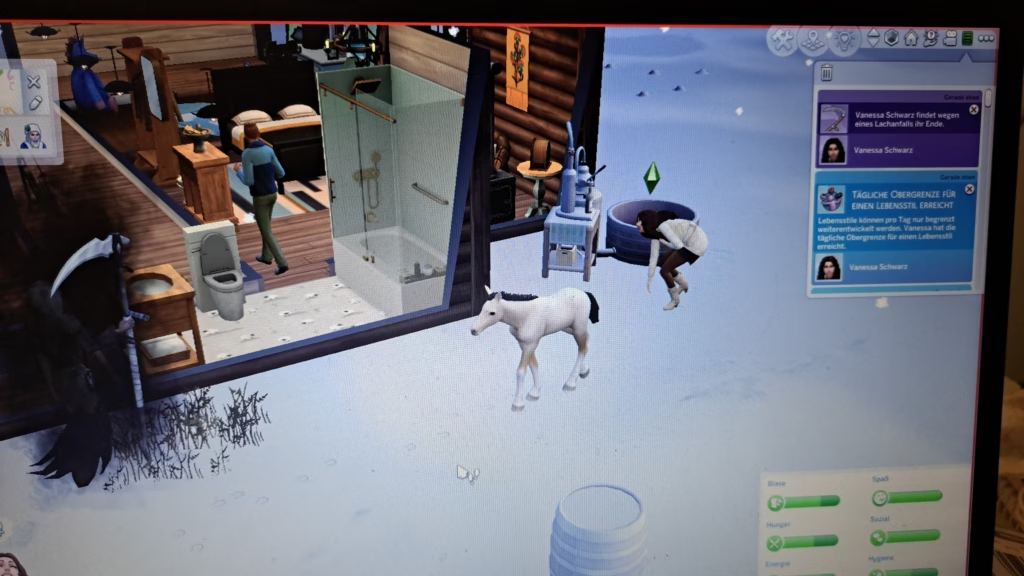
I don’t just know the theory of the reward circuit from books; I have experienced its silencing within myself over decades. Since my teenage years, I was deeply trapped in online worlds. Whether I was chasing virtual successes in World of Warcraft or designing ideal lives in The Sims – my brain got used to quick, digital rewards that felt intense but left no trace in the real world.
This continued in my career in the automotive industry. In design and project management, I spent years virtually creating vehicles. But between the CAD model and the finished car on the road lay worlds of abstraction and grueling discussions. Battles with customers over timelines and haggling with suppliers over cents were my daily life. I functioned in a system that demanded enormous energy but never gave me the haptic feedback my biological system needs to survive. Without noticing it, I slipped into depression – the logical consequence of a life without tangible results.
The Turning Point: The Immediacy of Life Switching to becoming a midwife was my first escape. Suddenly, causality was back: I care for a family and the response is direct – the weight of a newborn and the unadulterated gratitude of the parents. Here, biology counts, not deadlines on a Friday afternoon.
Nevertheless, I still feel the pull of the virtual world today. When I build websites or create texts, I am working digitally again. Without physical compensation, my moods drop extremely: from excitement about a new project to deep exhaustion. However, I have learned that I can mechanically interrupt this cycle.

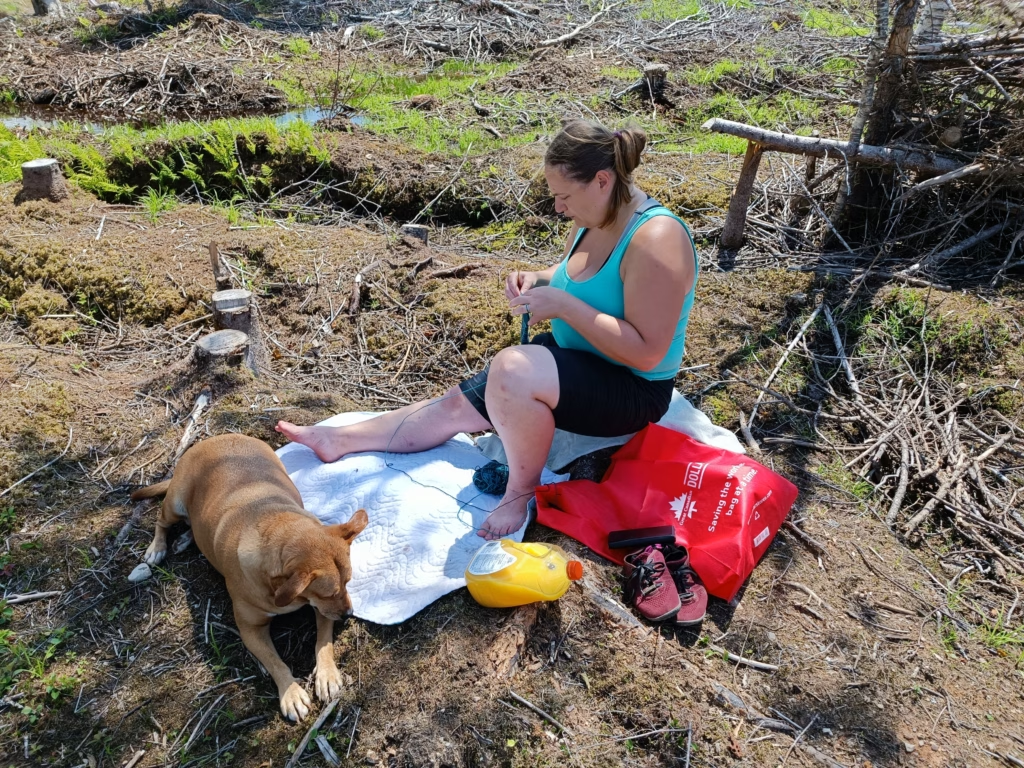
The Power of Haptic Work In Cape Breton, I discovered the healing effect of tasks that some might call mundane. But for me, splitting wood or chipping branches is pure meaning. When I see how a raw log becomes usable firewood, my brain gets the confirmation that no video game achievement could ever deliver.
I have also reconnected with this in the kitchen and at the workbench. Preserving one’s own harvest or the joy when others enjoy a home-cooked meal gives me deep satisfaction. I even rediscovered knitting. It’s not about just “killing time” with simple projects; I need the goal and structure of a complex piece, like a sock, a usable object, or a garment that serves a function in the end.

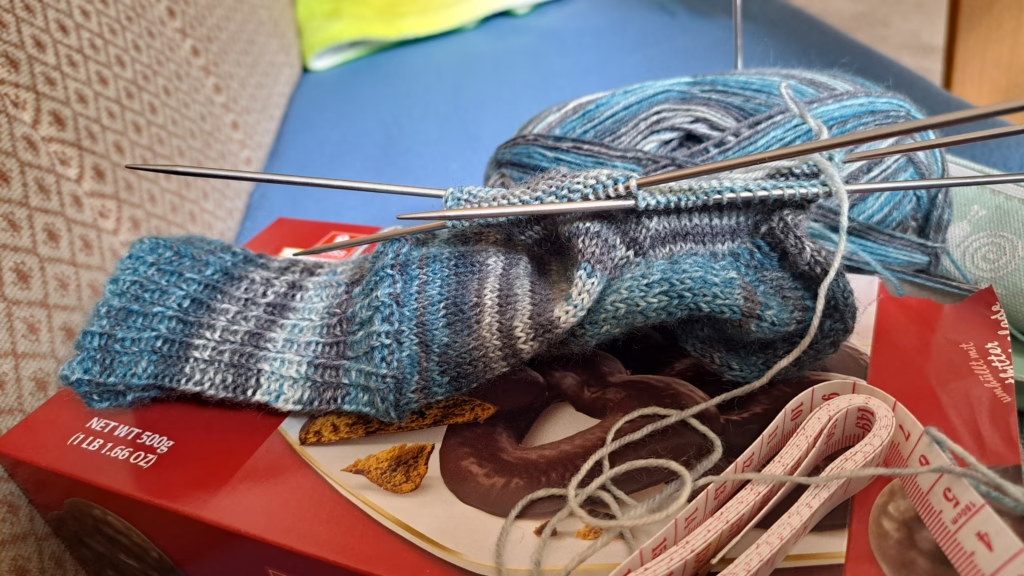

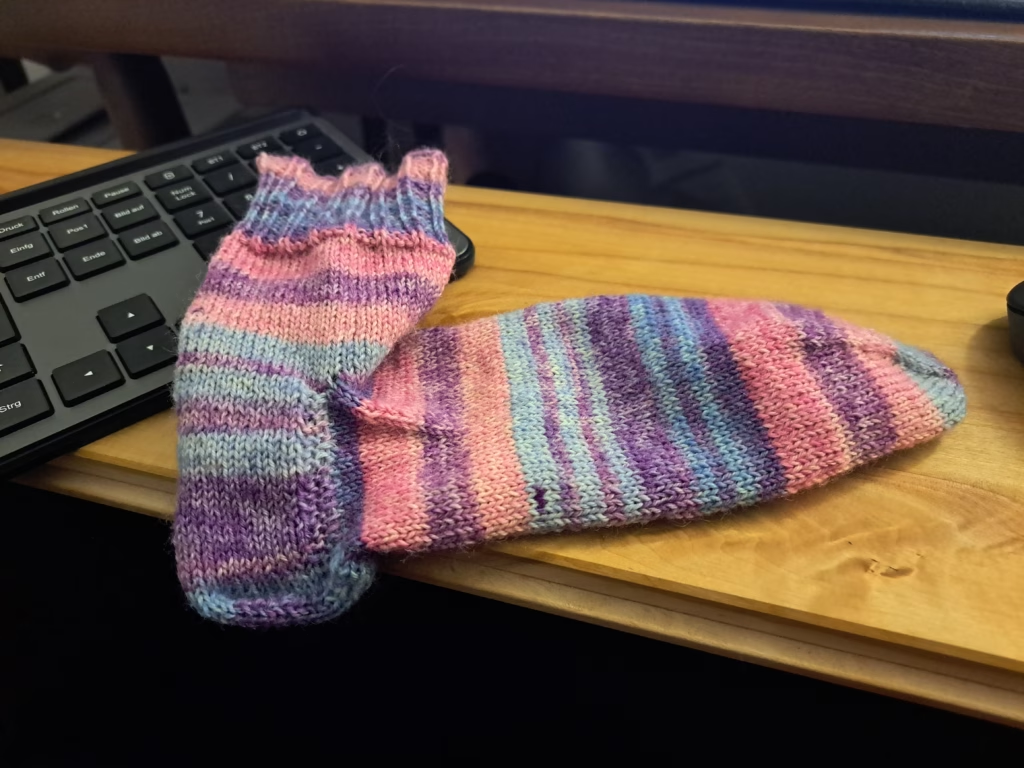
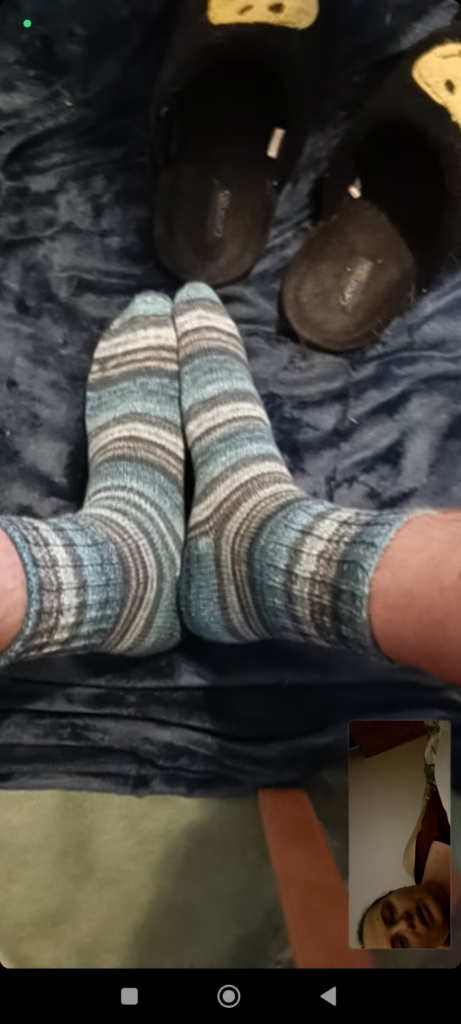
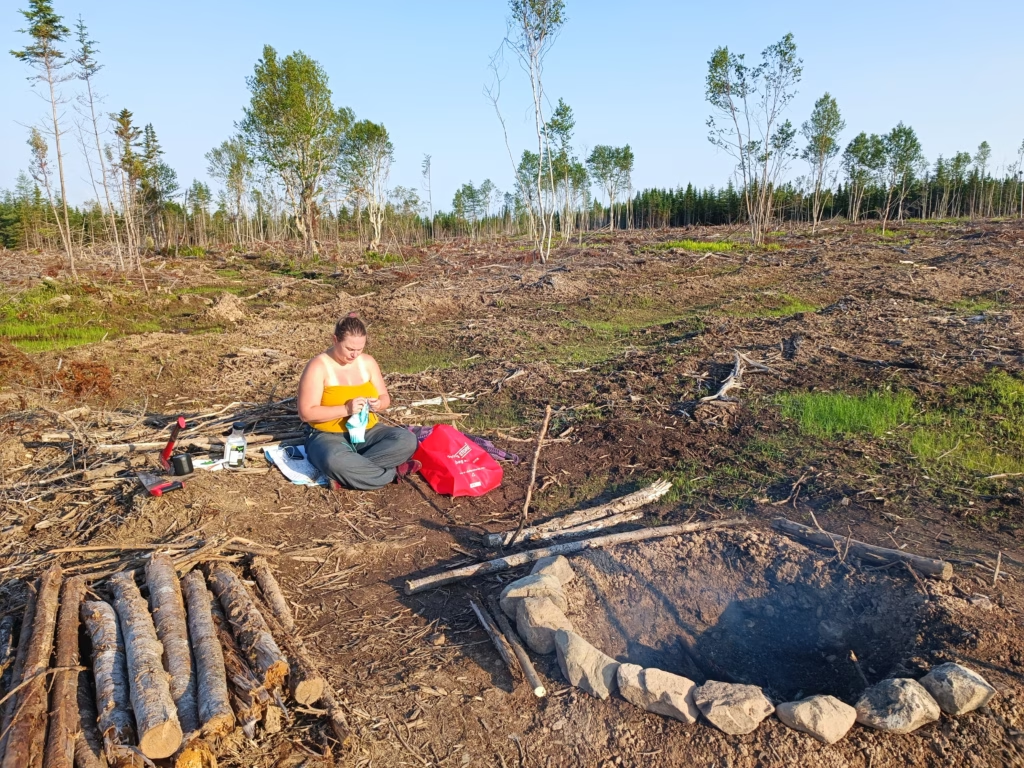
I have rediscovered the love of learning new, practical skills. Every new technique, whether in the garden, in crafts, or in food preservation, is a tool against the old helplessness. This slow path of haptic work pulls me ever more often out of the hollow world of pixels back into a reality that, while challenging, finally gives me solid ground under my feet.
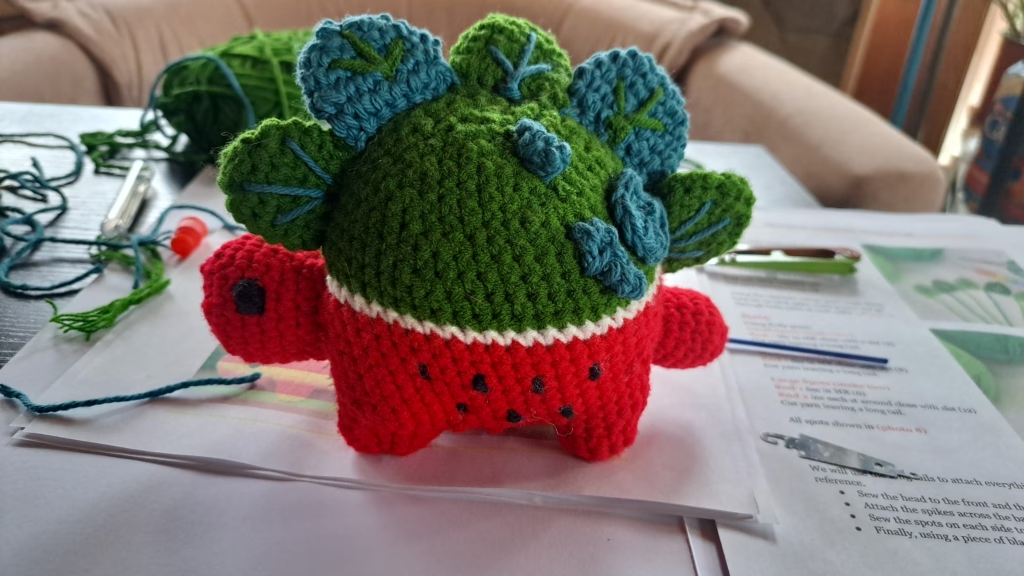
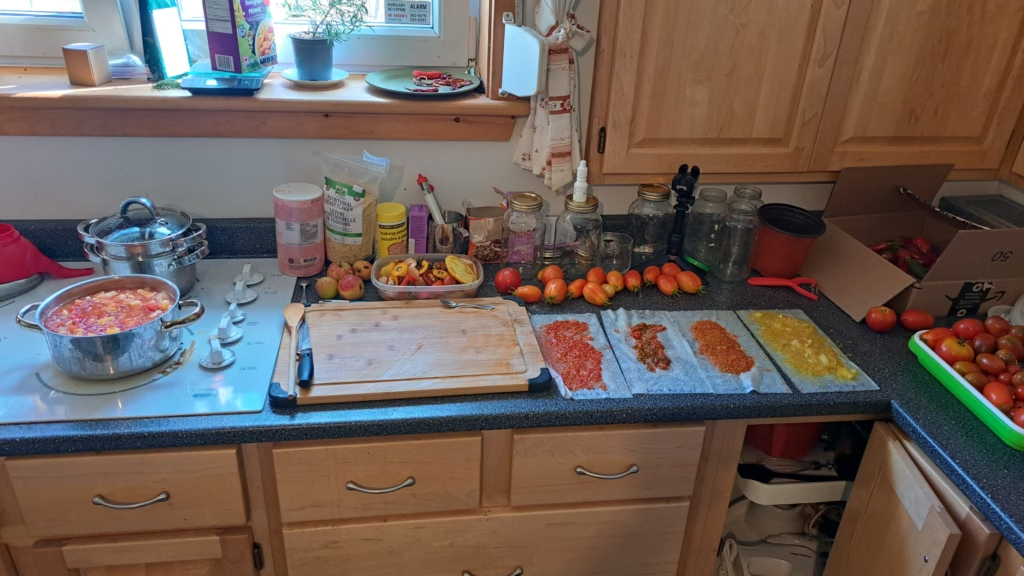


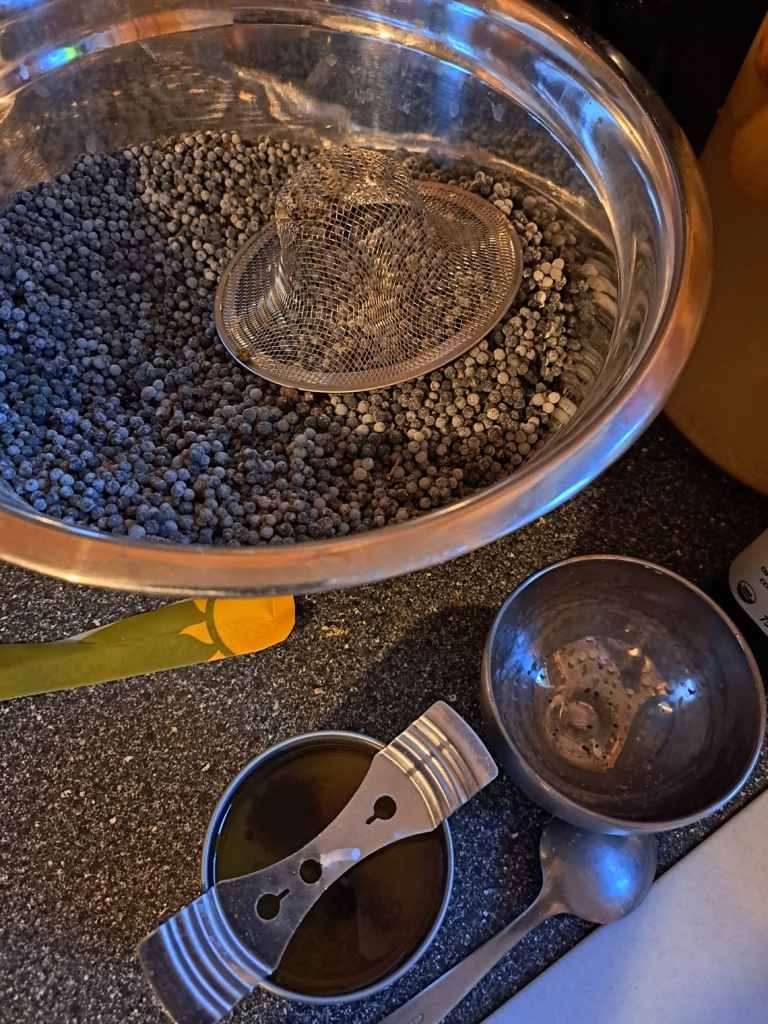
Depression remains a quiet companion for me – a low frequency in the background that may never fall completely silent. But it is no longer the only voice in my life. I have learned that I am not helplessly at its mercy as long as I use my hands to shape my world. By learning new things, splitting wood, knitting socks, or cooking for people who matter to me, I fill the void with real, tangible meaning. Every finished log and every full jar of preserves is a silent triumph over abstraction and proof that I have the power to take my life back into my own hands.
An Honest Context: Support and Self-Efficacy
When I write about the power of manual work, one thing is important to me: one must never trivialize severe depression. There are phases in which listlessness is so massive that the mere thought of work remains unimaginable. In such times, medical help and medication are often valuable tools. They act like a stable handrail on a steep staircase – giving us the support to even take the first step.
But healing does not happen in a vacuum. Just as important as medical support is an environment that carries this process. A values-based space and people who take the pressure of efficiency out of the equation form the fertile ground on which self-efficacy can grow again.
Medication and a stable environment create the necessary framework, while conscious, haptic doing enables the bridge back into experiential reality. Handwork of any kind is not a substitute for professional help, but an essential complement to experience one’s own effectiveness step by step. It is the moment we stop being mere observers of our states and become active shapers of our surroundings again. At the end of the day, it is the visible work of our hands that proves we are capable of acting – and that we have the power to change our reality bit by bit.
Sources & Further Knowledge
- Kelly Lambert: Lifting Depression: A Neuroscientist’s Hands-On Approach to Activating Your Brain’s Healing Power. (The central work on the Effort-Driven Reward Circuit).
- Amerikanische Psychologische Vereinigung (APA): Learned Helplessness (Scientific research background by Seligman).
- Harvard Health Publishing: Exercise and Depression (Biochemical effects of physical activity on the brain).
- Journal of Neuroscience: Neurobiology of the Reward Circuit (Insight into Striatum and Dopamine).
Back to the main Page
Explore more Articles
more plants



Leave a Reply