
Goldenrod Tea

Goldenrod Tea
A simple herbal infusion of dried goldenrod flowers and leaves. Steep, strain, and sip warm. Traditionally used as part of flushing therapy for mild bladder and lower-urinary-tract discomfort.
Equipment
- Mug or heatproof cup with saucer/lid
- Kettle
- Fine tea strainer or paper filter
- Spoon
Ingredients
- 1-2 teaspoons dried goldenrod flowers and leaves
- 250 ml hot water
Instructions
- Add the dried herb to the cup.
- Pour freshly boiled, slightly cooled water over the herb.
- Cover and steep for 10 minutes.
- Strain and drink warm.
Notes
- Use: 2–3 cups daily for up to 2 weeks, unless otherwise advised. Drink extra water during the day to support the flushing effect.
- Taste: Light, gently floral and herbaceous.
- Safety: Do not use in cases of edema due to heart or kidney disease. Use caution with diuretics. Possible allergy in people sensitive to Asteraceae (daisy family). Limited data for pregnancy or breastfeeding—seek professional advice.
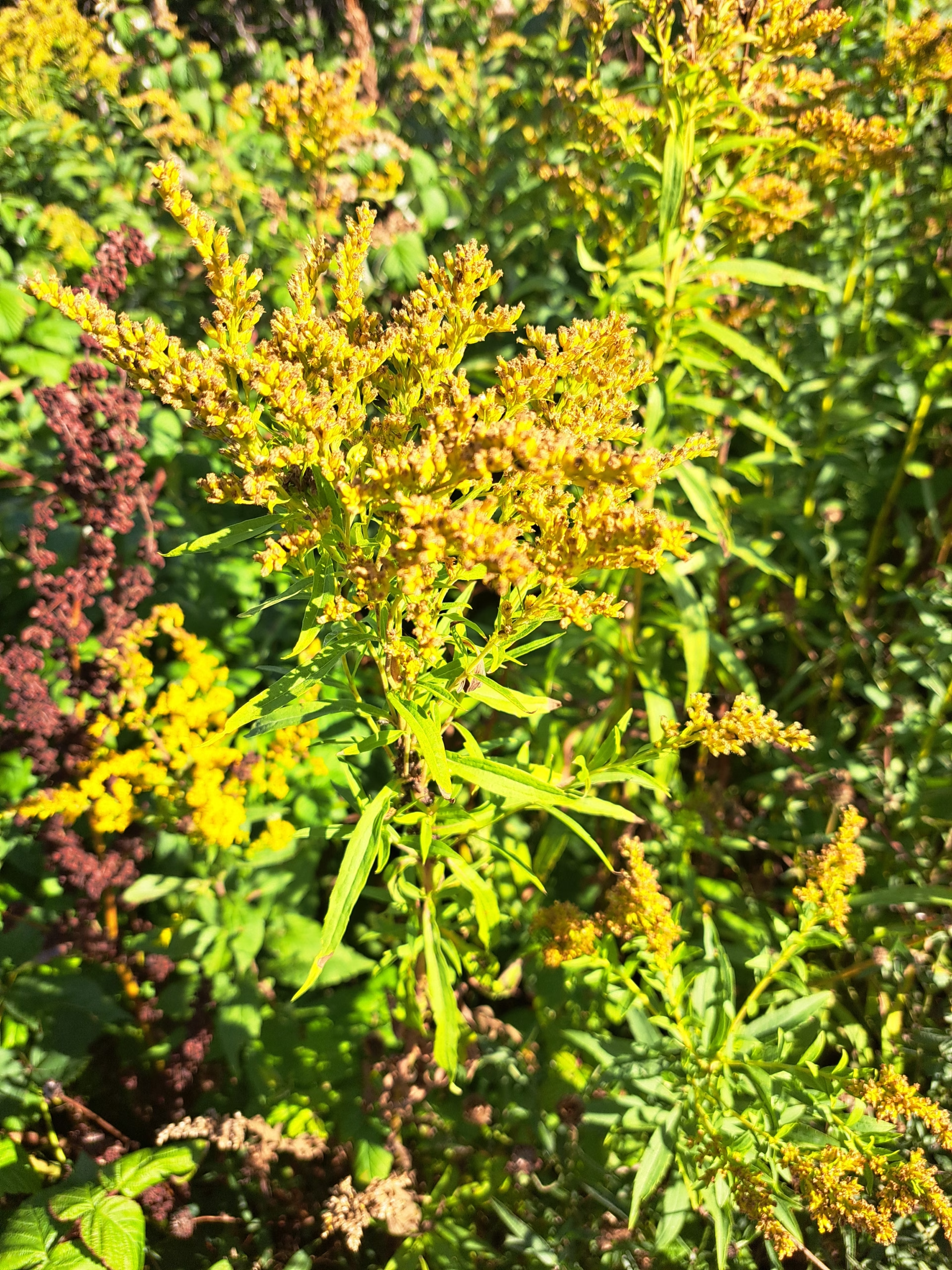
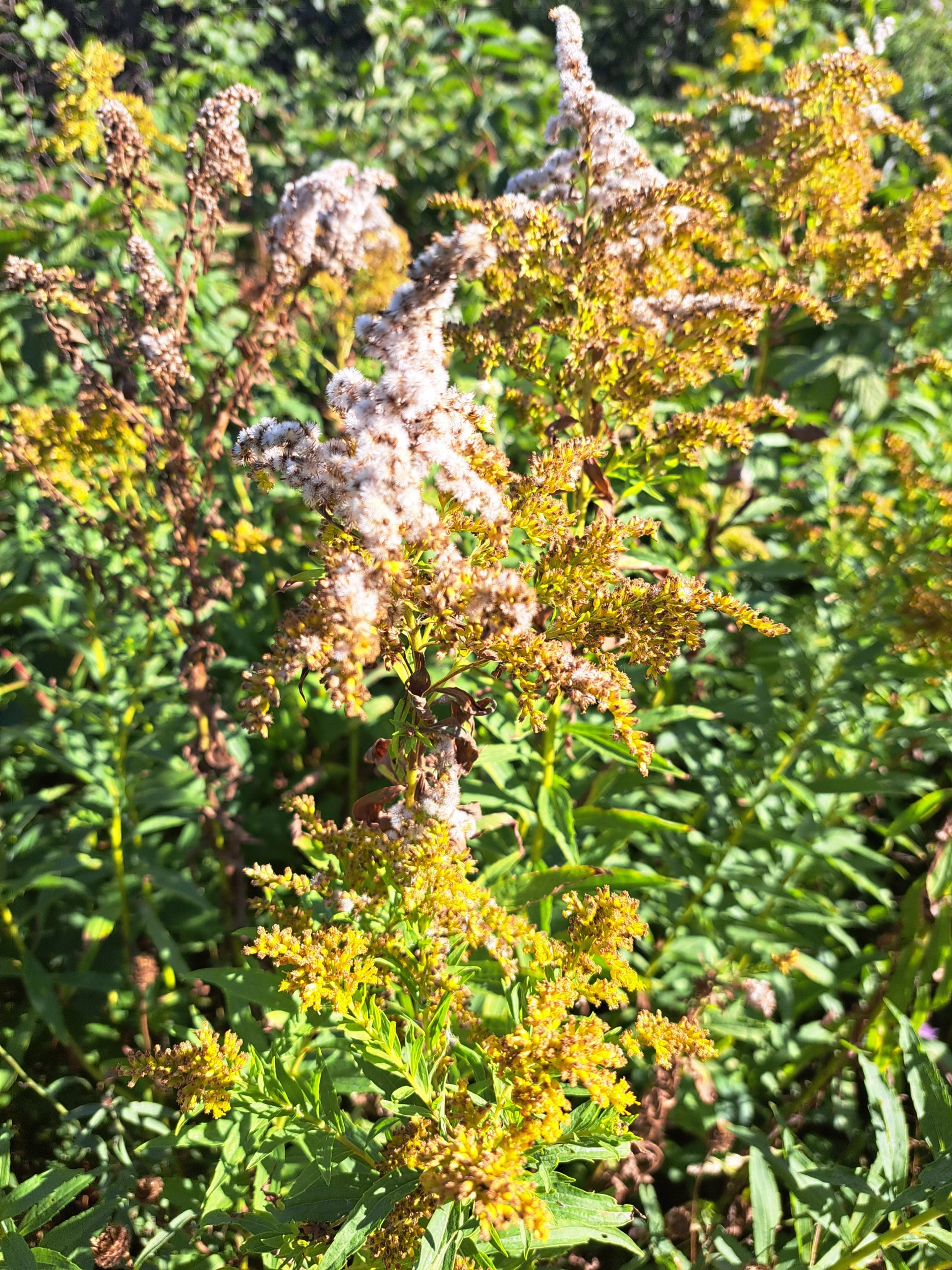
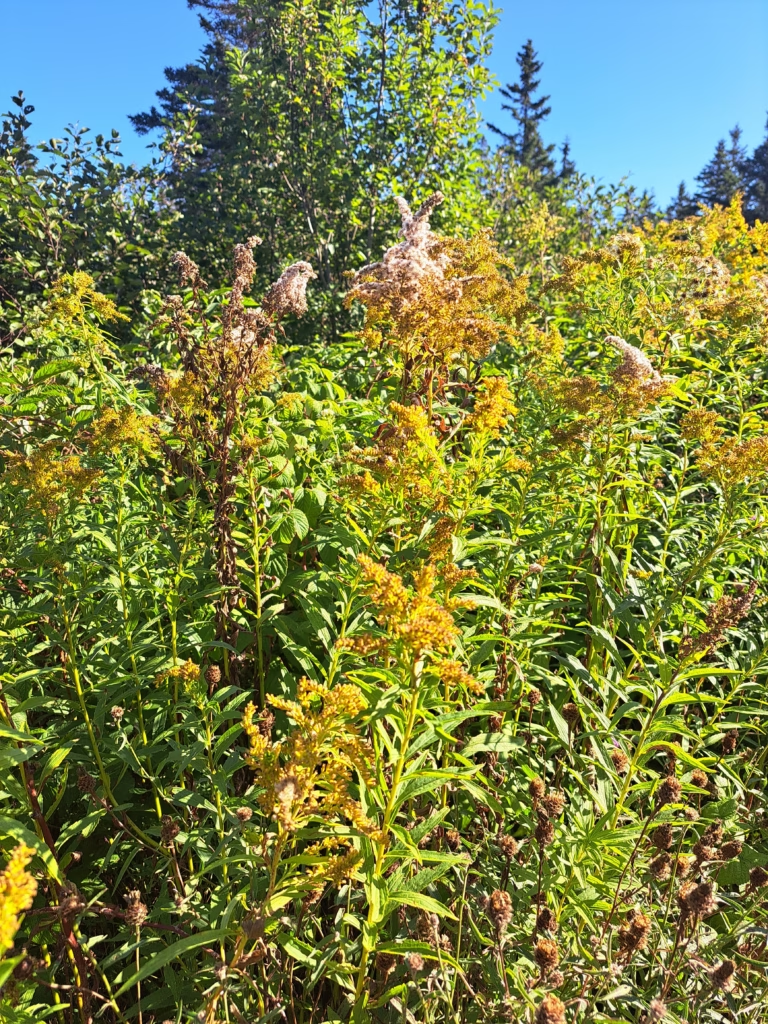
- Sourcing: Use correctly identified, well-dried goldenrod (commonly S. virgaurea in Europe; S. canadensis/S. gigantea are also used traditionally).
- Batch prep: For a teapot, scale to 3–6 teaspoons per 750 ml water; steep the same time.
Goldenrod Tincture

Goldenrod Tincture
A classic 40% alcohol maceration of fresh goldenrod tops (flowers + young leaves). Simple to make, traditionally used as part of flushing therapy for mild lower-urinary-tract discomfort.
Equipment
- cutting board and knife
- Clean jar with tight lid (≈1 liter)
- Fine sieve or muslin cloth
- Funnel
- Dark glass dropper bottles (30–50 ml)
- Labels and pen
Ingredients
- 100 g fresh goldenrod tops flowers + young leaves, coarsely chopped
- 500 ml alcohol 40% e.g., vodka
Instructions
- Prepare the herb: Rinse quickly if needed, pat dry, and coarsely chop.
- Place the plant material in a clean jar and cover completely with 40% alcohol (target ratio ~1 : 5 w/v). Make sure everything is submerged.
- Macerate: Seal the jar and keep it in a cool, dark place for 3–4 weeks. Shake once daily.
- Pour through muslin or a fine sieve, pressing the marc well to extract the liquid.
- Funnel into dark dropper bottles and label with plant, strength, date.
- Use 20 drops in a glass of water, 3 times daily.
Notes
- Sourcing: Use correctly identified goldenrod. In Europe, S. virgaurea is the native species; S. canadensis/S. gigantea are also used traditionally.
- Ratio: Your quantities equal ~1 : 5 (fresh herb : alcohol, w/v) at 40%—a solid general-purpose strength.
- Storage & shelf life: Store tightly closed, in a cool, dark place; keeps up to 2 years.
- Hydration: Drink extra water during use to support the flushing effect.
- Safety: Not for edema due to heart or kidney disease. Use caution with diuretics. Possible allergy in those sensitive to Asteraceae (daisy family). Limited data in pregnancy or breastfeeding—seek professional advice.
- Stop & check: If fever, flank pain, blood in urine, or symptoms persist >1 week, seek medical care.
- Variations: For a stronger extract, some makers use dried herb at 1 : 5 w/v with 50–60% alcohol; adjust only if you’re familiar with tincture strengths.
Goldenrod Syrup
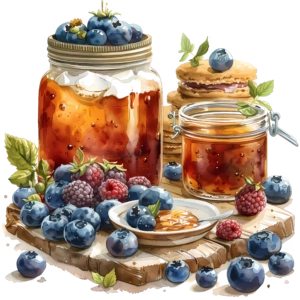
Goldenrod Syrup
A light, floral syrup made by simmering fresh goldenrod blossoms, then sweetening the strained infusion with sugar or honey and a touch of lemon. Lovely in tea, sparkling water, or over desserts.
Equipment
- Medium saucepan with lid
- Fine sieve or muslin cloth
- Heatproof measuring jug
- Ladle and funnel
- Clean bottles or jars with lids
- Optional: kitchen thermometer
Ingredients
- 2 handfuls fresh goldenrod flowers no tough stems
- 500 ml water
- 500 g sugar or runny honey about 2½ cups sugar
- ½ lemon juice optional a few strips of zest
Instructions
- Make the infusion: Combine flowers and water in a saucepan. Bring just to a simmer, cover, and cook gently for 15 minutes.
- Strain: Pour through a fine sieve or muslin into a measuring jug, pressing lightly. Discard the plant material.
- Sweeten: Return the strained liquid to the pan. Add sugar or honey and the lemon juice (and optional zest).
- If using sugar: Heat to a gentle boil, stirring until fully dissolved; simmer 5–10 minutes until lightly syrupy.
- If using honey: Warm gently below a boil, stirring until dissolved; keep the heat low to preserve aroma.
- Bottle: Ladle hot syrup into clean, hot bottles or jars. Wipe rims and seal. Let cool, then refrigerate.
- Use: Stir 1–2 tablespoons into tea or sparkling water, drizzle over yogurt, pancakes, waffles, fruit, or ice cream.
Notes
- Flavor: Goldenrod is delicately floral; lemon brightens and balances the sweetness.
- Consistency: A target of ~103–104 °C (217–219 °F) gives a light syrup. It will thicken slightly as it cools.
- Storage: Keep refrigerated and use within 4–6 weeks.
- Pantry option: For longer storage, process sealed bottles 10 minutes in a gently boiling water bath (add 5 minutes above ~300 m / 1000 ft). Store cool and dark; refrigerate after opening and use within 2–3 weeks.
- Sourcing: Use correctly identified goldenrod blooms, clean and unsprayed.
- Safety: Honey is not suitable for infants under 12 months. If you’re sensitive to plants in the Asteraceae family, test cautiously.
Goldenrod Steam Inhalation
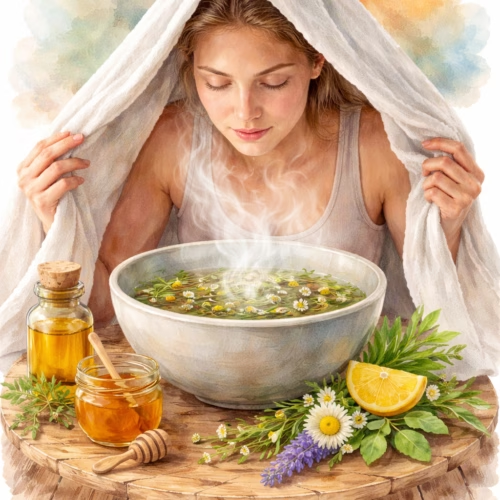
Goldenrod Steam Inhalation
A simple herbal steam using goldenrod flowers and leaves to moisten airways and ease stuffy noses or irritated sinuses. Pour boiling water over the herb, let the steam cool slightly, then inhale under a towel for 5–10 minutes.
Equipment
- Large heatproof bowl
- Kettle
- Large towel
- Timer (optional)
- Tissues
Ingredients
- 2 handfuls fresh goldenrod flowers + leaves or 2–3 tbsp dried
- 1 liter boiling water
Instructions
- Set up: Place the goldenrod in a large heatproof bowl on a stable surface.
- Pour: Carefully pour the boiling water over the herb.
- Cool briefly: Wait 1–2 minutes until the steam feels comfortably warm (not scalding).
- Inhale: Lean over the bowl, drape a towel over your head to form a tent, and inhale through nose and mouth for 5–10 minutes. Breathe slowly and take short breaks as needed.
- Finish: Gently pat your face dry. Discard the infusion.
- Use: Once or twice daily at the onset of a cold, for blocked sinuses, or hay-fever-like irritation.
Notes
- Safety: Keep eyes closed if they feel irritated. Avoid if you have asthma triggered by steam, acute sinus infection with high fever, broken facial skin, or heat sensitivity. Keep hot water well away from children and pets.
- Adjustments: Add a pinch of sea salt to the bowl for a slightly hypertonic feel, or blend with a little chamomile or thyme for a different aroma.
- Cleanliness: Use clean equipment; wash the bowl and towel after each session.
- Sourcing: Use correctly identified, unsprayed goldenrod (S. virgaurea in Europe; S. canadensis/S. gigantea also used traditionally).
Wild Herb Salad with Goldenrod
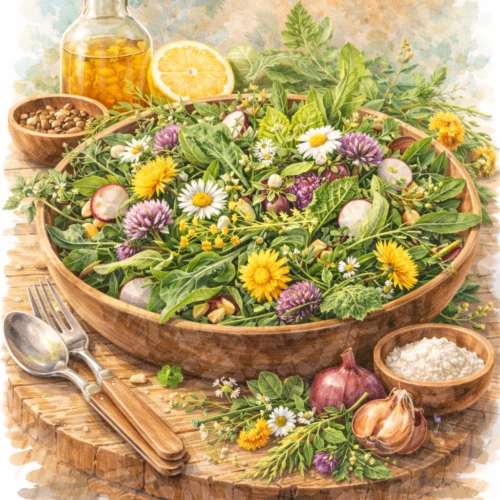
Wild Herb Salad with Goldenrod
A bright spring salad of finely chopped young goldenrod leaves, mixed wild greens, crisp apple, and nuts, dressed simply with olive oil, vinegar, and mustard. Use goldenrod leaves sparingly for a gentle, pleasantly bitter note.
Equipment
- Salad spinner or clean towel (to dry greens)
- cutting board and knife
- Large mixing bowl
- Small jar or bowl for dressing
- Spoon or whisk
Ingredients
- ½ cup Young goldenrod leaves April–June, finely chopped — about ½ cup loosely packed
- 2 cups mixed wild herbs/greens e.g., dandelion, chickweed, young lettuce, washed and dried
- 1 apple diced
- A small handful of nuts e.g., walnuts, hazelnuts, or sunflower seeds, roughly chopped
- Dressing
- 2 tablespoons olive oil
- 1 tablespoon vinegar apple cider or white wine
- ½ tablespoon Dijon mustard
- Salt and pepper to taste
Instructions
- Prep the greens: Wash and dry all leaves well. Finely chop the young goldenrod leaves; keep the amount modest to manage bitterness.
- Make the dressing: In a small jar or bowl, whisk olive oil, vinegar, mustard, salt, and pepper until emulsified.
- Assemble: In a large bowl, combine the mixed greens, goldenrod leaves, diced apple, and nuts.
- Dress and serve: Add the dressing, toss gently to coat, and serve immediately.
Notes
- Taste balance: Goldenrod leaves are slightly bitter—start with a small amount, then adjust to taste. A touch of honey in the dressing can soften the bitterness.
- Variations: Add thinly sliced radish, crumbled goat cheese, or a squeeze of lemon. Toast the nuts for extra crunch.
- Seasonality: Use only very young goldenrod leaves (spring). Older leaves become tough and more bitter.
- Sourcing & safety: Forage only correctly identified, unsprayed plants from clean areas. People sensitive to Asteraceae (daisy family) should test cautiously.
- Make-ahead: Dress just before serving to keep the greens crisp.
Goldenrod Ointment
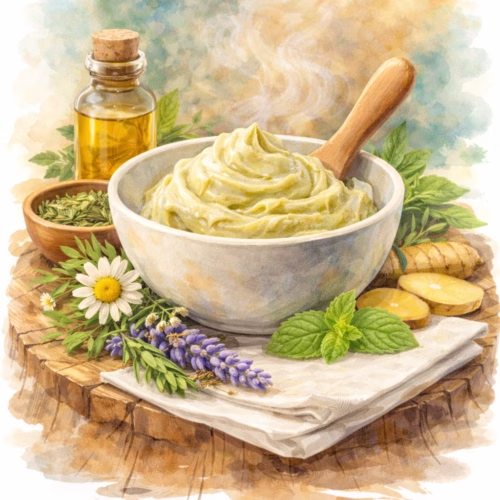
Goldenrod Salve
A gentle skin salve made from a warm oil infusion of fresh goldenrod tops, set with wax for a smooth, spreadable texture. Use thinly on minor irritations, insect bites, and small, non-bleeding scrapes.
Equipment
- cutting board and knife
- Heatproof jar or small beaker for the oil infusion
- Saucepan for a water bath
- Fine sieve or muslin cloth
- Spoon or spatula for stirring
- Small thermometer (optional)
- Small tins or jars (30–50 ml) with lids
- Labels and pen
Ingredients
- 1 handful fresh goldenrod flowers + young leaves coarsely chopped (tops only)
- 100 ml olive oil or almond oil
- 10 g beeswax for a medium-firm salve
- Vegan option: 5–6 g candelilla wax or 4–5 g carnauba wax stronger gelling; use a bit less than beeswax
- Optional: 3–5 drops vitamin E oil antioxidant
Instructions
- Warm infusion: Combine chopped goldenrod and oil in a heatproof jar. Place in a gentle water bath and keep warm (not boiling) for 60 minutes, stirring occasionally.
- Strain: Pour through muslin or a fine sieve, pressing the plant material well to collect the infused oil. Wipe the jar clean.
- Add wax: Return the infused oil to the warm jar in the water bath. Add wax and stir until fully melted and uniform.
- Test consistency (optional): Place a few drops on a cold spoon; let set 1 minute. For a firmer salve add a little more wax; for softer, add a splash of oil.
- Pot and cool: Pour the liquid salve into clean tins or jars. Let cool undisturbed, then cap and label.
- Use: Apply a thin layer to clean, intact skin on minor irritations, insect bites, or small, non-bleeding scrapes. Use 1–3× daily as needed.
Notes
- Plant parts: Use only tops (flowers + tender leaves). Tough stems dilute the infusion.
- Storage & shelf life: Keep cool, dark, and tightly closed; use within 6–12 months. Vitamin E can help slow oxidation.
- Sensitivity: People sensitive to Asteraceae (daisy family) should patch-test first.
- Safety: Do not use on deep, bleeding, or oozing wounds. Discontinue if redness or irritation occurs. In pregnancy, breastfeeding, or for children, seek professional advice before use.
- Cleanliness: Sterilize or at least heat-sanitize tins/jars; use a clean spatula to dispense to prolong shelf life.
Goldenrod Facial Toner
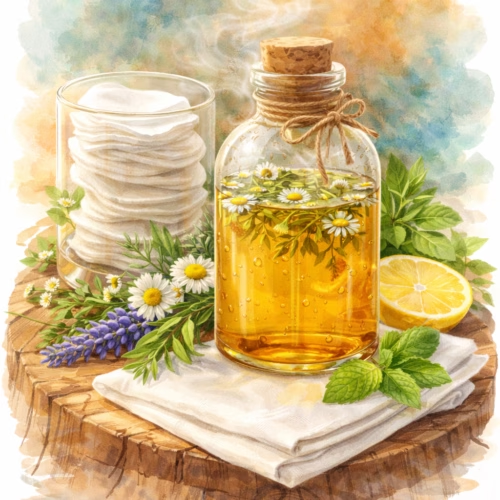
Goldenrod Facial Toner
A gentle, floral facial toner made from a short simmered infusion of fresh goldenrod blossoms with a touch of apple cider vinegar. Refreshes and lightly clarifies after cleansing. Keep refrigerated and use within a week.
Equipment
- Small saucepan with lid
- Fine sieve or muslin cloth
- Heatproof measuring jug
- Funnel
- Clean glass bottle (spray top optional)
- Labels and pen
Ingredients
- 1 handful fresh goldenrod flowers
- 200 ml water
- 1 teaspoon apple cider vinegar
- Optional: 1 teaspoon vegetable glycerin for a touch more moisture
Instructions
- Simmer: Combine flowers and water in a small saucepan. Bring to a gentle simmer, cover, and cook for 10 minutes.
- Strain & cool: Pour through a fine sieve into a jug and let cool completely.
- Finish: Stir in the apple cider vinegar (and optional glycerin).
- Bottle: Funnel into a clean glass bottle. Label and refrigerate.
- Use: Apply morning and evening after cleansing: sweep over skin with a cotton pad or mist lightly, avoiding the eyes. Follow with your usual moisturizer.
Notes
- Skin feel: With glycerin the toner is slightly more hydrating; without it, very light and fresh.
- Storage & shelf life: Keep refrigerated; use within ~1 week. Discard if the scent or appearance changes.
- Hygiene: Rinse bottle with hot water before filling; keep caps and sprayers clean.
- Variations: For very sensitive skin use only ½ tsp vinegar, or swap the vinegar for 1 tsp witch hazel distillate (alcohol-free).
- Safety: Patch test before first use. Do not apply to broken, oozing, or highly irritated skin. People sensitive to Asteraceae (daisy family) should test cautiously.
Goldenrod Dye Bath
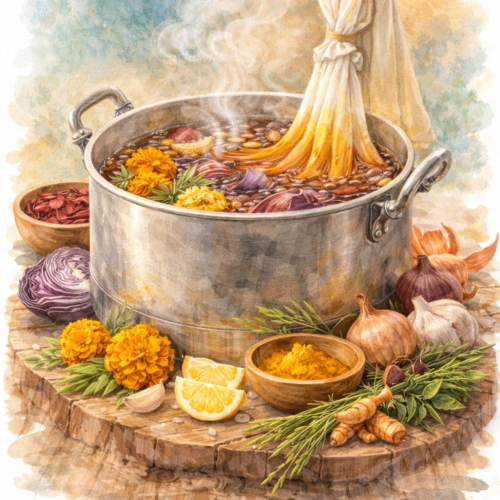
Goldenrod Dye Bath
A bright, plant-based dye bath extracted from fresh goldenrod blossoms. Simmer the flowers to release color, strain, then dye pre-wetted fibers. Alum yields clear yellows; iron modifiers shift toward olive/green.
Equipment
- Large non-reactive pot (stainless steel)
- Second pot or bucket for straining
- Fine sieve or muslin cloth
- Stirring spoon (wood or stainless)
- Tongs or dye stick
- Gloves and apron
- Thermometer (optional)
- Bucket/bowl for pre-soaking fibers
Ingredients
- 200 g fresh goldenrod flowers roughly chopped
- 2 liters water
- Optional mordants: – For protein fibers wool/silk: alum 10–15% WOF
- Optional modifiers:
- – 1–2% iron ferrous sulfate of WOF for olive/greenish tones
- – 1 tsp vinegar for cooler yellow; 1 tsp baking soda for warmer yellow
Instructions
- Prepare fibers: Wash to remove finishes/oils. Pre-soak in clean water. Mordant if desired (see amounts above), rinse lightly, and keep damp.
- Extract dye: Combine chopped flowers and water in the stainless pot. Simmer gently (not a rolling boil) for 60 minutes.
- Strain: Pour through a sieve/muslin into a second vessel, press flowers lightly, then return the clear dye liquor to the dye pot.
- Dye: Add pre-wetted fibers to the bath. Maintain just under a simmer for 60–120 minutes, moving gently for even color. Do not boil wool.
- Cool & set: Remove from heat and let fibers cool in the bath 30–60 minutes.
- Rinse & dry: Lift out, rinse in cool water until clear, gently squeeze, and dry in the shade.
- Modify (optional): For olive tones, dip the damp fibers 5–10 minutes in a very weak iron bath (1–2% WOF), watching the shift closely, then rinse well.
Notes
- Yield: Goldenrod gives clear lemon-to-gold shades; pre-mordanted protein fibers take color deepest.
- pH effect: Slightly acidic (vinegar) shifts toward fresh, cooler yellow; slightly alkaline (baking soda) warms the tone.
- Clarity: Filtering the liquor reduces plant specks and yields cleaner color.
- Safety: Wear gloves; keep food and dye pots separate. Avoid copper/iron pots (they shift color). Ventilate well. Dispose of plant waste in household trash/compost—don’t dump into waterways.
- Scaling: For deeper shades, increase flowers (up to 300–400 g per 100 g fiber) or extend dye time.
- Light/wash fastness: Improves with proper mordanting. Let dyed items cure 1–2 days before first wash; use a gentle pH-neutral soap.