
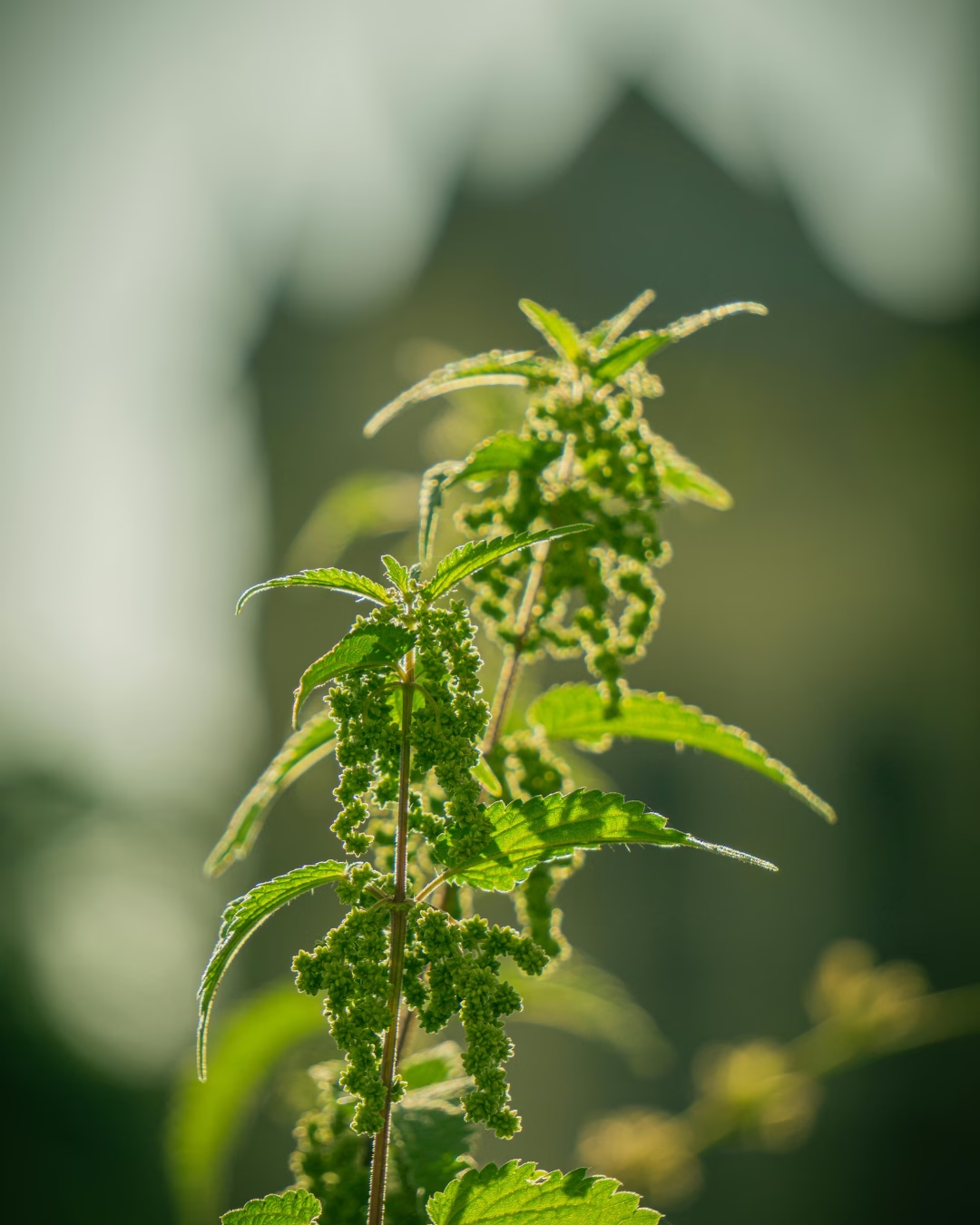
Nettle Fertilizer (Liquid Manure)
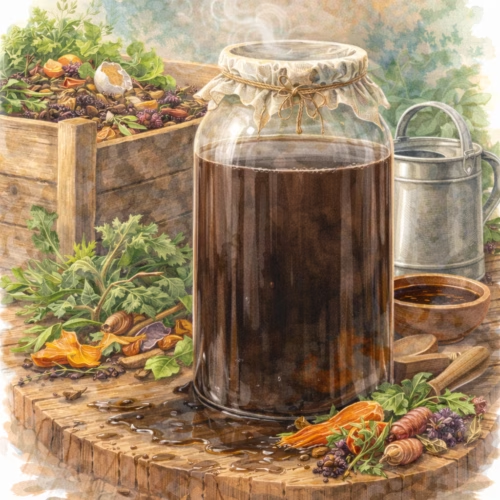
Nettle Fertilizer (Liquid Manure)
The natural cycle in a bucket: giving back to the soil what the plant has gathered from the earth.
Equipment
- Large 100-liter barrel (plastic or wood)
- Sturdy stirring stick
- Fine sieve or cloth for straining
- Watering can or sprayer
Ingredients
- 10 kg fresh nettle shoots before seed maturity
- 100 L rainwater
- Optional: 500 g rock meal (to bind odors)
Instructions
- Roughly chop the plant parts and fill loosely into the barrel.
- Fill with 100 liters of rainwater until the material is completely covered.
- Cover the barrel with a breathable material to keep insects out.
- Stir vigorously once a day to introduce oxygen.
- After approx. 10–14 days (once the liquid is dark and no longer foaming), strain through a sieve.
Notes
- Application:
- Dilute 1:10 with irrigation water.
- Use weekly for heavy feeders,
- every 2 weeks for light feeders.
- Calculation: Includes a 15% safety margin (target mass approx. 11.5 kg) to compensate for leaching during Atlantic heavy rain events.
- Safety: Strong inherent odor during fermentation; set up the barrel at a distance from living areas.
Botanical Dye: Nettle (Gray-Green)
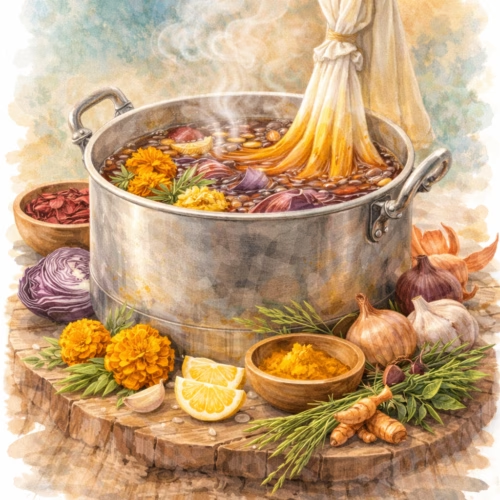
Botanical Dye: Nettle (Gray-Green)
Natural dyeing of wool and silk using fresh nettle greens and alum mordant.
Equipment
- Large stainless steel pot (do not use for food)
- Scale and measuring cup
- Fine sieve or muslin cloth
- Gloves
Ingredients
- 1 kg fresh nettle leaves
- 75 g Alum Potassium aluminum sulfate as a mordant (corresponds to 15% of the fiber weight)
- 500 g Wool or silk pre-washed
- Optional: 1 tsp Iron II sulfate (for darker olive tones)
Instructions
- Mordanting: Dissolve alum in warm water, add damp wool, and heat gently at 80 °C (176 °F) for 60 minutes. Let it cool down in the pot.
- Dye Bath: Chop the nettles, cover with water, and simmer for 60 minutes. Then strain the liquid.
- Dyeing: Place the pre-mordanted wool into the dye bath and let it steep for 60 minutes at 80–90 °C (176–194 °F).
- Rinsing: Remove the wool, rinse with lukewarm water, and dry in the shade.
Notes
Application: Produces a subtle to vibrant gray-green on protein-based fibers (wool/silk).
Technical Term: Alum is a mineral salt that acts as a bridge between the fiber and the dye.
Safety: Work only in well-ventilated areas. Do not use the pots for food after dyeing.
Metabolism Cure (Rheuma & Gout Tea)

Metabolism Cure (Rheuma & Gout Tea)
Targeted flushing therapy to support the treatment of inflammatory joint complaints.
Equipment
- Large teapot (approx. 1 liter capacity)
- Fine tea strainer
- Tea cozy or lid
Ingredients
- 4 tbsp dried nettle leaves or 8 tbsp freshly chopped
- 1 liter sparkling boiling water soft/filtered
- Optional: 1 tbsp birch leaves to enhance drainage/detoxification
Instructions
- Place the herbs directly into the pot or a large strainer.
- Pour the boiling water over them, ensuring all leaves are fully submerged.
- Cover the pot immediately to preserve volatile active ingredients.
- Let it steep for exactly 12 to 15 minutes. The longer steeping time is crucial for releasing the silica.
- Strain and drink in small sips throughout the day.
Notes
- Application: Drink as a cure for 4 to a maximum of 6 weeks. Consume 1 liter of the tea daily.
- Metabolism: Helps to dissolve and flush out uric acid crystals.
- Hydration: At least 1.5 liters of still water must be consumed daily in addition to the tea.
- Safety: Do not use in cases of water retention (edema) caused by heart or kidney insufficiency.
Wild Herb Pesto
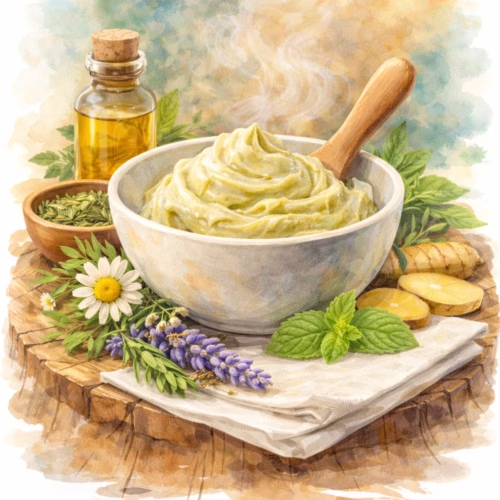
Wild Herb Pesto
A nutritious protein boost made from the first fresh shoots.
Equipment
- Mortar and pestle or blender
- Kitchen towel
- Sterile screw-top jars
Ingredients
- 2 handfuls of young nettle tips
- 50 g walnuts or sunflower seeds
- 50 g hard cheese or nutritional yeast
- 150 ml plant oil rapeseed or olive
- Garlic
- salt, and pepper to taste
Instructions
- Roll the nettles in a kitchen towel (to break the stinging hairs) and chop them roughly.
- Process with the nuts and garlic using a mortar and pestle or a blender.
- Stir in the cheese and oil, then season to taste.
- Store in a cool place, ensuring the surface is covered with a layer of oil.
Notes
- Application: Serve with pasta, potatoes, or as a spread on bread.
- Notes: Harvest only the top tips to encourage further plant growth.
Strengthening Hair Tonic (Root Extract)
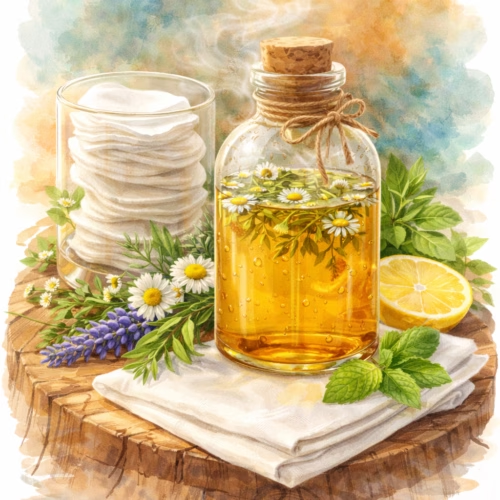
Strengthening Hair Tonic (Root Extract)
Traditional care to stimulate scalp circulation.
Equipment
- Dark screw-top jar
- Fine cloth or coffee filter
- Dark storage bottle
Ingredients
- 2 handfuls of nettle roots
- 250 ml apple cider vinegar or 40% alcohol e.g., vodka
Instructions
- Brush the roots clean and cut them into fine pieces.
- Place them in the jar and cover completely with the vinegar or alcohol.
- Let it infuse in a dark, warm place for 21 days; shake daily.
- Filter the liquid and transfer it into the dark storage bottle.
Notes
- Application: Massage into the scalp after washing; do not rinse out.
- Notes: Regulates sebum production and strengthens the hair roots.
Protein Boost (Nettle Seed Salt)
Protein Boost (Nettle Seed Salt)
Nutrient-rich topping for remineralization.
Equipment
- Mortar and pestle
- Airtight jar
Ingredients
- 4 tbsp dried nettle seeds
- 2 tbsp coarse sea salt
Instructions
- Rub the dried seeds to separate them from the stems.
- Place seeds and salt in the mortar and crush them briefly and vigorously.
- Seal in an airtight jar.
Notes
- Application: Sprinkle over salads, soups, or buttered bread.
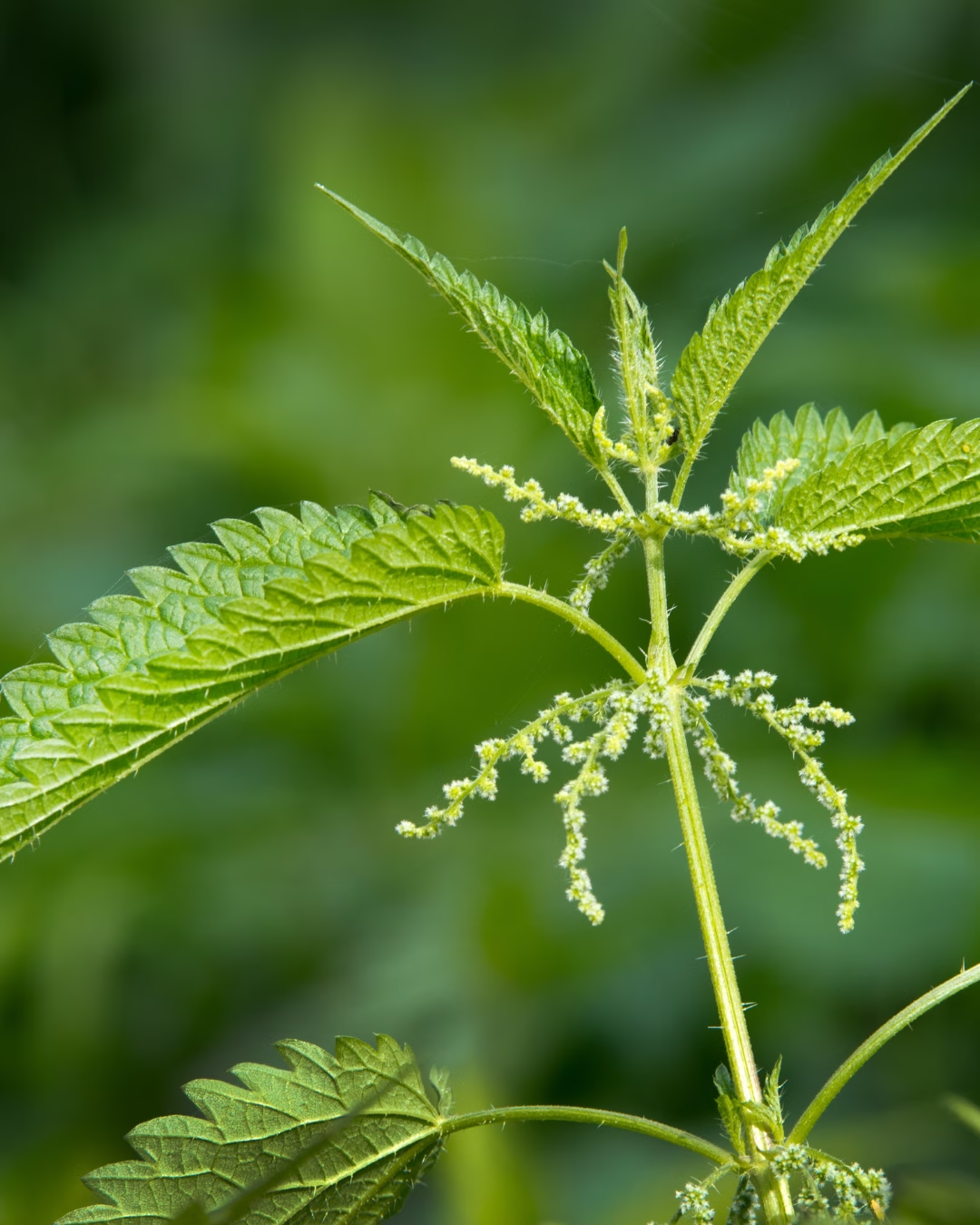
- Notes: Use only the brown, drooping seed clusters from female plants.