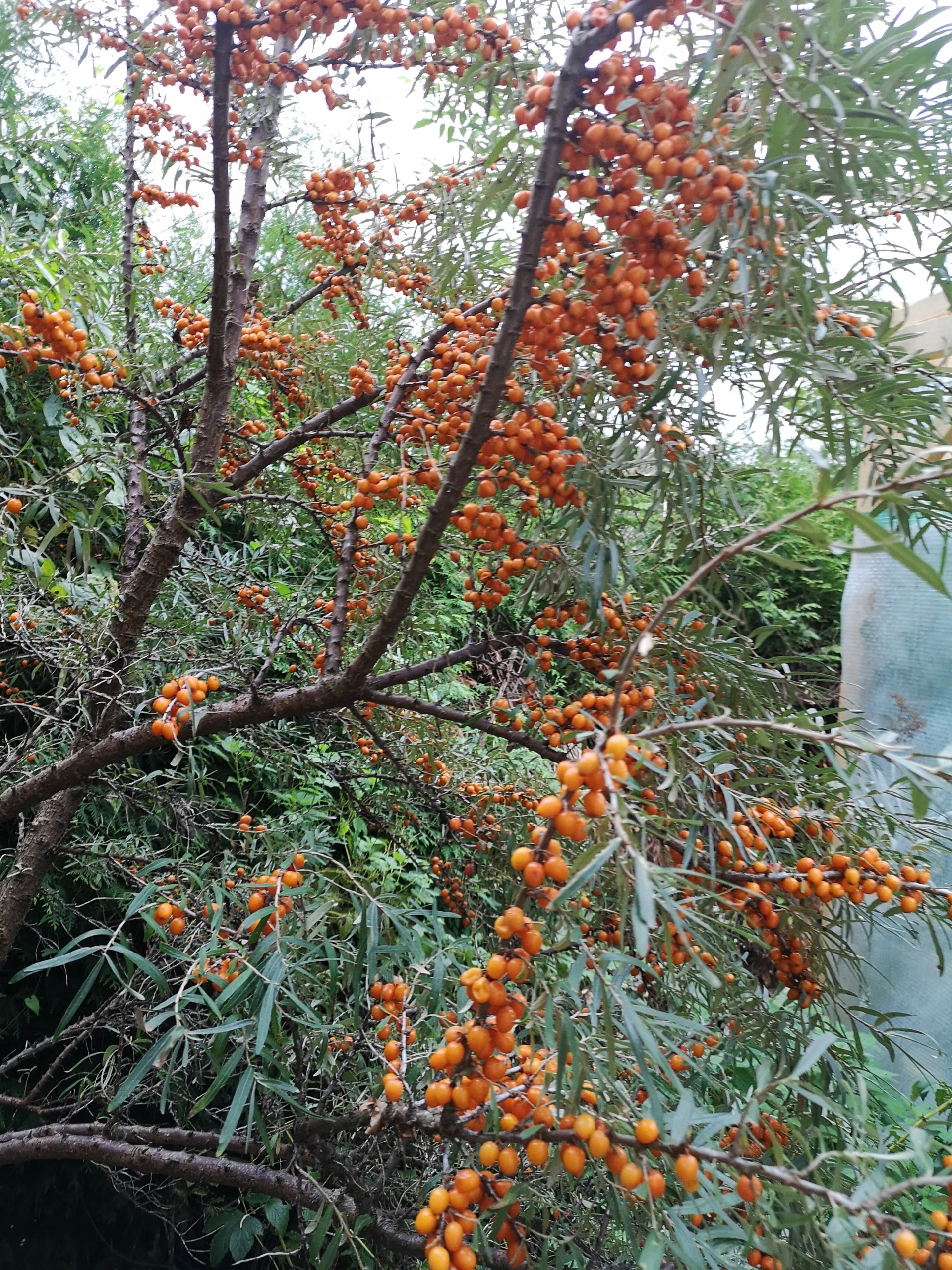
Sea buckthorn is a true survivor – a pioneer that thrives where other plants give up.

Name

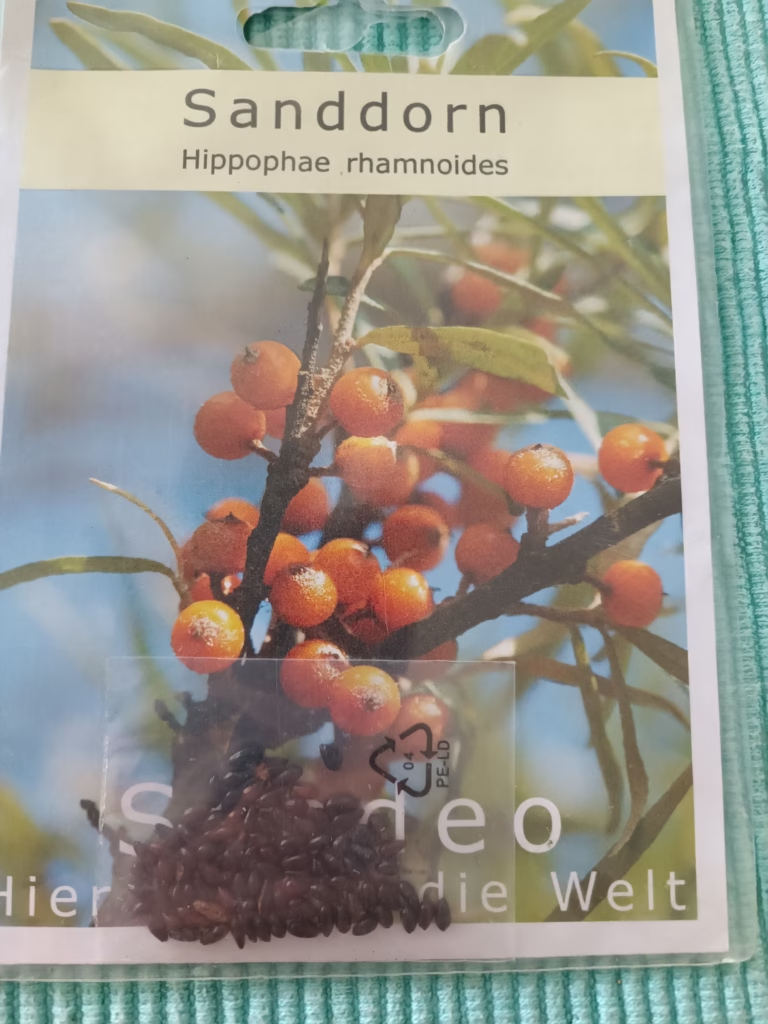
  • German: Sanddorn, Weidendorn, Rote Schlehe
  • English: Sea Buckthorn, Seaberry, Sandthorn
  • Latin: Hippophae rhamnoides

Plant Group

  • Family: Elaeagnaceae (Oleaster family)
  • Subgroup: Sea Buckthorns (Hippophae)

Distribution

  • original Origin: Nepal, Himalayan region
  • current Distribution: Europe, Asia, North America

Identification

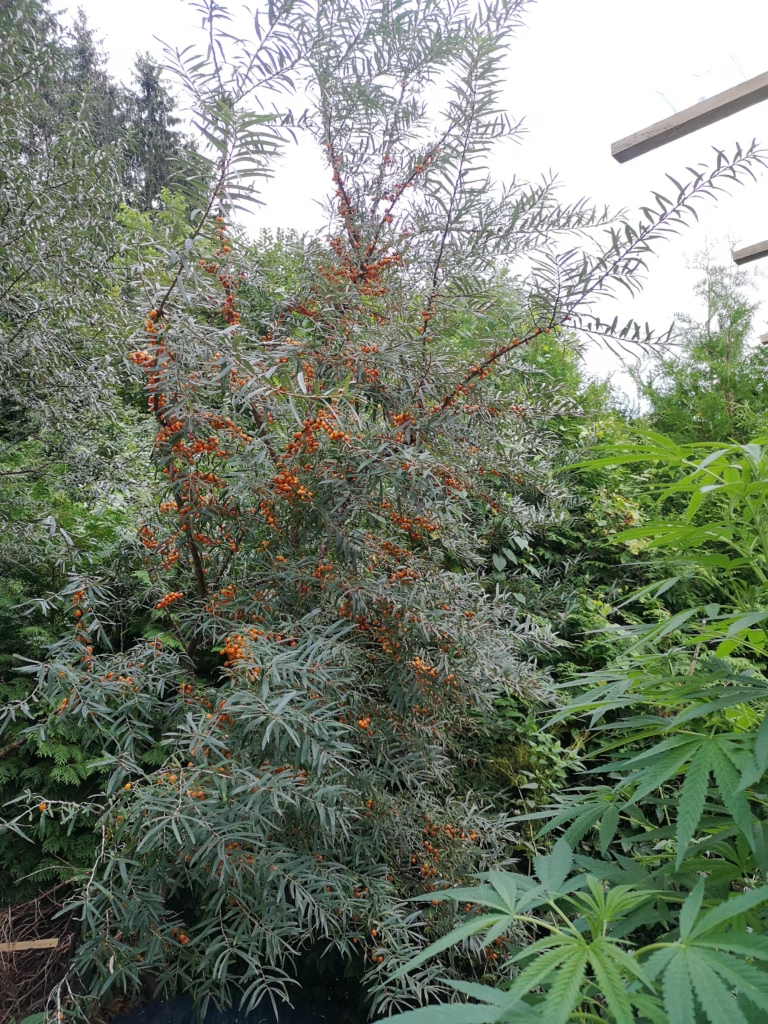
  • Height: 3–6 metres (rarely up to 10 metres)
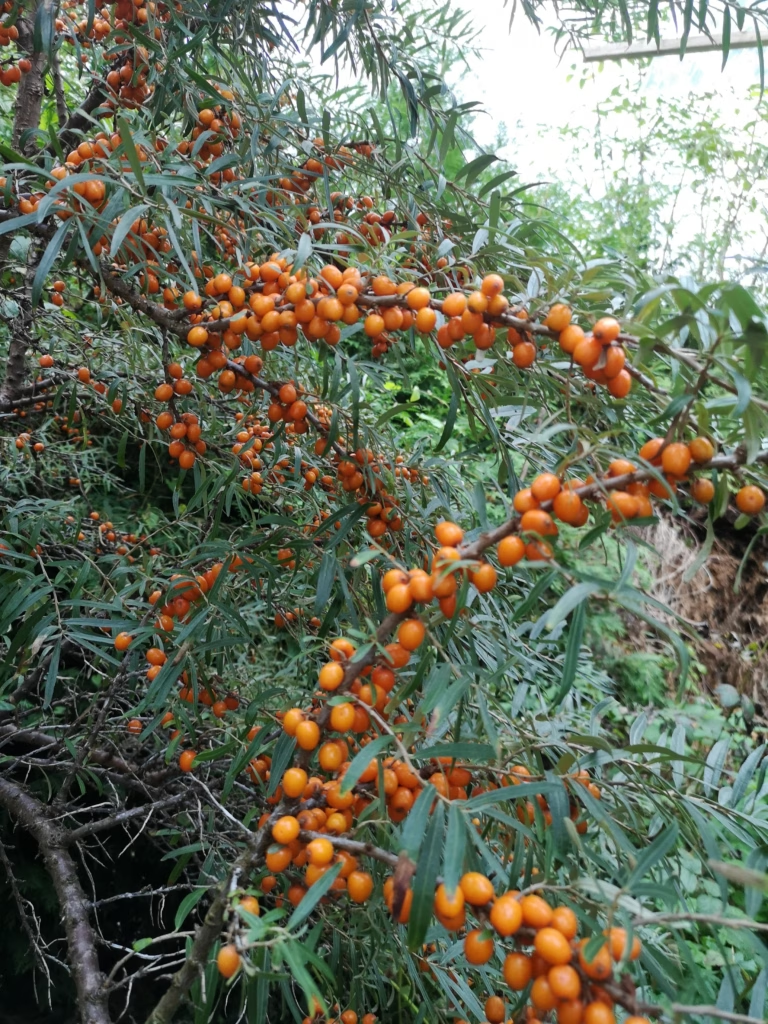
  • Leaves: Narrow-lanceolate, 2–6 cm long, silvery-green, alternate
  • Flowers: Inconspicuous yellowish-brown, before leaf emergence (March–May)
  • Fruits: Orange to yellow-red berries, 6–8 mm, very juicy
  • Bark / Stem: Grey-brown bark, young shoots silvery-hairy
  • Type: Dioecious shrub (male and female plants separate)
  • Special features: Thorny shoot tips, vigorous runner formation

Usage

  • Medicinal: Multivitamin Powerhouse
  • Immune system booster: With up to 900mg of Vitamin C per 100g of berries – ten times more than lemons
  • Skin health: Omega-7 fatty acids (palmitoleic acid) support cell regeneration and wound healing
  • Cardiovascular: Flavonoids and unsaturated fatty acids support vascular health
  • Topical use: Sea buckthorn oil for sunburn, dry skin and minor injuries
  • Culinary: Nutrient-Rich Wild Food
  • Fresh berries: Very sour – best mixed with sweet fruits
  • Sea buckthorn juice: Diluted 1:3 with apple or pear juice, rich in Vitamin C
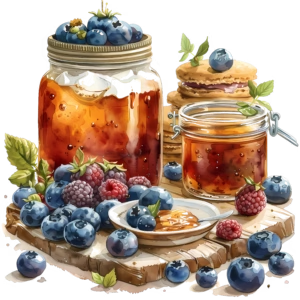
  • Jellies & jams: Classic preparation with apple pieces or other sweet fruits
  • Sea buckthorn oil: Cold-pressed from the seeds, valuable omega fatty acids
  • Important note: Berries are edible and very nutritious, but extremely sour – processing recommended
  • Ecological / Ornamental: System Stabiliser
  • Erosion control: Deep taproot and runners stabilise soils perfectly
  • Windbreak: Robust living fence, tolerant of salt wind and frost (–35°C)
  • Soil improvement: Nitrogen fixation through symbiosis with actinomycete bacteria
  • Pioneer performance: Deep roots unlock nutrients from lower soil layers and make them available
  • Wildlife support: Berries as winter food for birds, thorny branches as nesting protection
  • Phytoremediation: Heavy Metal Stabiliser
  • Pollutant binding: Preferentially accumulates heavy metals in the roots
  • Soil stabilisation: Prevents leaching of contaminants
  • Mycorrhiza synergies: Enhanced uptake and binding of pollutants
  • Long-term remediation: Slow but steady soil improvement over years
  • Other Uses
  • Natural dyeing: The carotenoid-rich berries produce brilliant orange-yellow to red dyes for wool and other natural fibres. Depending on the mordant used, different shades emerge – from warm golden yellow to intense orange-red. Particularly colourfast due to the high content of natural antioxidants
  • Bird protection: The dense, heavily thorned branches create perfect nesting sites and shelters for small birds. The impenetrable structure keeps cats, martens and other predators away, while the nutritious berries simultaneously serve as winter food
  • Biomass: The prunings are exceptionally mineral-rich, as sea buckthorn transports nutrients from lower soil layers up to the surface via roots reaching up to 3 metres deep. Particularly rich in potassium, phosphorus and trace elements such as manganese and iron. As mulch, it slowly releases this “deep-mine” wealth to surface-rooting plants
  • Landscaping: As a pioneer shrub, sea buckthorn creates vertical structure in barren landscapes and forms the backbone for subsequent plant communities. Its salt tolerance and wind resistance make it the ideal framework for coastal and hillside plantings in permaculture systems

Toxicity

  • for Humans:
  • Safe: Berries are fully edible and very healthy
  • Acidity: Extreme sourness can cause stomach issues in large quantities
  • Processing: Raw berries are very sour – processing into juices or jellies recommended
  • Special groups: No specific warnings for pregnant women or children
  • For Animals:
  • Bird food: Important winter food for native bird species
  • Pets: Berries are safe for dogs and cats, but only in small amounts due to acidity
  • Livestock: Leaves can be used as supplementary feed, high nutritional value

Risk of Confusion

  • Similar Plants:
  • Barberry (Berberis vulgaris) – EDIBLE, but different use
    Habitat: Prefers dry, calcareous soils, often in hedgerows and woodland edges
    Key feature: Berries are elongated-oval and dark red, not orange. Leaves are broader with distinct thorns at the leaf axils
    Distinction: Barberry berries hang in clusters, sea buckthorn berries sit directly on the branch
    Use: Barberry is also edible and vitamin-rich, but less sour
  • Purging Buckthorn (Rhamnus cathartica) – TOXIC
    Habitat: Woodland edges, hedgerows, lime-loving
    Key feature: Berries are black and glossy, not orange. Leaves are ovate with pronounced venation
    Danger: Berries are strongly laxative and toxic in larger quantities
    Distinction: Completely different leaf shape and black rather than orange berries
  • Firethorn (Pyracantha) – MILDLY TOXIC
    Habitat: Commonly grown in gardens as an ornamental shrub
    Key feature: Orange-red berries similar to sea buckthorn, but leaves are much broader and glossy green
    Distinction: Firethorn has normal green leaves without a silvery underside; berries are harder and mealy
    Caution: Berries are mildly toxic and inedible

additional Information

  • Maintenance:
  • Sea buckthorn is extremely low-maintenance once the site suits it. Once established, it requires virtually no care.
  • Important tip: As it is dioecious, you need both male and female plants for berry production (optimal ratio: 1 male to 6 female).
  • Growing Conditions:
  • Soil: Sandy, well-drained soils preferred
  • pH: Neutral to alkaline (6.5–8.0)
  • Light: Full sun; does not tolerate permanently shaded positions
  • Moisture: Drought-tolerant; no waterlogging
  • Special feature: Salt-tolerant – ideal for coastal locations
  • Cultivation Notes:
  • Planting time: Autumn or early spring
  • Spacing: At least 2–3 metres apart, as it spreads strongly by runners
  • Pruning: Only when necessary; tolerates hard cutting back
  • Harvest: Berries from August/September onwards, ideally after the first frosts
  • Storage: Fresh berries keep for a few days; frozen for many months
  • Special Notes:
  • Invasive tendency: Can spread vigorously through root runners – take this into account when planting
  • Harvest tip: Cut whole branches and freeze, then knock off the berries
  • Mycorrhiza: Benefits greatly from mycorrhiza inoculation at planting time
  • Companion plants: Works well with other pioneer shrubs such as willows or birches

Recipes

Sea Buckthorn & Apple Jelly

Classic jelly made from sea buckthorn berries and apples. The sourness of the berries is balanced by sweet apples, while the high pectin content of the apples ensures a perfect set. Bright orange colour and intense Vitamin C content.
Prep Time 20 minutes
Cook Time 25 minutes
Course Pantry
Cuisine wild fruits
Servings 4 Jars

Equipment

  • Large stainless steel pot
  • Fine mesh strainer or food mill
  • Wooden spoon
  • Sterilised jars
  • Kitchen scales
  • Cold plate or jam thermometer

Ingredients
  

  • 500 g fresh sea buckthorn berries
  • 500 g tart apples e.g. Bramley or Granny Smith
  • 500 g jam sugar 1:1
  • Juice of half a lemon
  • 100 ml water

Instructions
 

  • Sort and wash the sea buckthorn berries. Peel, core and roughly dice the apples.
  • Place berries and apple pieces with water in the pot, bring to a boil and simmer for 15 minutes.
  • Pass the fruit through a fine strainer – do not press, or the jelly will become cloudy.
  • Measure the juice – there should be approximately 750ml.
  • Bring juice to a boil with jam sugar and lemon juice, stirring constantly.
  • Boil vigorously for 4 minutes, stirring frequently.
  • Setting test: drop a small amount onto a cold plate – it should set immediately.
  • Fill into sterilised jars while hot, seal immediately.

Notes

  • Cleanliness is key: Jars and lids must be sterilised for long shelf life
  • Pectin content: Slightly underripe apples have more pectin and set better
  • Vitamin preservation: Avoid overcooking to protect the Vitamin C content
  • Shelf life: Stored cool and dark, keeps for up to 2 years
  • Variations: Stir in 100g chopped walnuts before filling for extra texture
  • Serving suggestion: Perfect with game, cheese or as a spread
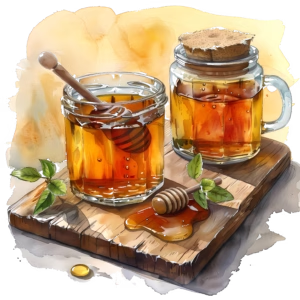
Sea Buckthorn Vitamin Shot

Concentrated Vitamin C boost from fresh sea buckthorn berries. One shot covers the daily Vitamin C requirement several times over and naturally strengthens the immune system. Ideal during cold season or whenever vitamin needs are elevated.
Prep Time 5 minutes
Cook Time 4 minutes
Course Home remedies
Cuisine Home apothecary
Servings 1

Equipment

  • Fine grater or ginger grater
  • Small measuring cup
  • Teaspoon for stirring
  • Shot glass or small cup

Ingredients
  

  • 2 tbsp fresh sea buckthorn juice or 1 tbsp sea buckthorn pulp + 1 tbsp water
  • 4 tbsp cloudy apple juice
  • 1 tsp honey local, raw
  • ½ tsp freshly grated ginger
  • Optional: a squeeze of fresh lemon juice

Instructions
 

  • Prepare the sea buckthorn juice (if homemade: press berries through a fine strainer).
  • Dissolve honey in a small amount of lukewarm water.
  • Combine all ingredients in the measuring cup and stir well.
  • Drink immediately – do not store!

Notes

  • Vitamin content: One shot contains approximately 180mg of Vitamin C (200% of daily requirement)
  • Dosage: Maximum 1–2 shots daily; do not take on an empty stomach
  • Quality: Use only fully ripe, clean sea buckthorn berries
  • Homemade juice: Press berries through a fine strainer or food mill
  • Frozen berries: Easier to juice after thawing
  • Effect: Supports immune system, collagen synthesis and provides an antioxidant boost
  • Caution: If you have a sensitive stomach, take with yoghurt or after eating
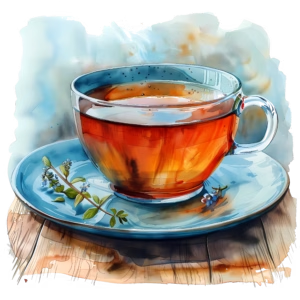
Sea Buckthorn Leaf Tea

Mild herbal tea made from dried sea buckthorn leaves. Rich in tannins, Vitamin C and minerals. Traditionally used to strengthen the immune system and support digestion. Gently astringent with a slightly fruity note.
Prep Time 5 minutes
Cook Time 8 minutes
Course Tea
Cuisine Home apothecary
Servings 2

Equipment

  • Tea strainer or infuser
  • Heatproof teapot
  • Fine kitchen sieve
  • Kitchen scales or teaspoon

Ingredients
  

  • 2 tsp dried sea buckthorn leaves approx. 3–4g
  • 500 ml freshly boiled water no longer at a rolling boil
  • Optional: 1 tsp honey per cup
  • Optional: a squeeze of lemon juice

Instructions
 

  • Bring water to a boil and allow to cool for 1–2 minutes (ideal: 90°C / 194°F).
  • Place the sea buckthorn leaves in the tea strainer and set in the pot.
  • Pour the hot water over the leaves.
  • Steep for 8–10 minutes – longer will become too bitter.
  • Remove the leaves and serve the tea warm.
  • Sweeten with honey to taste.

Notes

  • Harvest and drying: Collect young leaves in early summer; dry in the shade
  • Storage: Dried leaves keep for up to 1 year in an airtight container
  • Active compounds: Tannins, flavonoids, Vitamin C, minerals
  • Effect: Mildly astringent, soothing for the digestive tract
  • Dosage: 2–3 cups daily; do not use long-term without medical advice
  • Blending: Combines well with rosehip or chamomile
  • Caution: Consult a doctor during pregnancy and breastfeeding
  • Flavour tip: Enhance with a piece of orange peel or a pinch of cinnamon

medical Disclaimer

The recipes and information provided here are for informational purposes only and do not replace the advice of a doctor or other healthcare professional. Always consult a doctor if you have health concerns or are unsure about anything.

Back to the main Page

Explore more Articles

more plants

Leave a Reply

Your email address will not be published. Required fields are marked *

Rezept Bewertung