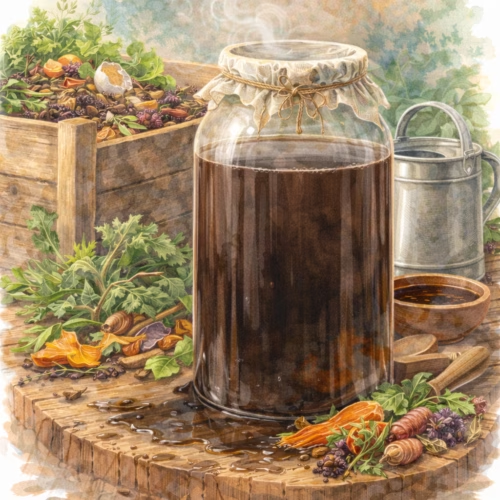
Bayberry Compost Water
A practical by-product from bayberry wax extraction used as a mild compost accelerator. Use steamed water sparingly as-is; always dilute boiled extraction water to avoid over-acidifying the heap. Helps curb odors while supporting a balanced breakdown.
Equipment
- Bucket or watering can with volume marks
- Stir stick
- Fine sieve (optional, to remove particles)
- Labels and pen (to note dilution)
Ingredients
- Water left from bayberry wax extraction
- – Steamed water milder
- – Boiled water stronger
- Fresh water for diluting boiled water
Instructions
- Cool completely: Let the extraction water return to room temperature.
- Clarify (optional): Strain through a fine sieve to remove plant particles.
- Dose — steamed water: Apply directly, 1–2 liters per full compost heap, no more than once per week.
- Dilute — boiled water: Mix at least 1 part extraction water to 3 parts fresh water (≥1:3).
- Apply: Sprinkle evenly over active layers of the heap, ideally after adding fresh greens or after a turn.
- Aerate: Lightly fork or turn the heap to maintain oxygen and distribute moisture.
Notes
- Why it helps: Resins and tannins can suppress odor-causing putrefactive bacteria while leaving beneficial fungi and actinomycetes active, encouraging steadier decomposition.
- Go light: Small, frequent applications work better than large dumps. Watch moisture—aim for “wrung-out sponge.”
- pH awareness: Boiled water is more concentrated; always dilute to prevent excessive acidity.
- Materials balance: Pair applications with carbon-rich bulking agents (leaves, wood chips, shredded cardboard) to offset any resin/tannin load.
- Spent fruit: De-waxed bayberries can be composted in small amounts—crush first and mix well. Large quantities may slow the heap; distribute across multiple piles if needed.
- Safety & Sustainability
- Use only fully cooled liquids.
- Keep all liquids out of drains and natural waterways.
- Wear gloves if you have sensitive skin.
- Keep craft and food equipment separate.