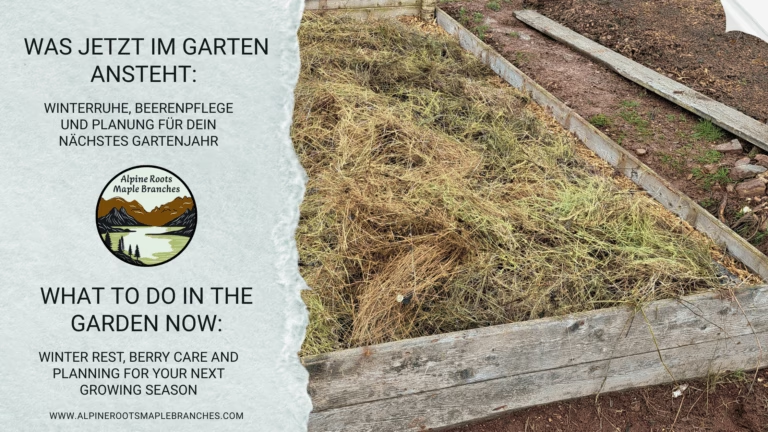
What to Do in the Garden Now: Winter Rest, Berry Care and Planning for Your Next Growing Season

When the garden looks quiet on the surface, our most important work begins: we thin out dense raspberry patches, plant garlic, refresh the mulch around our berries, watch how winter cabbage responds to its spot and give the soil fresh impulses. Winter becomes a silent planning season where we prepare crop rotation, soil care and berry structures so that the next garden year can start more stable, diverse and relaxed.
From Rain to Habitat

A year of watching before digging: how we harvest, steer, and store hillside rain with a diversion drain, gentle overflows, and a new pond. After nearly 16 rain-free weeks, our water system is the difference between stress and stability for soil, plants, and wildlife.
The Art of Mulching – Sustainable Methods at a Glance

Mulching protects soil, conserves moisture, and supports soil life. Learn which materials work best, their pH effects, and how to mulch in Zone 6a.
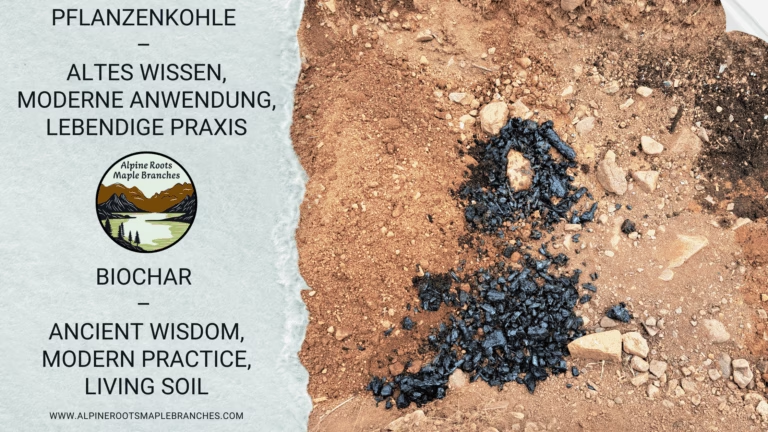
Biochar – ancient wisdom, modern practice, living soil

Biochar is more than just “charred wood.” Rooted in ancient traditions like Terra Preta, it combines science and practice to improve soil, boost resilience, and lock away carbon. Learn how it’s made, why “charging” matters, and how it transforms gardens into sustainable, living systems.
Understanding Hardiness Zones – and How to Grow Successfully in Zone 6a

Whether you’re starting a vegetable bed or planting perennials, success in the garden depends not only on light, soil, and water – but also on your zone. Plant hardiness zones help you choose species that survive local winters. In this detailed guide, we explore what hardiness zones are, how they’re structured globally, and what they mean for growers on Cape Breton Island, located in Zone 6a. With practical tips, a full USDA zone table, and zone-specific planting advice, this article is your roadmap to climate-smart gardening.
What is Homesteading?

Homesteading emphasizes self-sufficiency, sustainable living, and a connection to nature, originating from the U.S. “Homestead Act” of 1862. Today, it embodies various practices from food cultivation to ethical lifestyle choices, enhancing community ties and promoting environmental stewardship. It combines tradition and modernity, fostering mindfulness and sustainability.
Blueberries, Building Projects, and Wildlife Challenges

After weeks filled with hard work, we’re starting to see how our project is slowly taking shape. The first blades of grass are sprouting in the newly created beds, and it feels good to see that our efforts are gradually paying off. Diana also enjoys these moments, often relaxing nearby while we continue building. A […]
Soil Samples and Campfire: An Evening in Nature

Since moving to Canada, we’ve been constantly learning more about our land and preparing it for our permaculture project. An essential part of this process involves taking soil samples from different areas of the property. These samples help us understand the soil better and identify the best spots for specific plant types, such as herbs. […]
Raised Bed, Wildflowers, and Fire Trucks: A Colorful Mix from Canada

After settling in Canada, the next adventure awaited us: we bought a boat – an inflatable boat! Why an inflatable boat? We thought it would be a great way to explore the nearby lake – and honestly, it was! (Well, at least to a certain point…) Inflatable Boat Adventure – Joy with Small Obstacles It […]
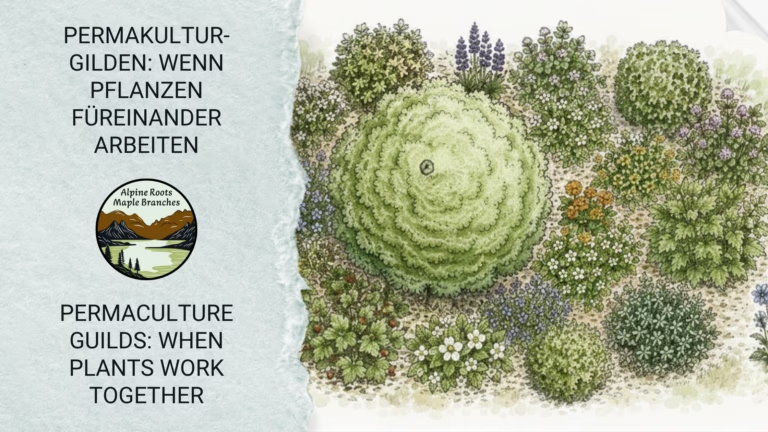
Permaculture and Forest Gardens: A Sustainable Path to Healthy Agriculture

Even before we moved to Canada, we had been deeply engaged with the idea of sustainable farming. Gernot, in particular, has been working with the concept of permaculture for years and experimented with it on a small plot in Austria. On less than 300 m², many permaculture principles were integrated, but it became clear that […]