
The dream of living and working in Canada draws numerous people each year. To turn this dream into reality, it’s essential to understand the various residency and work permits that Canada offers. In this article, we provide an overview of the most important permits. However, there are many other options we won’t dive into here (such as starting or buying a business) as we don’t want to bore you.
If you want to explore all the different options, you can do so in detail on the Canadian government website: https://www.canada.ca/en.html
1. Residency Permits
a. Temporary Resident Visa (TRV) or eTA (Electronic Travel Authorization)
The Temporary Resident Visa, also known as a visitor visa, allows entry into Canada for a limited period. It’s commonly used by tourists, business travelers, or people visiting family. An eTA is valid for five years, but you can only stay in the country for up to six months at a time unless you apply for an extension during your stay.
Example: Visiting properties, meeting online contacts in person, and getting a first impression of the area.
b. Study Permit
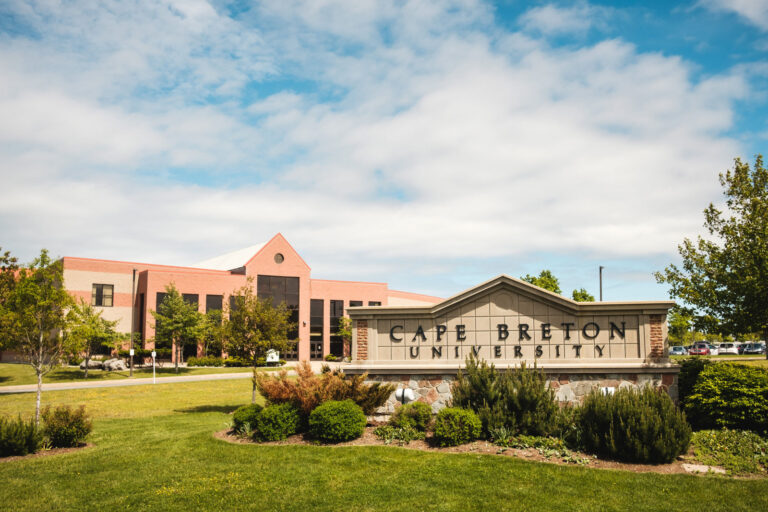
A study permit allows international students to study at a recognized Canadian educational institution. This permit is valid for the duration of the study program and can be extended if needed. Often, students can also work part-time with this permit.
Example: From what we’ve found, this is the most common route people use to later secure permanent residency. Some couples we’ve connected with during our research took this path, where one partner studies and the other receives an open work permit.
Note: As of January 2024, the spouse no longer receives a work permit. Canada is trying to reduce the number of international students due to overburdened infrastructure around universities. Many students face difficulties finding accommodation and part-time jobs, especially as tuition can range from CAD 11,000 to CAD 15,000 per semester (excluding living costs, food, etc.).
2. Work Permits
a. Open Work Permit
An open work permit is not tied to a specific employer, allowing the holder to work for any employer in Canada. This permit is often granted to spouses or partners of international students or skilled workers.
Example: As mentioned with the study permit, the partner receives an open work permit. This also applies if one partner holds an employer-specific work permit. As a single applicant, obtaining an open work permit has proven nearly impossible, based on our research and experience.
b. Employer-Specific Work Permit
This type of permit is tied to a specific employer and position. The employer must first obtain a positive Labour Market Impact Assessment (LMIA), proving that no Canadian citizens or permanent residents are available for the role.
Example: Employers who have an LMIA often mention it in job postings, as it’s difficult for them to acquire. It’s also important to note that job applications in Canada typically have a different format than in Europe. From what we’ve learned from friends and personal experience, it’s more common here to physically drop off your application at the company. Phone inquiries also have a better chance of success than emails. You can use an eTA to embark on a job-hunting tour.
c. Post-Graduation Work Permit (PGWP)
This permit allows international graduates of Canadian institutions to work in Canada after their studies. The length of the PGWP depends on the duration of the study program, lasting up to three years.
Example: After completing studies with a study permit, you can apply for this and start job hunting. Once a job is secured, it can be converted into a work permit or permanent residency (see below).
3. Permanent Resident (PR) Status
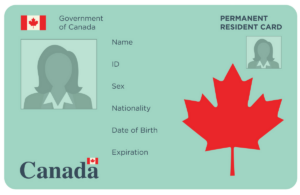
Permanent Resident (PR) status offers many benefits, including the right to live, work, and study in Canada. There are several paths to obtaining PR status:
a. Express Entry
Express Entry is a points-based system that categorizes skilled workers into Federal Skilled Worker, Federal Skilled Trades, and Canadian Experience Class. Candidates with the highest scores are invited to apply for PR status.
Example: Many online services advertise that you can obtain PR or a work permit for CAD 2,000. Unfortunately, based on our experience, these offers sound promising, but unless you can prove Canadian education or work experience, it’s difficult to gather enough points unless combined with a Provincial Nominee Program (PNP).
b. Provincial Nominee Program (PNP)
Each province and territory in Canada has its own nomination program (sometimes many different ones) to select immigrants who meet local labor market needs. Applicants nominated by a province or territory receive additional points in the Express Entry system.
c. Family Sponsorship
Canadian citizens and permanent residents can sponsor close relatives, such as spouses, children, or parents, to help them obtain PR status.
d. Canadian Experience Class (CEC)
This category is for individuals who have already worked in Canada and have gained Canadian work experience. It offers a streamlined path to PR status.
Example: If one partner has gained sufficient work experience with their open work permit, they can apply for PR while the other partner continues studying or working with an employer-specific permit. Once one partner receives PR, the other partner will also be granted PR.
Conclusion
Canada offers a variety of residency and work permits tailored to different needs and qualifications. Whether you’re looking for temporary stays, study or work opportunities, or a path to permanent residency, it’s essential to understand the right steps and meet the necessary requirements.
After about a year of trying, we realized that it’s better to seek professional help. Not from an anonymous company offering generic services, but from an immigration consultant. While this may incur higher costs, you get personalized advice and don’t have to navigate the constantly changing immigration programs on your own.
Your Thoughts?
Have you already emigrated and want to share your experience with us? Or are you planning to and have additional information we haven’t mentioned? Share your thoughts and questions in the comments below and become part of our community on this exciting journey towards self-sufficiency and permaculture. Together, we can learn, grow, and make our dreams a reality!
Note on readability: For the sake of readability, gender-specific language has been omitted in this article. All references to individuals are intended to apply equally to all genders. This decision is solely for the purpose of improving readability and is not intended to imply any form of bias.