As summer fades and the evenings around the Bras d’Or Lake grow cooler, the village of St. Peter’s begins its preparations for a festival that turns the community into a sea of color, music, and storytelling. Pirate Days are far more than just a few days of entertainment. They have become a living symbol of creativity, togetherness, and the pride of a community that knows how to turn a bold idea into a lasting tradition.
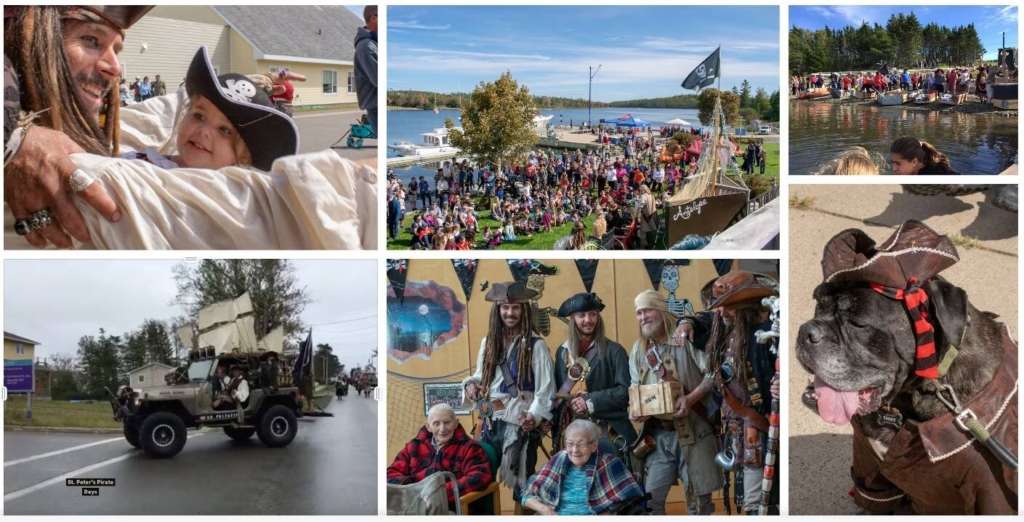
A tourism blog described Pirate Days back in September 2016 as “Richmond County’s newest shoulder season festival” and noted that the event had “first taken place three years earlier.” This suggests a possible founding year of 2013. However, no independent sources confirm this date as the official origin. What is certain is that Pirate Days have been celebrated regularly since 2016 and that the festival has been enthusiastically embraced from the very beginning.
The original idea came from Danielle Sampson, who wanted to create a new late-summer event. With support from the municipality, Tourism Cape Breton, numerous associations, local businesses, and a remarkable number of volunteers, the concept quickly became reality. At its first documented edition in 2016, the entire village was caught up in pirate spirit. Houses and shops were decorated, children and adults dressed up, and a glowing boat parade lit up the St. Peter’s Canal with magic.
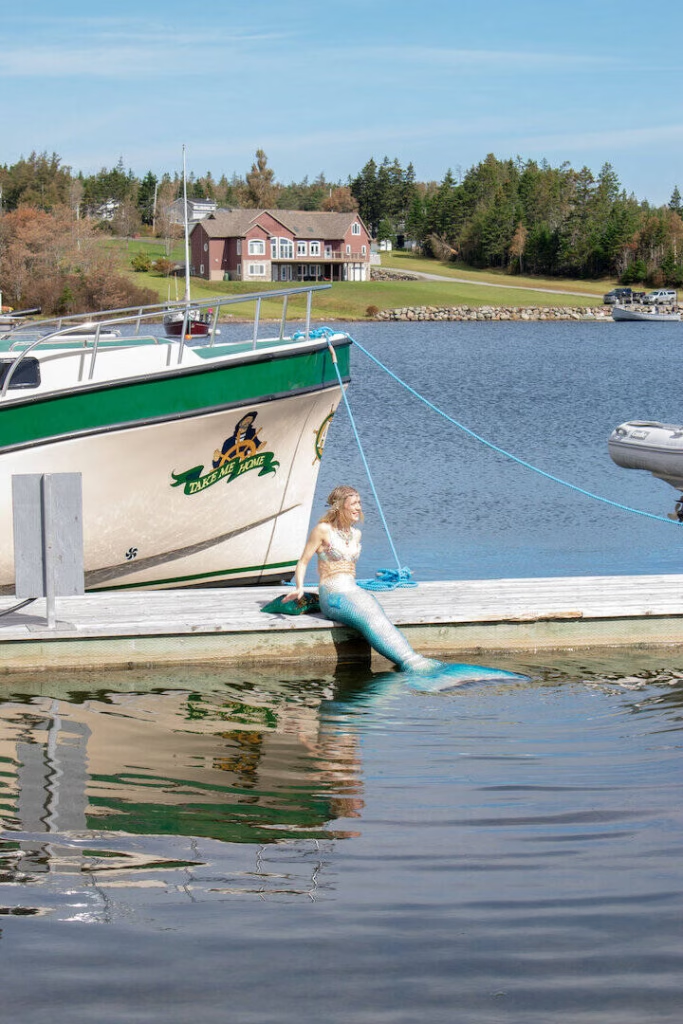
Why pirates became the heart of the festival has never been officially explained. Yet the choice seems obvious: St. Peter’s is part of a region shaped by the sea for centuries, and pirates are a universal image of maritime adventure. Tales of treasure hunts, hidden gold, and fearless sailors spark imagination and excitement in both children and adults. Even during the early editions, the youngest visitors were welcomed as “wee pirates” and entertained with games and stories about “Pirates’ Gold.” The theme proved accessible, colorful, and imaginative—strengthening the sense of community while playfully reflecting the maritime identity of the village.
The success of the festival lies not only in its program but also in its strong community character. Families create costumes together, associations like the Lions Club host events, the fire department contributes its support, and the Nicolas Denys Museum opens its doors. Pirate Days weave together local history, maritime flair, and fantasy into a celebration that strengthens social bonds.

Beyond their cultural role, Pirate Days also carry economic importance. St. Peter’s lies on the Bras d’Or Lake, an inland sea recognized as a UNESCO Biosphere Reserve in 2011. Connected to the Atlantic through the historic St. Peter’s Canal, the lake is the heart of Cape Breton. With Pirate Days, the region gained a cultural highlight that draws visitors even at the end of peak tourist season—filling inns, energizing local shops, and supporting the community’s economy.
Today, Pirate Days are firmly established in the local events calendar. Treasure hunts for children, evenings filled with music, markets, costume contests, and fireworks over the canal are all part of the program. But the central message remains unchanged: everyone is invited to discover their inner pirate for a few days. What began as a vision has grown into a living legacy that strengthens St. Peter’s identity and continues to write new stories year after year.