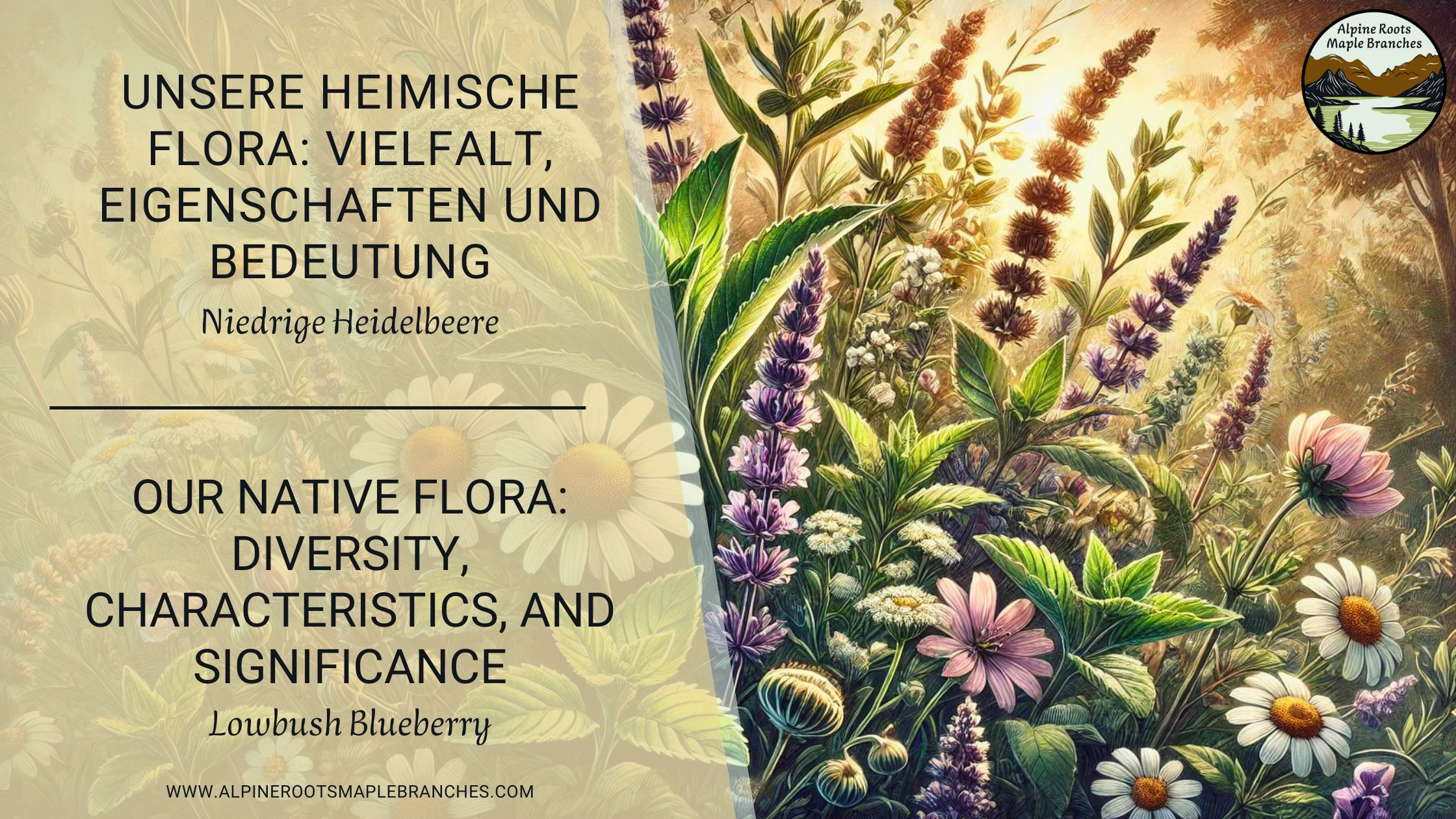
On our property, in the lower fifth, we found it: the Lowbush Blueberry. Discovering several large patches of wild blueberries brought us great joy. You can read more about our find in the recent blog post, „Blueberries, Construction Projects, and Animal Challenges.“ For detailed information about the plant itself, feel free to check out the plant profile.
Antioxidants: Protection for Our Cells
The Lowbush Blueberry is more than just an ordinary berry; it’s a rich source of antioxidants – substances that help our bodies neutralize free radicals. Free radicals form during natural metabolic processes or due to environmental factors like stress and pollutants. They’re unstable molecules that try to stabilize by taking electrons from other cells, which can cause cellular damage and is associated with aging and various diseases. Antioxidants, like those found in the Lowbush Blueberry, act as a shield by binding free radicals, thereby helping to prevent cell damage. This protective effect keeps the body vital and resilient, especially during colder seasons.
A Friend to the Heart and a Natural Aid in the Home Apothecary
The Lowbush Blueberry is also impressive for heart health. Its extract helps balance “good” HDL and “bad” LDL cholesterol, supporting cardiovascular stability. Whether as a cholesterol-lowering extract or a tea for digestive support, the Lowbush Blueberry has many uses in natural remedies. If you’re interested, the profile includes recipes and a detailed explanation of its effects.
The Blueberry in Indigenous Folklore
To many Indigenous cultures of North America, blueberries were not just a food source but also symbolic plants. The Mi’kmaq and Anishinaabe communities viewed blueberries as a gift from nature that brings life and health. One myth tells how, in times of hardship, the „Sky Berries“ were sent to earth to give people strength. These „Sky Berries“ became a food source providing resilience and strength during difficult times. Even today, blueberries are used by some Indigenous groups in ceremonies honoring the connection to the earth and the natural cycle.
More than Just a Fruit in the Garden
In one’s garden, the Lowbush Blueberry is a charming, easy-care ground cover. It thrives especially well in acidic soil and does well in partial shade. Its dark blue fruits and delicate spring flowers make it visually attractive too – a piece of forest in your own garden that nourishes not only us but also birds and insects.
A Quick Guide to this Powerful Berry
For those who are now curious, we’ve created a detailed profile of this plant, covering its characteristics, origin, and uses. It’s a true all-rounder for nature lovers and a great addition to both the garden and home apothecary. Get inspired and discover the many sides of this small but mighty berry!
Learn more in our detailed plant profile.
Your Thoughts
Have you ever come across the Lowbush Blueberry or even planted it in your own garden? Do you use wild berries in your kitchen or home remedies? We’d love to hear your thoughts and look forward to your comments and insights!